The Stonebreaker
Characteristics
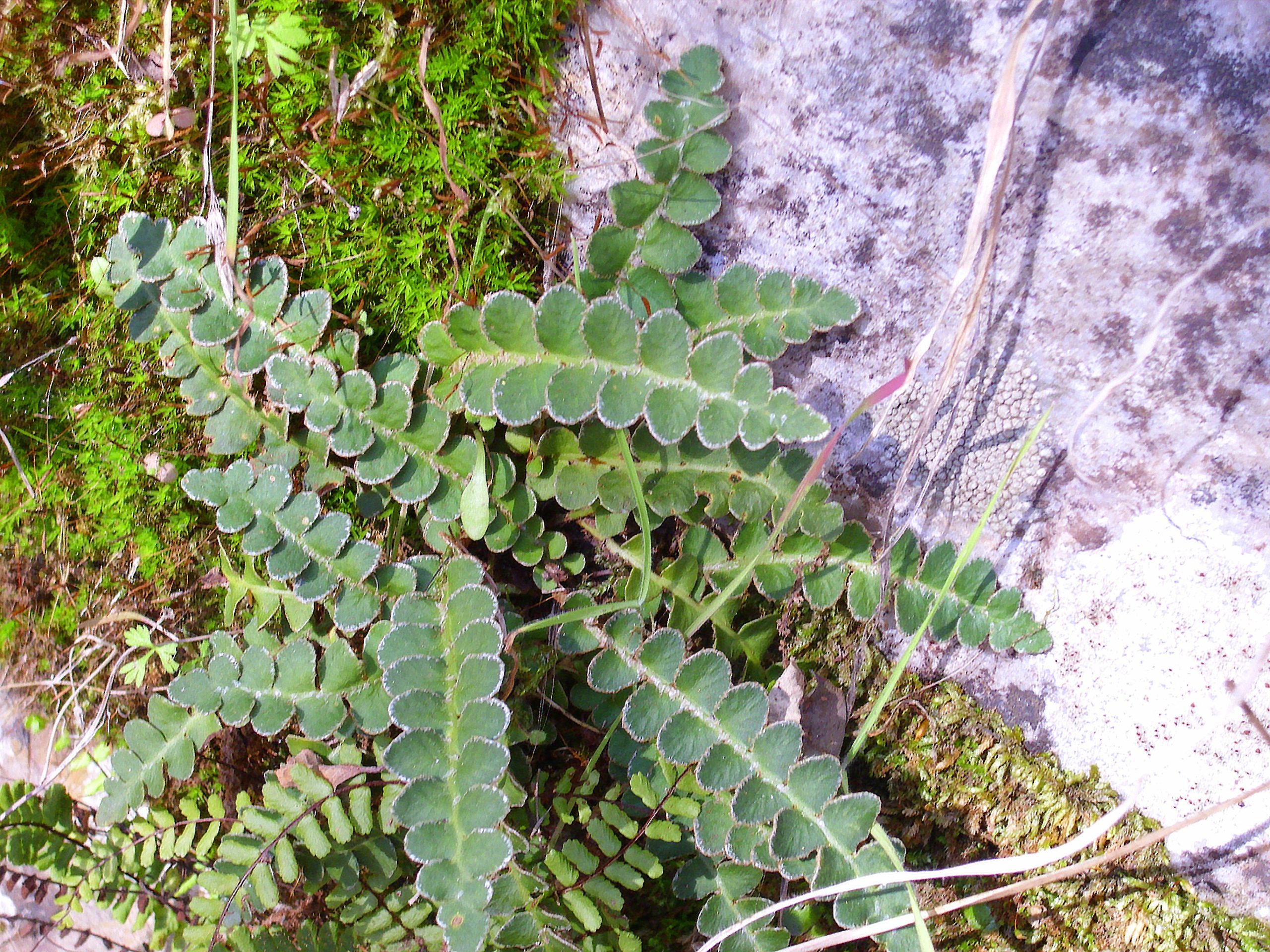
Habit: A small perennial fern, 5–20 cm tall, forming a compact basal rosette, supported by a very short rhizome covered with paleaceous scales. Fronds: Persistent, thick and narrowly lanceolate, with a green, glabrous upper surface and a lower surface covered with dense woolly scales, at first whitish and later rust-coloured, protecting the reproductive organs. Reproductive structures: Linear sori containing spores, lacking an indusium and protected by golden-brown scales on the underside of the fronds. Sporulation: May–October.
Distribution and habitat
Chorological type: Eurasian. Distribution in Italy: Common and widespread throughout the whole country, including the major islands. Habitat: It typically grows in rock crevices, on old walls and among consolidated debris, preferring calcareous substrates but adapting to various rock types, from coastal areas up to 2000 m above sea level.
Etymology
Generic name (Asplenium): From the Greek asplen, “without spleen”, in reference to the ancient medicinal use of these ferns to treat spleen disorders according to the doctrine of signatures. Specific name (ceterach): From the Medieval Latin ceterah, rooted in the Arabic shtaraj and Persian shitarakh.
Uses and properties
Rustyback fern has long been used in folk medicine, where it is known as “stonebreaker” because of its marked diuretic and anti-uric properties, making it useful for those suffering from kidney stones or high urinary oxalate levels. In addition to its decongestant action on the spleen, it has also been used externally and internally as a sedative and emollient remedy for coughs, thanks to its anti-inflammatory, astringent and decongestant action on the mucous membranes of the mouth and throat. In herbal practice, the fresh or dried fronds are mainly used, and more rarely the rhizome.