The Maidenhair of the Rocks
Characteristics
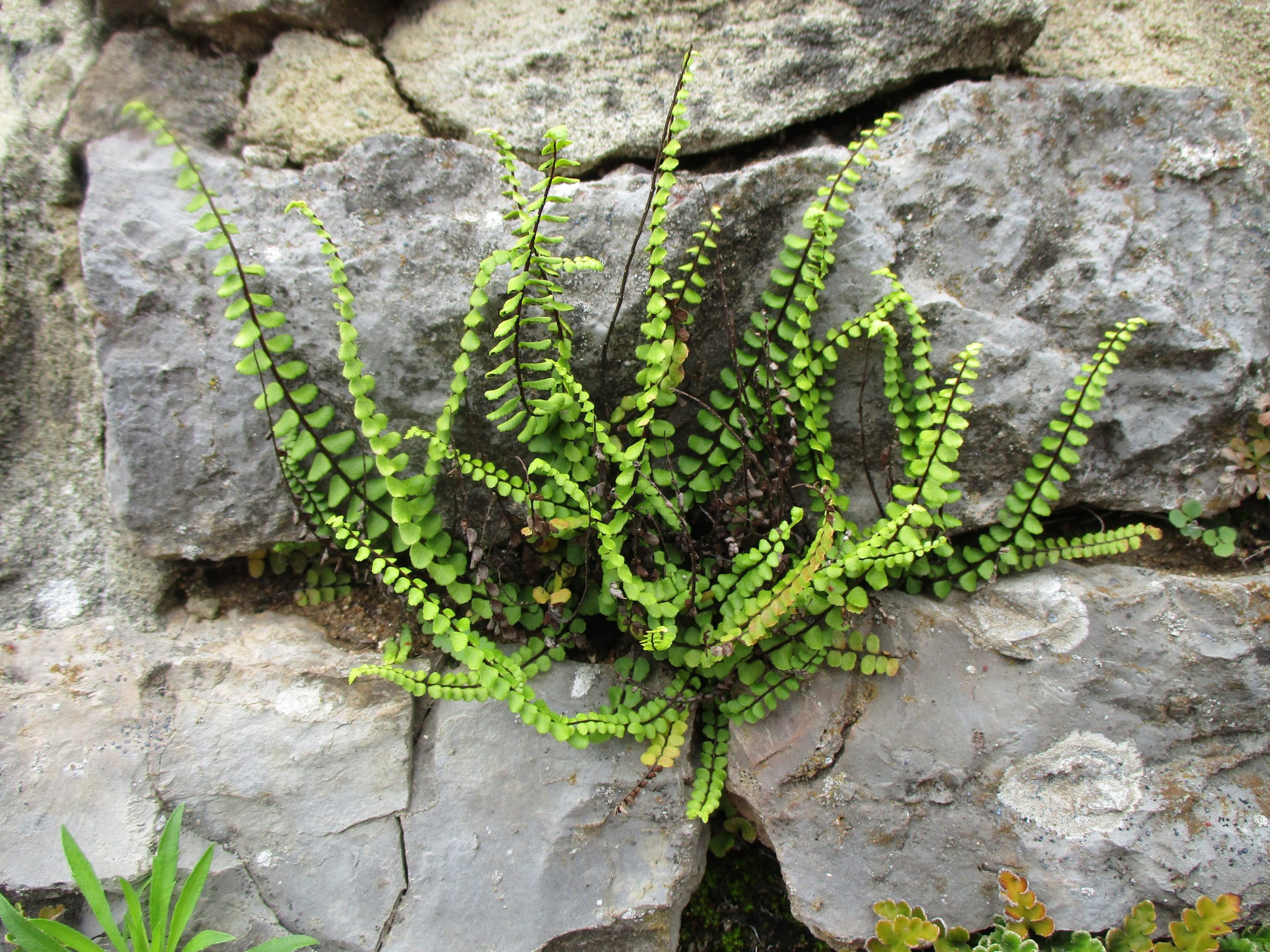
Habit: Fern with a short rhizome covered with brown lanceolate scales, bearing fertile fronds that are erect-spreading and sterile fronds often flat and closely appressed to the substrate. Fronds: 4–20 cm long, occasionally up to 35 cm, dark green, with a glossy black rachis that is rigid and brittle; the blade ranges from linear to lanceolate-pinnatisect and is composed of 15–40 pairs of elliptic-ovate pinnules with crenulate or entire margins. Reproductive structures: Linear-oblong sori containing spores, regularly arranged in two parallel rows on the underside of the pinnules. Sporulation: Active during much of the year when sufficient humidity is available.
Distribution and habitat
Chorological type: Cosmopolitan. Distribution in Italy: Present throughout the Italian territory, from coastal areas to mountain zones. Habitat: It prefers cool, shaded places such as mossy rock crevices or old walls, behaving as a rupicolous and wall-dwelling species from 0 to 2900 m above sea level.
Etymology
Generic name (Asplenium): Derived from Greek and meaning “against the spleen”, in reference to the supposed curative powers attributed to these plants in antiquity. Specific name (trichomanes): From the Greek thrix, trikhos, meaning “hair”, and manos, meaning “thin” or “sparse”, referring to the very slender, glossy black stalks that recall a head of hair. Subspecific name (quadrivalens): Refers to tetraploidy, that is, the presence of four chromosome sets, a cytological feature distinguishing this subspecies from others in the group.
Uses and properties
Ferns of this genus, historically known as “capillary ferns”, were used in folk medicine for their diaphoretic, anticatarrhal and eupeptic properties, as well as to promote the expulsion of gravel and counter bladder stones. A domestic cosmetic use still survives today, whereby a decoction of the plant is employed in scalp applications aimed at combating dandruff and preventing hair loss.