The Snow Veil of the Fields
Characteristics
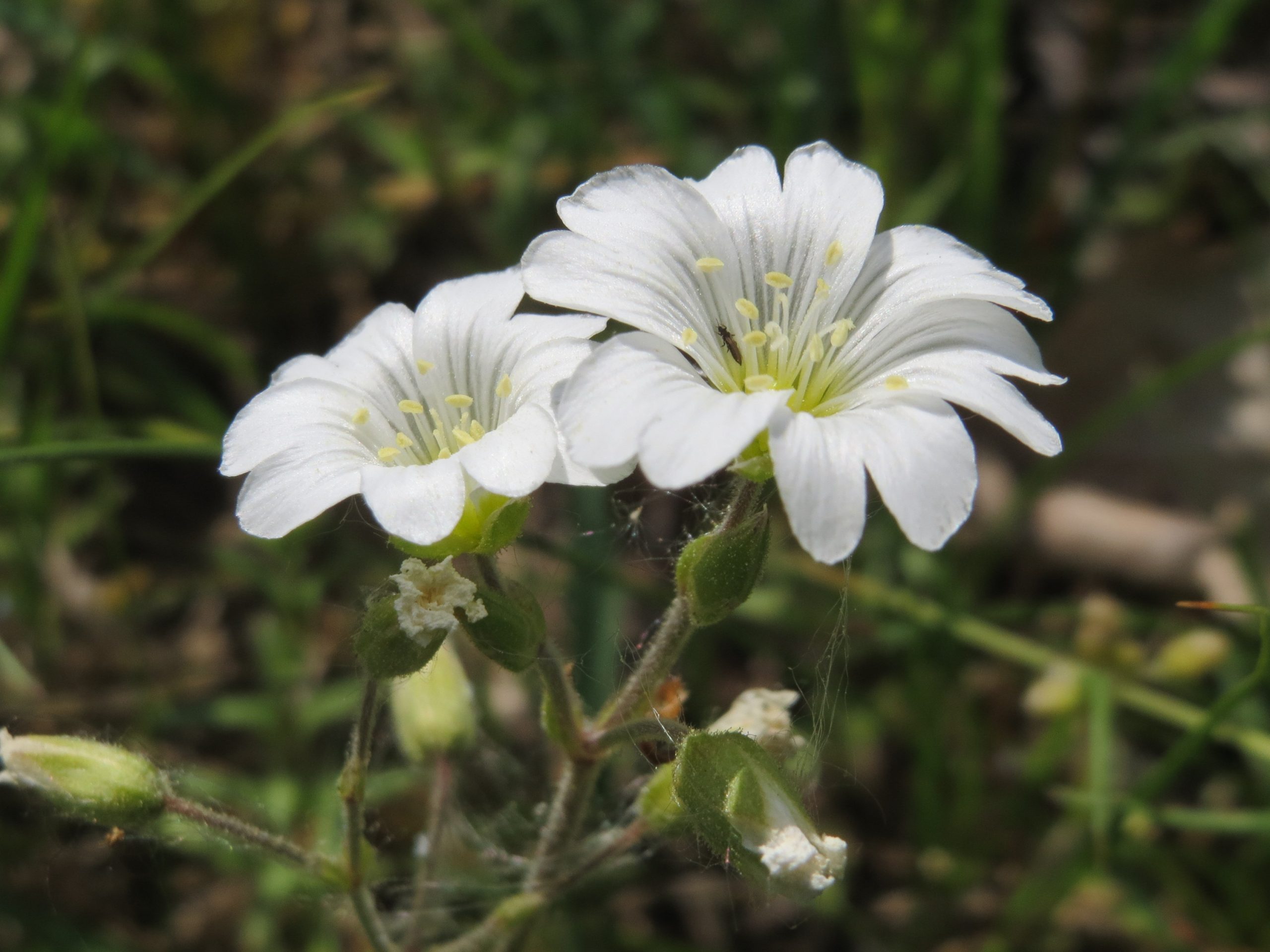
Habit: Perennial herb 5–30 cm tall, usually tufted. Stems: At first creeping, later becoming erect-ascending and branching dichotomously. Leaves: Opposite and oblong-lanceolate. A characteristic feature is the presence of clusters of smaller leaves, brachyblasts, inserted in the axils of the main leaves. Flowers: Arranged in loose cymes of 1–20 flowers, pentamerous and pure white. Petals bifid and distinctly longer than the sepals, which have a white membranous margin. Stamens 10, with white filaments. Fruits: Subcylindrical capsule, typically curved upward at the apex when mature, containing wingless seeds covered in small surface tubercles. Flowering: April–August.
Distribution and habitat
Chorological type: Subcosmopolitan. Distribution in Italy: Present throughout northern and central Italy, extending southwards to Campania. Habitat: A heliophilous and neutrocline species preferring cool environments, often stony or gravelly, from sea level to 2900 m above sea level.
Etymology
Generic name (Cerastium): From the Greek keras, “horn”, a term introduced by Dillenius to describe the shape of the fruiting capsule, which at maturity appears elongated and slightly curved, resembling a bovine horn. Specific name (arvense): From the Latin arvum, “cultivated field”, identifying the plant as a typical inhabitant of farmland, field margins and pastures.
Uses and properties
Field mouse-ear is particularly appreciated in ornamental gardening, especially in the creation of rock gardens and alpine flower beds. Thanks to its rapid, vigorous growth, it is used as a ground-cover plant to stabilize slopes or fill spaces between stone pathways.