The Flower that Saved a God
Characteristics
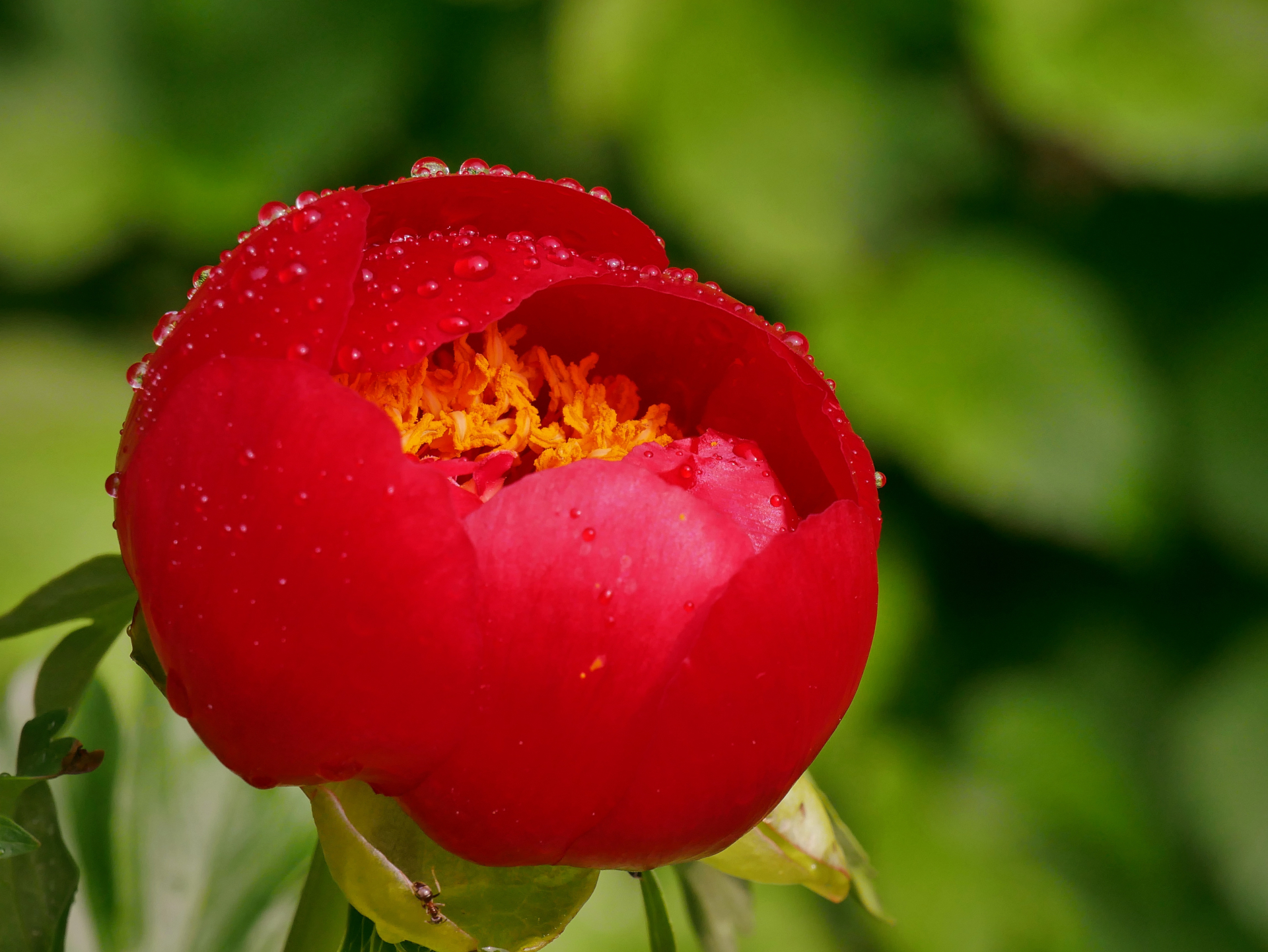
Habit: Robust perennial herbaceous plant, 30–60 cm tall. Stems: Erect, cylindrical, usually unbranched, ending in a single large apical flower. Leaves: Alternate and deeply divided, with a bi- or triternate structure. Each leaf is composed of 15–30 lanceolate or elliptic segments. The upper surface is glossy and deep green, while the lower one is duller and may vary from almost glabrous to finely hairy. Flowers: 7–13 cm in diameter. The calyx is composed of 5 unequal sepals. The corolla bears large spatulate petals of carmine-red or purplish colour, with a rounded apex. At the centre stands a dense cluster of numerous stamens arranged in a spiral, with bright yellow anthers. The carpels (from 1 to 8) are free and densely tomentose, topped by a red, recurved stigma. Fruits: An aggregate of swollen tomentose follicles which, at maturity, become dark and bend outward. When opening, they reveal glossy blue-black (fertile) or reddish (sterile) seeds. Flowering: March–June.
Distribution and habitat
Chorological type: European / Pontic. Distribution in Italy: Present in all regions of central and northern Italy and in Abruzzo; absent from the rest of southern Italy and from the major islands. Habitat: It prefers bright environments such as open deciduous woods, subalpine scrub, rocky slopes, and dry meadows, favouring calcareous substrates, from 100 to 1800 m a.s.l.
Etymology
Generic name (Paeonia): Derived from Peon (Paion), the mythical physician of the gods in ancient Greece. According to myth, Peon used the roots of this plant to heal Mars and Pluto from wounds sustained in battle; to save him from the wrath of his master Asclepius, jealous of his success, Hades transformed him into the flower that bears his name. Specific name (officinalis): From the Latin officina (workshop), testifying to its ancient and established use in medicinal preparations.
Uses and properties
Common peony is a species of great importance in the history of medicine. It contains complex active principles such as paeoniflorin and various tannins, which give it sedative, antispasmodic, and diuretic properties. Until the 16th century, peony root was considered a fundamental remedy for treating epilepsy and convulsions. In popular culture, it was attributed magical and protective virtues: it was believed that a piece of root wrapped in linen and worn around the neck could drive away demons or relieve the suffering of teething children. Although its beauty favoured its cultivation in historic gardens, it should be remembered that it is a toxic plant if ingested in excessive quantities, which is why its therapeutic use has now been almost entirely abandoned in favour of ornamental use. In the wild it is often protected at regional level to prevent indiscriminate collecting.