The Hidden Seal in the Shade
Characteristics
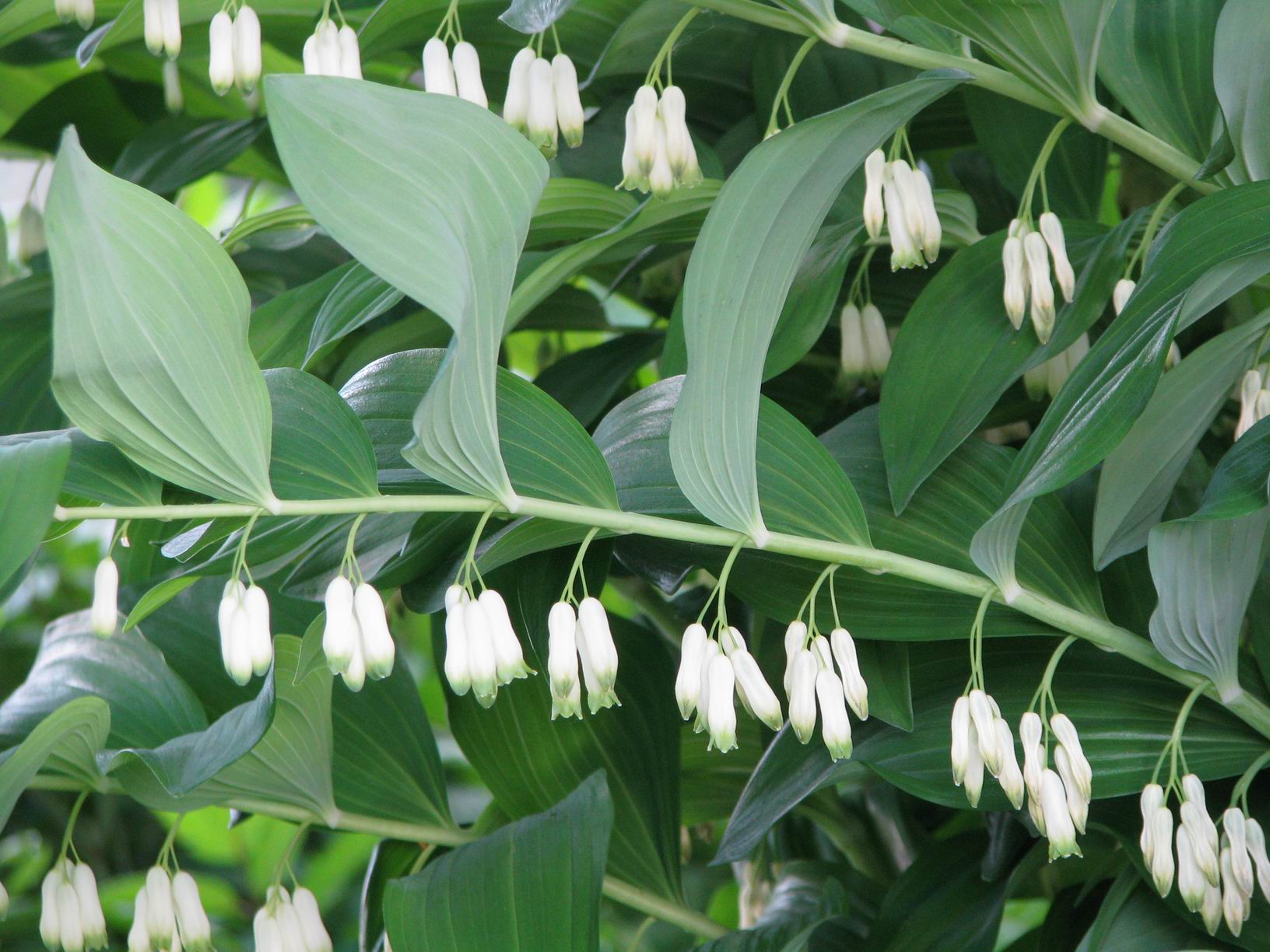
Habit: Perennial herbaceous plant reaching up to 1 metre in height. Stems: Cylindrical and erect at the base, becoming slightly angular and markedly arched upward, sometimes bending toward the ground. Leaves: Arranged alternately, elliptic in shape, glabrous, sessile or with an almost imperceptible petiole. The lower surface is glaucous and shows the sub-parallel, arched veins typical of the family. Flowers: Scentless and pendulous, gathered in the axils of the leaves in groups generally composed of 3 to 5 elements. The perianth is whitish, shaped like an elongated funnel, and ends in 6 small pubescent teeth. Fruits: A globose berry changing colour during ripening, from red at first to bluish-black at full maturity, often covered with a thin white bloom. Inside are olive-green seeds, subspherical or pyriform in shape. Flowering: April–July.
Distribution and habitat
Chorological type: Eurasian. Distribution in Italy: Present in all regions of the national territory. Habitat: A typically sciaphilous (shade-loving) species that grows in cool, shady places, preferably at the edge or in the undergrowth of beech and pine woods, from sea level up to 1800 m a.s.l.
Etymology
Generic name (Polygonatum): From the Greek terms polýs (many) and gonía (angle), referring to the nodose and angular nature of the rhizome or stems. Specific name (multiflorum): A Latin term underlining the peculiarity of the multiple flowers in each axillary cluster, distinguishing the species from the common Solomon’s seal (P. odoratum), which usually bears only 1 or 2 flowers.
Uses and properties
Greater Solomon’s seal is a complex medicinal plant containing steroidal saponins and flavonoids. Although the rhizome has astringent and anti-inflammatory properties and was formerly used in slices to soften calluses, its use today is limited mainly to veterinary medicine as an expectorant for livestock. Although the young spring shoots are sometimes eaten like wild asparagus (a practice not recommended to non-experts), the plant is considered toxic. The autumn berries, despite their attractive appearance, are poisonous and may cause severe gastrointestinal disorders. The popular name “Solomon’s Seal” remains linked to the suggestive legend of the scars on the rhizome, interpreted as the seal impressed by King Solomon to attest the plant’s healing virtues.