The Spiny Jewel of the Underwood
Characteristics
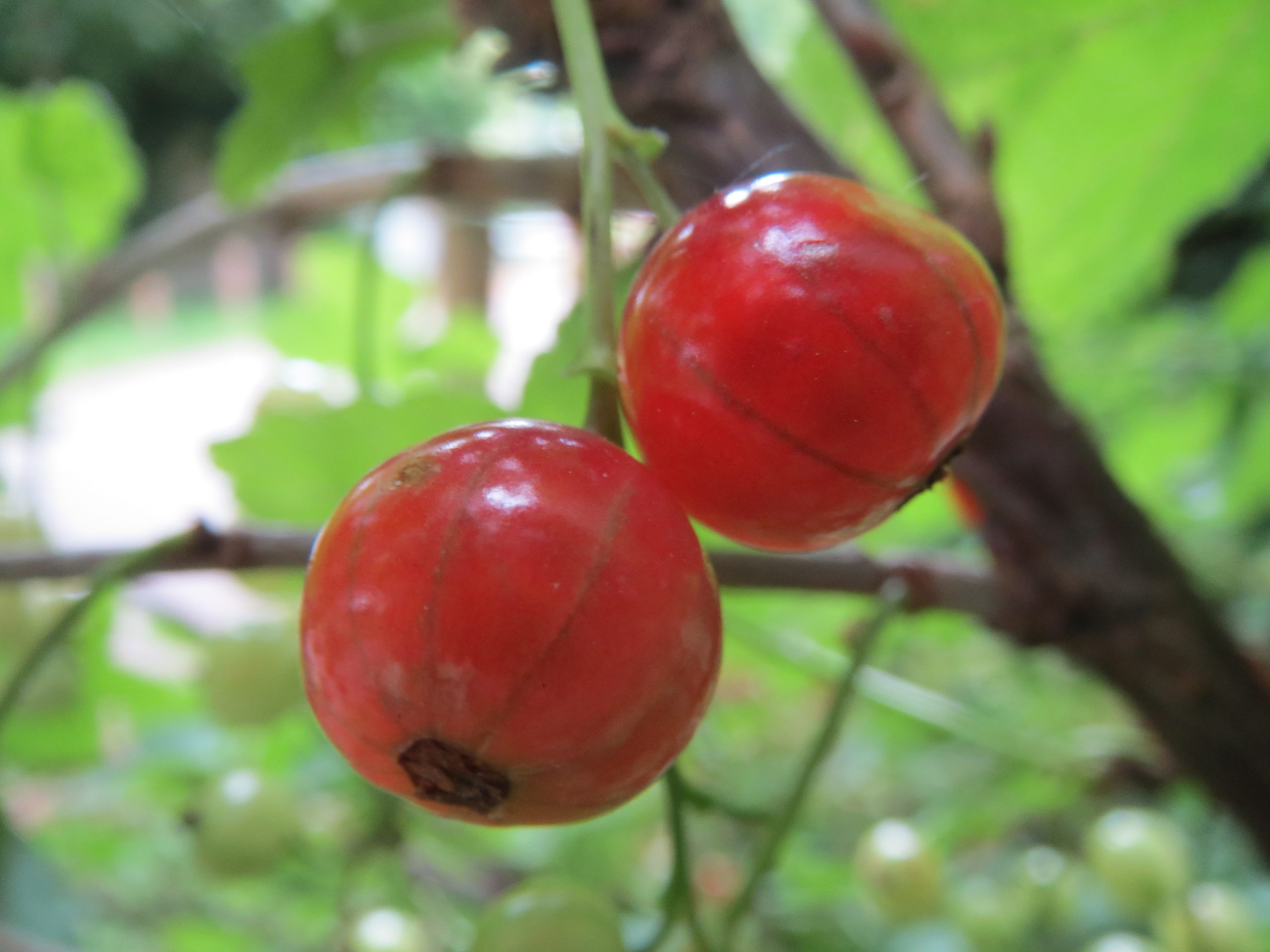
Habit: Small deciduous shrub with a tangled habit, 60 cm to 1.5 metres tall. Stems: Erect-arching, armed with robust pointed spines (3.5–10 mm), usually situated at the base of the nodes. Leaves: Small (2–5 cm), with a triangular or pentagonal outline and a base varying from cordate to cuneate. The shape is palmately divided into 3–5 obtuse lobes with an incised-crenulate margin. Flowers: Hermaphroditic, pentamerous, and pendulous, arranged singly or in short axillary racemes of 2–3 flowers. The calyx is gamosepalous with spatulate, petaloid lobes of greenish or purplish colour, which remain attached to the fruit even after ripening. The true petals are whitish and about half as long as the calyx lobes. Fruits: A many-seeded globose or ovoid berry, translucent and about 10 mm in diameter. It may be glabrous or covered with stiff glandular hairs. Its taste is sweet-sour and very aromatic. Flowering: April–July.
Distribution and habitat
Chorological type: European-Caucasian. Distribution in Italy: Present throughout the Alpine arc and in the central-northern Apennines; absent or very rare in the South and in Friuli. Habitat: Commonly found in hedges, woodland edges, clearings, and montane pastures, between 100 and 1600 m a.s.l.
Etymology
Generic name (Ribes): From medieval Latin, derived from the Arabic term ribas, used to indicate plants with a sour and acid taste. Specific name (uva-crispa): Composed of the Latin uva and crispus (curled, wrinkled), referring to the fruit surface which in many wild forms appears bristly and rich in glandular hairs.
Uses and properties
Gooseberry is an important edible and medicinal species. The fruits are an excellent source of vitamin C, pectins, mucilages, and mineral salts, conferring refreshing, diuretic, and remineralising properties. In herbal medicine it is used to stimulate the body’s defences and regulate intestinal functions. Besides fresh consumption, the fruits are used to produce syrups, jellies, and the traditional conserva de ùa spinèla typical of Trentino. Thanks to their sugar content, gooseberries can also be fermented to obtain a fruit wine. A gastronomic curiosity concerns the use of unripe fruits as an accompaniment to fish: in France it is called the “mackerel currant” (groseillier à maquereau) precisely because its acidity balances the fats of oily fish. In cosmetic use, the crushed pulp of the fruits is applied as a facial mask for its astringent and purifying properties, proving particularly effective in the treatment of oily skin.