The Herb of Good Health
Characteristics
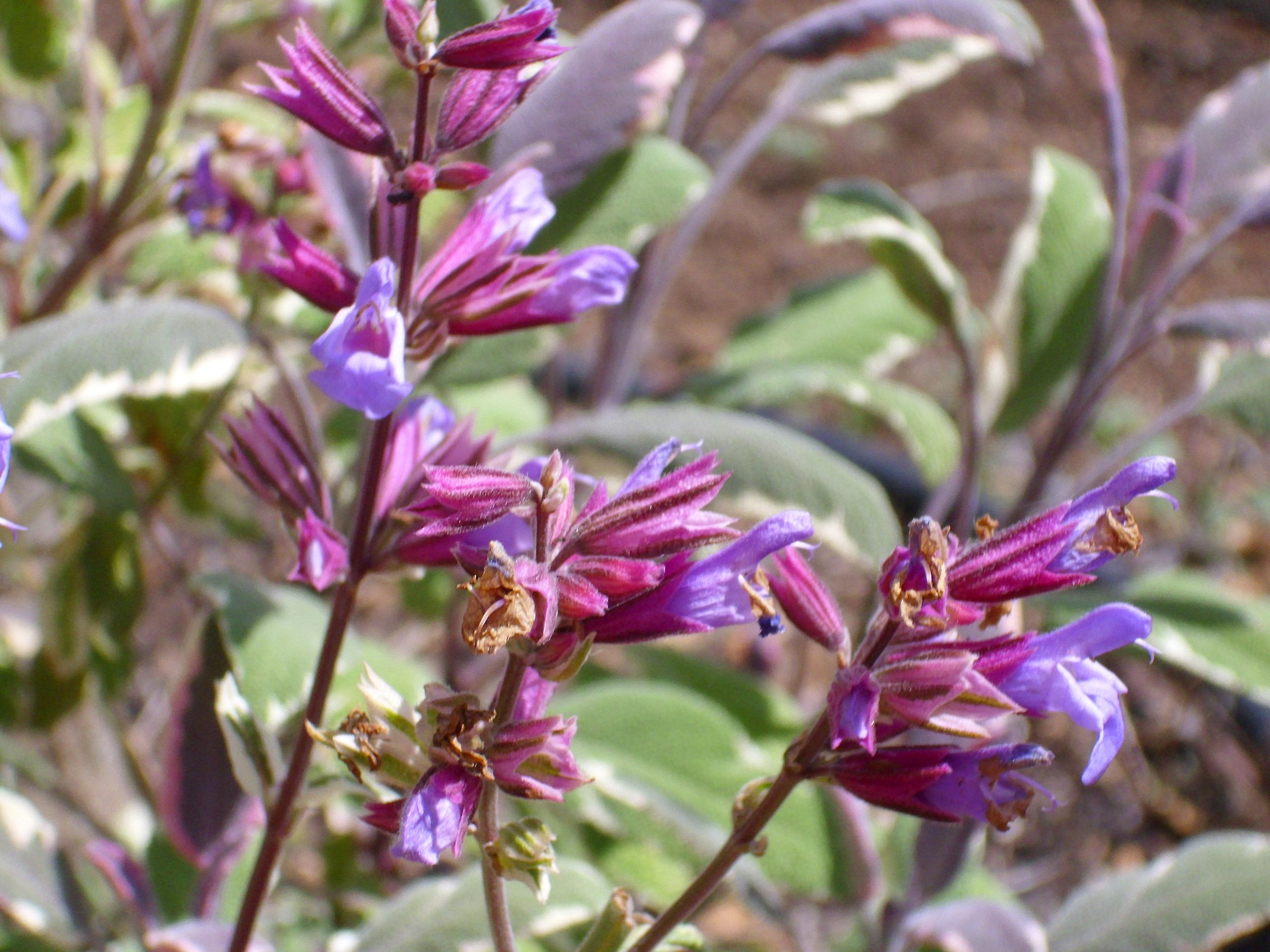
Habit: Perennial suffruticose plant, 20–40 cm tall. Stem: Woody at the base, broadly branched, and covered with spreading hairs. Leaves: Borne on a distinct petiole, they are lanceolate with an obtuse apex and a finely crenate margin. Their texture is velvety to the touch; the upper surface has reticulate venation that gives it a wrinkled appearance, while the lower one is paler and densely hairy. Flowers: Arranged in verticillasters (circularly disposed around the stem), each composed of 5–10 elements. The calyx is campanulate and often takes on a rusty reddish colour. The corolla, typically bilabiate, is violet (more rarely pink or white), with a tube 10–15 mm long and an upper falcate lip 7–10 mm long. Fruits: A schizocarp that at maturity divides into 4 small subglobose, dark chestnut mericarps (nutlets). Flowering: February–May in the wild; it may continue longer in cultivation.
Distribution and habitat
Chorological type: Northern stenomediterranean. Distribution in Italy: Widespread in almost all regions. Although it grows spontaneously in some areas of central and southern Italy, in many northern localities it occurs as a relic of ancient cultivation or naturalised. Habitat: It prefers warm and arid environments, such as calcareous cliffs, screes, and sunny slopes, typically from sea level up to 300 m a.s.l., although in cultivation it tolerates higher altitudes.
Etymology
Generic name (Salvia): From the Latin salvere (to be in good health, to be well), a term celebrating the extraordinary and universal therapeutic virtues attributed to the plant since classical times. Specific name (officinalis): An adjective identifying plants endowed with medicinal properties, historically sold in the officinae (ancient pharmacies).
Uses and properties
Common sage is one of the most celebrated medicinal plants in European medical history. It has antiseptic, diuretic, anti-inflammatory, and digestive properties. In phytotherapy it is used to regulate perspiration, counter infections of the oral cavity, and support liver function. Folk medicine suggests the use of the decoction as a cardiotonic, while the combination of sage and honey is a well-known expectorant remedy. A curious traditional practice involves boiling the leaves in white wine to help regulate blood sugar levels. In cooking it is an indispensable aromatic herb for meats, sauces, and melted butter. Fresh leaves, rubbed on the teeth, have a whitening and hygienic action on the gums. The essential oil contains thujone, a substance that can be toxic at high doses; therefore, the use of concentrated extracts must always be moderate.