The Magical Tree of Bird Catchers
Characteristics
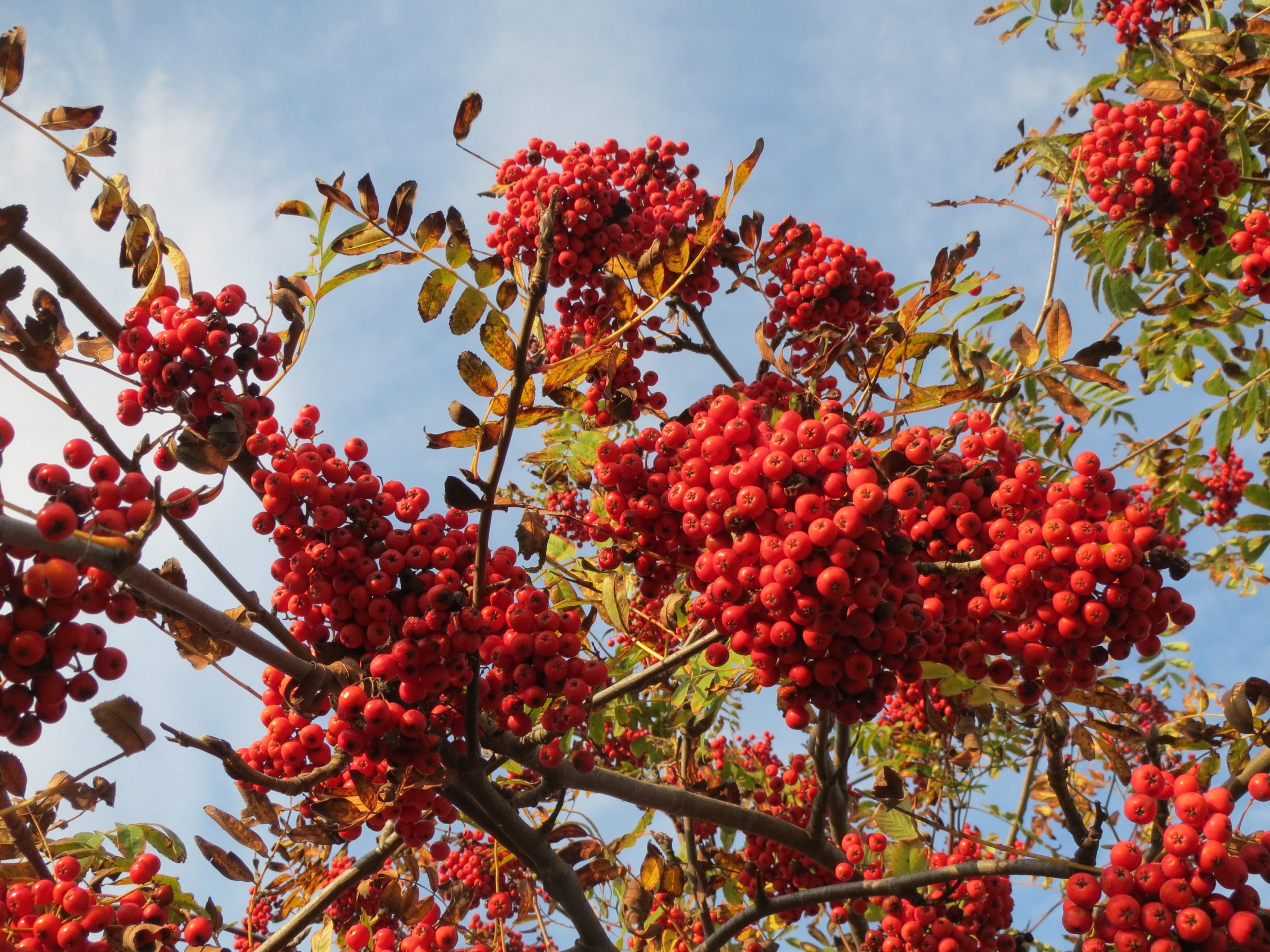
Habit: Deciduous tree that may reach 15–20 metres, with a rounded crown. Bark: In young specimens it is smooth, glossy, and silver-grey, studded with numerous horizontal lenticels. With age it tends to become darker, grey-brown, and begins to fissure longitudinally. Branches: Young branches are slender, flexible, and reddish-brown in colour, covered with a slight fine greyish pubescence that soon disappears. Leaves: Alternate and odd-pinnate, up to 20 cm long. They are composed of 6–7 pairs of sessile oblong-lanceolate leaflets with serrated margins. The upper surface is dark green, the lower one glaucous green. In autumn they turn an intense blood-red. Flowers: Gathered in dense erect corymbs that may reach 15 cm in diameter. Each flower has 5 white petals and 20 stamens. They emit a characteristic odour due to trimethylamine, similar to that of chestnut flowers. Fruits: Small bright scarlet-red globose pomes, gathered in heavy and conspicuous pendulous clusters. They remain on the plant for a long time, even after leaf fall. Flowering: May–July.
Distribution and habitat
Chorological type: European. Distribution in Italy: Present in almost the whole territory, with the exception of Puglia. Habitat: It settles in rocky niches, overhangs, and clearings in mountain woods, both deciduous and coniferous. It prefers acid or neutral soils, growing from 400 up to 2400 m a.s.l.
Etymology
Generic name (Sorbus): Probably of Celtic origin, from roots meaning “sour apple.” Specific name (aucuparia): From the Latin aucupium (bird-catching). The name recalls the historical use of this plant to attract small birds such as blackbirds and thrushes into hunters’ traps, since the fruits are extremely attractive to birds.
Uses and properties
Rowan is an edible and medicinal species, but it requires caution in consumption. The fresh fruits contain parasorbic acid, which may cause severe gastrointestinal irritation. Cooking neutralises this toxin, converting parasorbic acid into sorbic acid. From the cooked fruits are obtained jellies, tart jams excellent with game, distilled beverages, and the so-called sorbitol used as a sweetener for diabetics. The decoction is traditionally used as a diuretic, laxative, or, if well cooked, as an intestinal astringent. The wood is highly valued for its hardness and compactness. It is used in cabinetmaking, for the production of flutes, parts of sledges, and carving work.
Curiosities
Anciently considered a sacred tree by the Druids, rowan was a symbol of protection. It was planted beside houses and stables to protect them from lightning and evil spirits. It was also believed that its wood was the material of choice for carving magical rods, called “witch’s hands,” used for divinatory purposes.