The Aromatic Golden Button
Characteristics
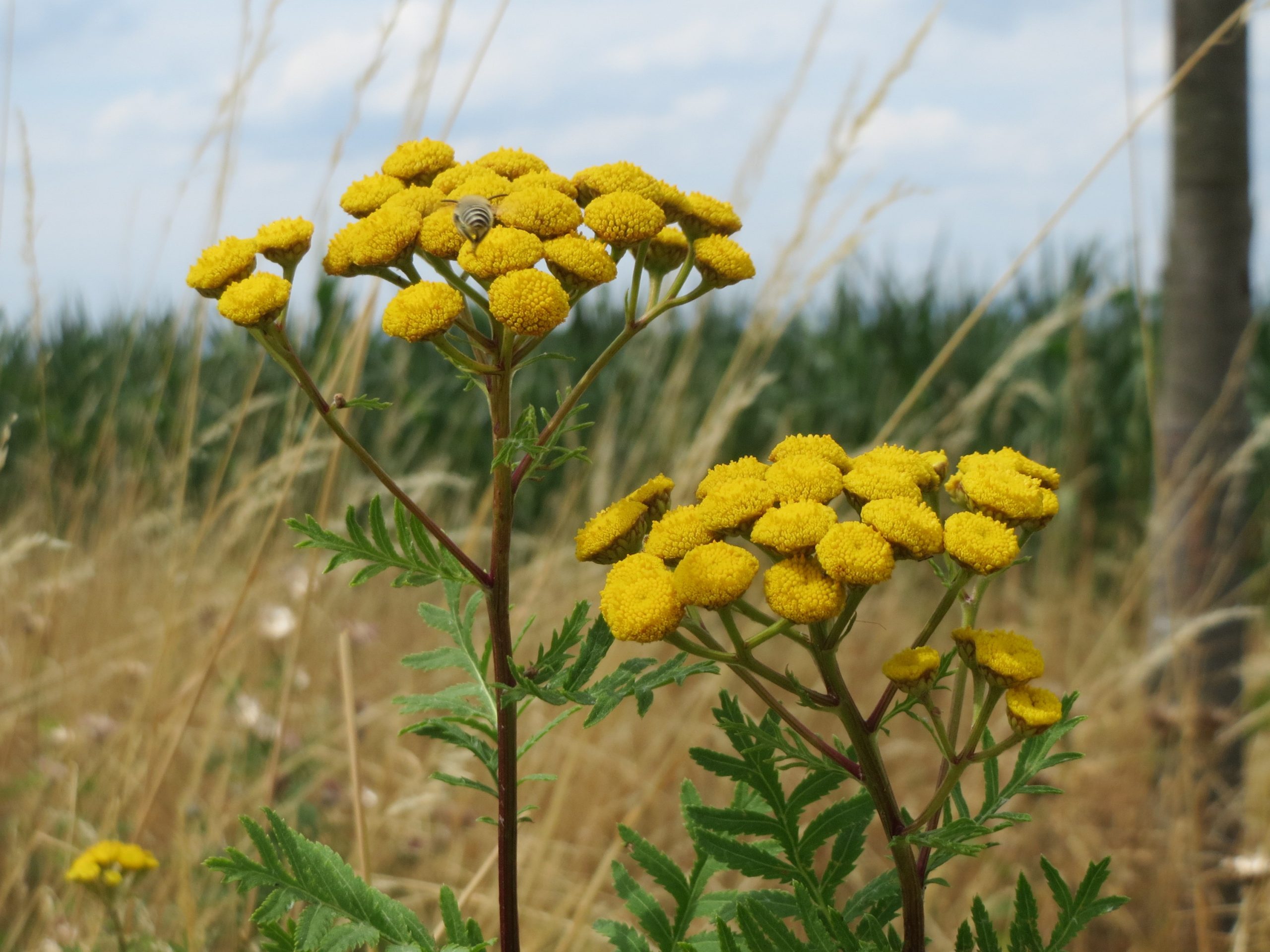
Habit: Robust perennial herbaceous plant, 60–120 cm tall. Stems: Erect, striated, and branched only in the apical portion. Leaves: Alternate and deeply divided, with an appearance reminiscent of fern fronds. They are composed of 15–23 segments with serrated margins. On the lower surface there are small glands secreting essential oils. Flowers: Gathered in a dense, flattened terminal corymb, button-shaped or discoid, about 1 cm in diameter, and intense golden yellow in colour. The external white ray flowers are entirely absent; all flowers are tubular. The peripheral florets are female, while the central ones are hermaphroditic. Fruits: An achene about 2 mm long with 4–5 longitudinal ribs. The pappus is reduced to a tiny membranous crown. Flowering: June–October.
Distribution and habitat
Chorological type: Eurasian. Distribution in Italy: Widely distributed in almost all regions. Habitat: It grows along ditches, roadsides, meadows, and river gravels, from the lowlands up to 1600 m a.s.l.
Etymology
Generic name (Tanacetum): From medieval Latin tanazita, probably derived from the Greek term for worm, taenia, because of the ancient use of the plant against intestinal parasites. Specific name (vulgare): From the Latin vulgus, common or widespread, indicating the wide distribution of the species.
Uses and properties
Tansy is a medicinal species characterised by high toxicity due to its essential oil rich in thujone, a neurotoxic compound that may cause convulsions and severe organ damage, which is why its ancient therapeutic internal use has been almost entirely abandoned. Historically, the plant was celebrated as one of the most powerful natural vermifuges, used in powder form to eliminate pinworms, and also employed in infusion as an emmenagogue or macerated in wine and grappa for its bitter-tonic, digestive, and febrifuge properties against spasms and loss of appetite. Today its safest and most widespread use is as a natural insecticide and repellent: thanks to its pungent smell, bunches of tansy are effective in keeping away moths, fleas, lice, and even mice from grain stores. In cooking, although in the Middle Ages its leaves were common for flavouring meat and egg dishes, its use is now extremely limited and restricted to the preparation of particular herbal liqueurs, where it serves as a bittering component under strict control of quantities.