The Silver Giant of the Mountain
Characteristics
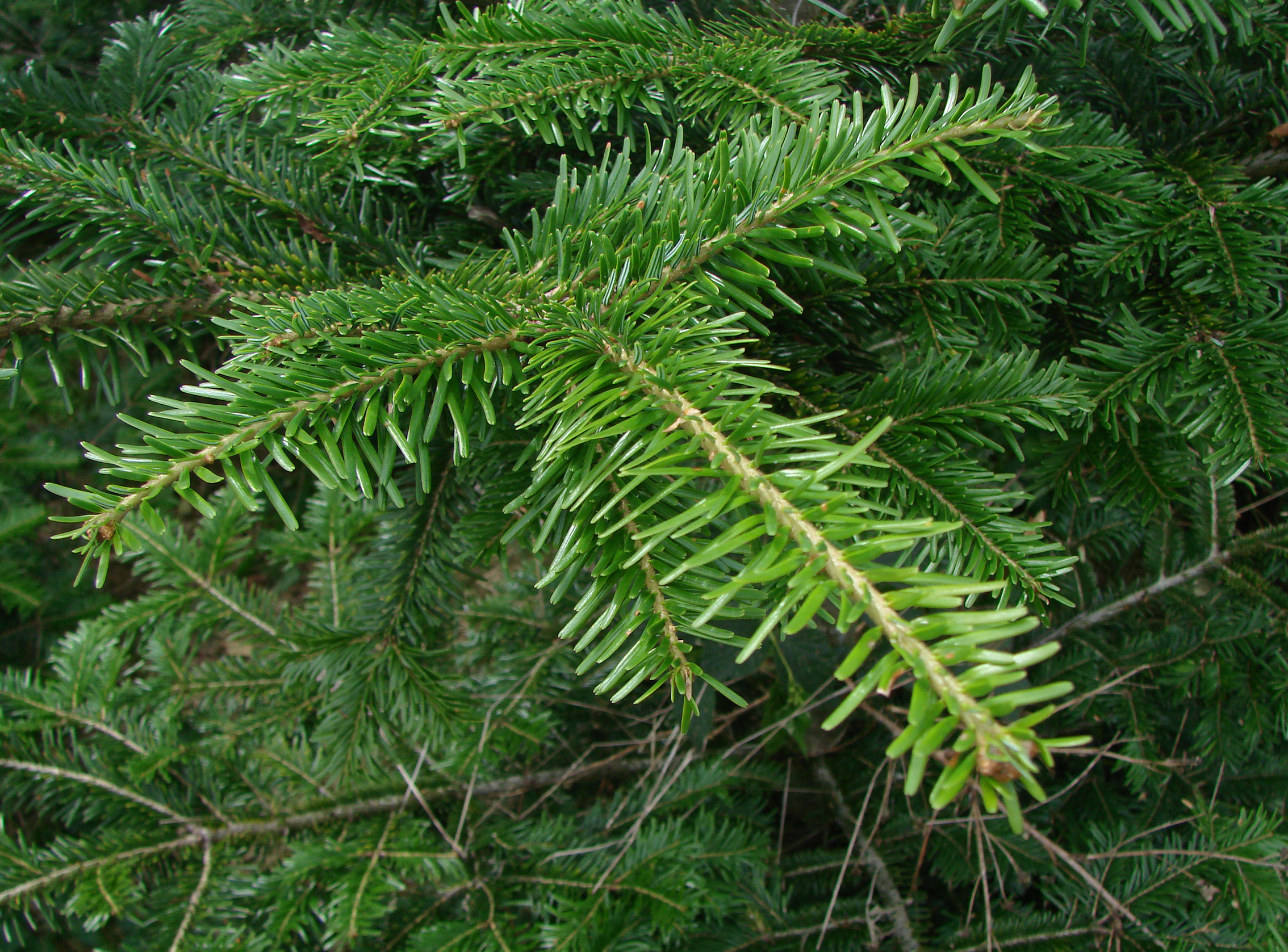
Habit: A large tree, typically 40–50 m tall, with a straight cylindrical trunk and a dense pyramidal crown whose top flattens into a “stork’s nest” with age. Bark: Pale grey, silvery in young trees, with small resin blisters; in mature specimens it becomes fissured into grooves and dark plates. Branches: Main branches arranged in regular horizontal tiers, secondary ones spiralling along the trunk. Buds: Small, conical, glossy brown, never resinous. Leaves: Flattened, rigid needles borne singly on the twigs in a comb-like arrangement, with two silvery waxy bands containing 6–8 rows of stomata. Reproductive structures: Grouped in cones. Male cones are small, numerous, yellowish and ovoid, located in the central and upper crown; female cones are erect, cylindrical-ovoid, green to reddish-purple, borne at the top of the crown. At maturity, the female cones become woody and disintegrate, releasing winged seeds. Flowering: March–May.
Distribution and habitat
Chorological type: South-European orophyte. Distribution in Italy: Present throughout the Alpine arc, with greatest abundance in the southern sectors. In the Apennines it survives in more or less extensive but discontinuous relict stands. Habitat: A montane species typical of cool, moist forests between 400 and 1800 m above sea level. Frequent in pure silver fir woods or in mixed forests with beech and Norway spruce.
Etymology
Generic name (Abies): From the Greek abios, meaning “long-lived”. Specific name (alba): From Latin, meaning “white”, referring to the pale colour of its bark in comparison with Norway spruce, or to the silvery reflections of the crown seen from below due to the stomatal bands on the needles.
Uses and properties
Silver fir yields a light, flexible and highly elastic wood, widely used in carpentry as construction timber because it is often knot-free, although it is considered less durable than Norway spruce. It is also employed in the production of plywood and cellulose materials, while as fuel it is regarded as a “cold” wood due to its lack of resin. Medicinal products obtained from it include turpentine from the bark, used as a balsamic remedy, and an essential oil from the buds used in cosmetics. In addition, bees produce a prized honeydew honey from it, notable for its intense flavour.
Curiosities
It symbolizes strength, purity and eternal life. For the Druids it represented the tree of clairvoyance and far-sighted wisdom, capable of connecting earth and sky. It later became the first Christmas tree of Central Europe, an emblem of rebirth and hope in winter.