The Purple Sphere of Dry Slopes
Characteristics
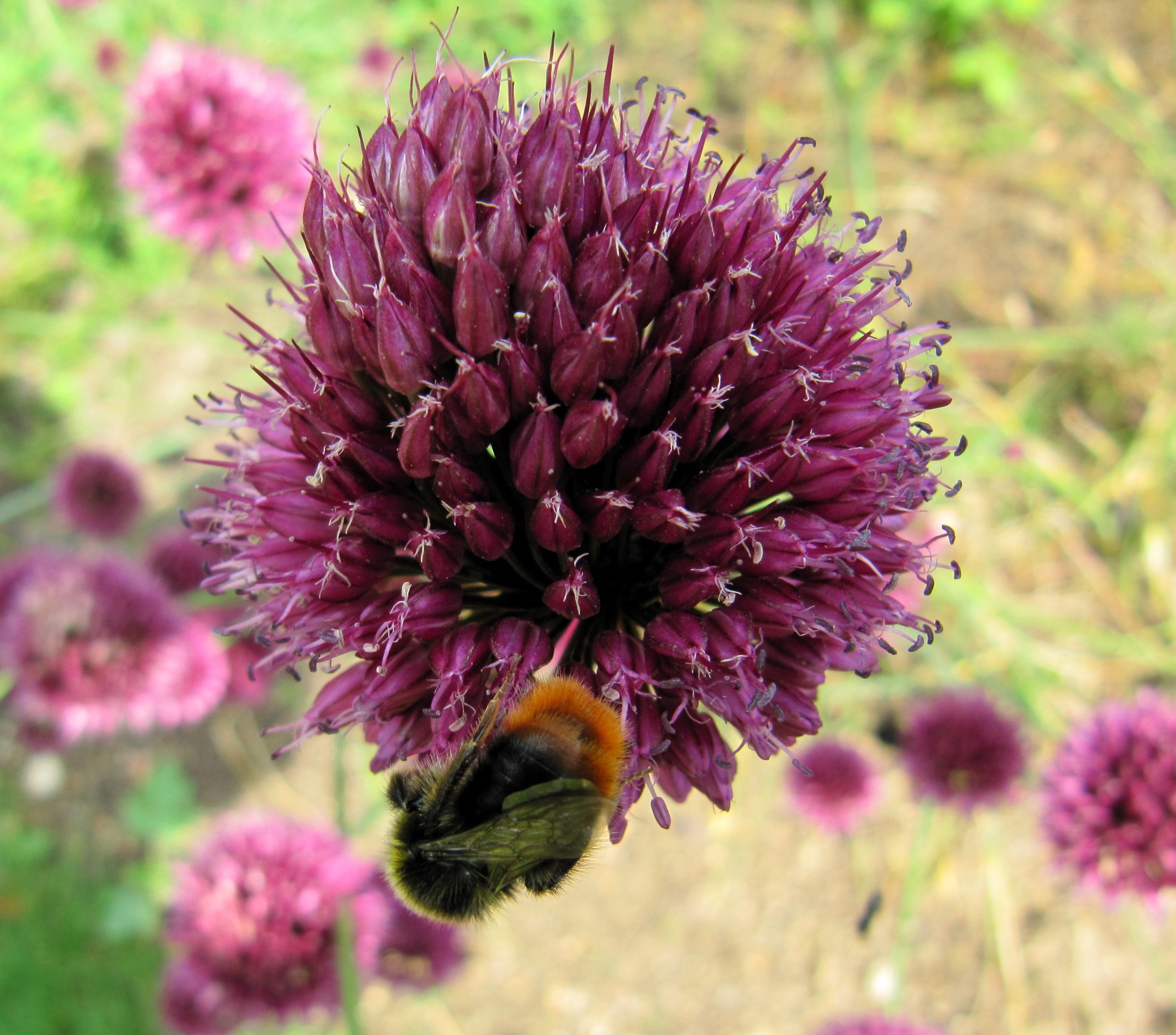
Habit: A highly polymorphic perennial herb, 30–120 cm tall. Stem: Erect, cylindrical and solid, arising from an ovoid bulb often surrounded by bulbils and enclosed in a pale yellow tunic. Leaves: 2–6 in number, sessile and stem-clasping, concentrated in the lower half of the scape; pointed, more or less cylindrical or deeply grooved. Flowers: Arranged in a simple, spherical to subglobose-oblong and very dense umbel, with a campanulate perianth and blunt pink to dark purple tepals; six erect, exserted stamens, the inner filaments bearing two long pointed appendages. Fruits: Small capsules containing triangular seeds. Flowering: May–August.
Distribution and habitat
Chorological type: Palaeotemperate. Distribution in Italy: Present in all Italian regions, common in the Peninsula and on the Islands, but rare in the North. Habitat: Rocky slopes, dry soils, wasteland and vineyards, from sea level up to 1900 m above sea level.
Etymology
Generic name (Allium): Etymology uncertain, perhaps linked to the idea of a wing or division, referring to the bulb split into cloves. Specific name (sphaerocephalon): Refers to the spherical shape of the inflorescence, from sphaera, “sphere”, and kephale, “head”.
Uses and properties
This edible medicinal species shares with other members of the genus Allium many healing virtues recognized by tradition. It has been credited in particular with properties useful in lowering blood pressure, counteracting hypercholesterolaemia and helping to prevent the formation of atherosclerotic plaques. Beyond these therapeutic uses, the plant is now mainly appreciated as an ornamental in gardens, thanks to its highly decorative globose inflorescences and its hardiness.