The White Tree with Hanging Rays
Characteristics
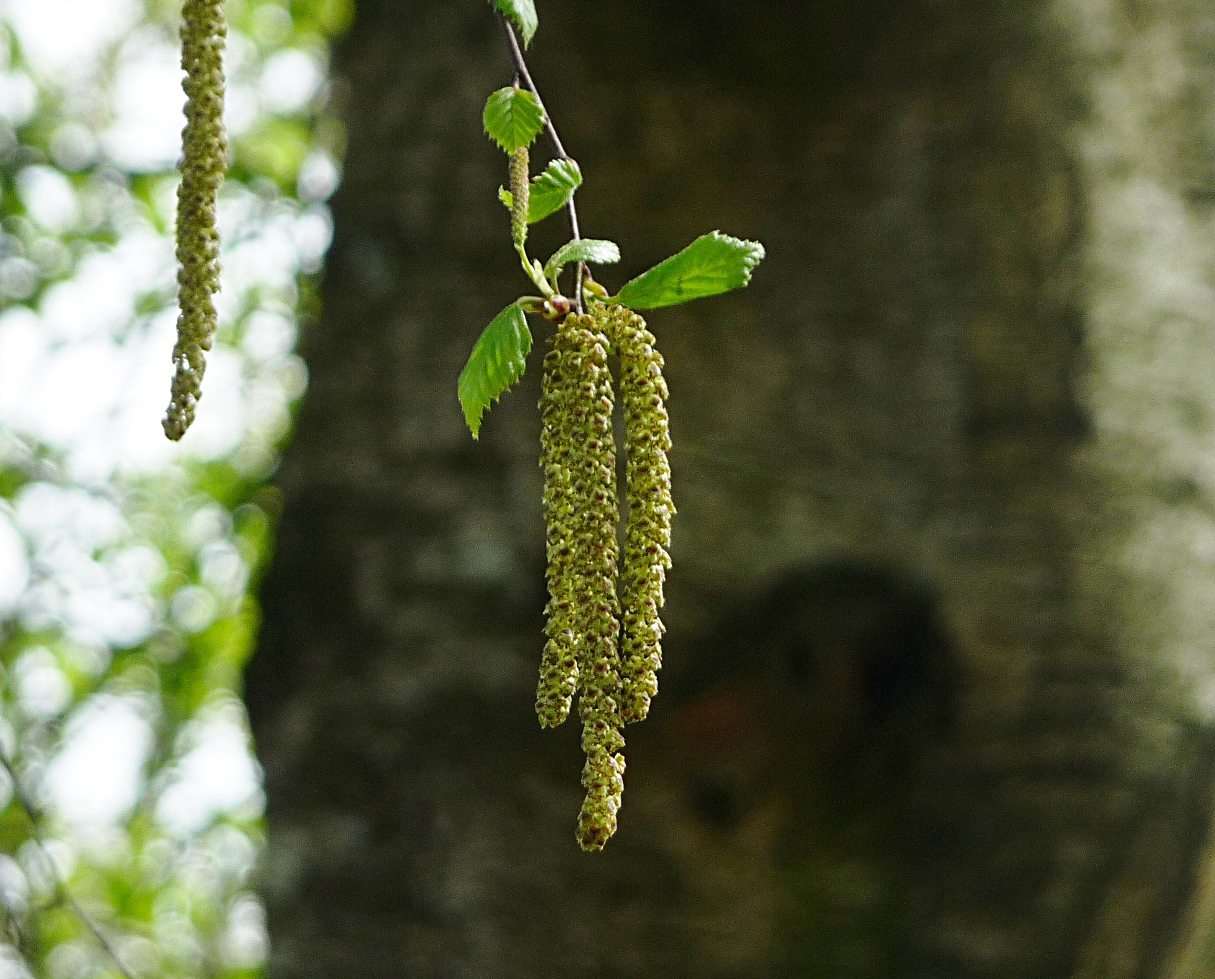
Habit: Slender tree up to 25–30 m tall, with a light, open crown. Bark: Thin, initially golden-brown, then papery white, peeling in silvery strips and developing deep blackish fissures at the base of the trunk. Branches: Primary branches ascending; young twigs slender, pendulous, glabrous and dotted with glandular-resinous warts. Leaves: Deciduous and alternate, triangular to rhomboid, with an acute apex and cuneate base; margin doubly toothed. Colour changes from deep summer green to bright golden yellow in autumn. Flowers: Monoecious species with separate sexes on the same plant; male flowers form pendulous yellowish catkins 3–10 cm long, while female flowers are initially erect, green with red stigmas, and become pendulous after pollination. Fruits: Small compressed, ovoid achenes with lateral wings for wind dispersal, enclosed in hanging catkins. Flowering: March–June.
Distribution and habitat
Chorological type: Eurosiberian. Distribution in Italy: Present throughout mainland Italy, absent from Umbria, Puglia and Calabria, and more frequent in the Alps than in the Apennines. Habitat: A heliophilous and hygrophilous species that colonises open montane woods and sometimes forms pure birch woods between 400 and 2000 m above sea level.
Etymology
Generic name (Betula): From the Gallic term betw or bettiu, whose original meaning remains uncertain. Specific name (pendula): Refers to the characteristic drooping habit of the secondary branches, which gives the crown its weeping appearance.
Uses and properties
This medicinal species is rich in flavonoids, betulin, tannins and vitamin C. In phytotherapy it is chiefly used for its strong diuretic action in the treatment of water retention, cystitis and stones, and it also has anti-inflammatory and sudorific properties useful against rheumatism and gout. Externally, birch tar oil is effective against psoriasis and eczema, while the tincture is used to counter hair loss. A fermentable sap is extracted from the trunk for alcoholic drinks or syrups. The white, elastic wood is used for furniture and paper, while charcoal is an excellent intestinal absorbent. An oil obtained from the bark is also used in the tanning of “Russia leather”.
Curiosities
The Romans adopted from northern peoples the idea of birch as a symbol of purification, including its rods in the fasces to represent the moral regeneration of the condemned. In folk practice, the flexibility of its branches made it the preferred material for broom-making and, in Anglo-Saxon countries, for the manufacture of rods used in corporal punishment in schools and prisons.