The Architect of Marshlands
Characteristics
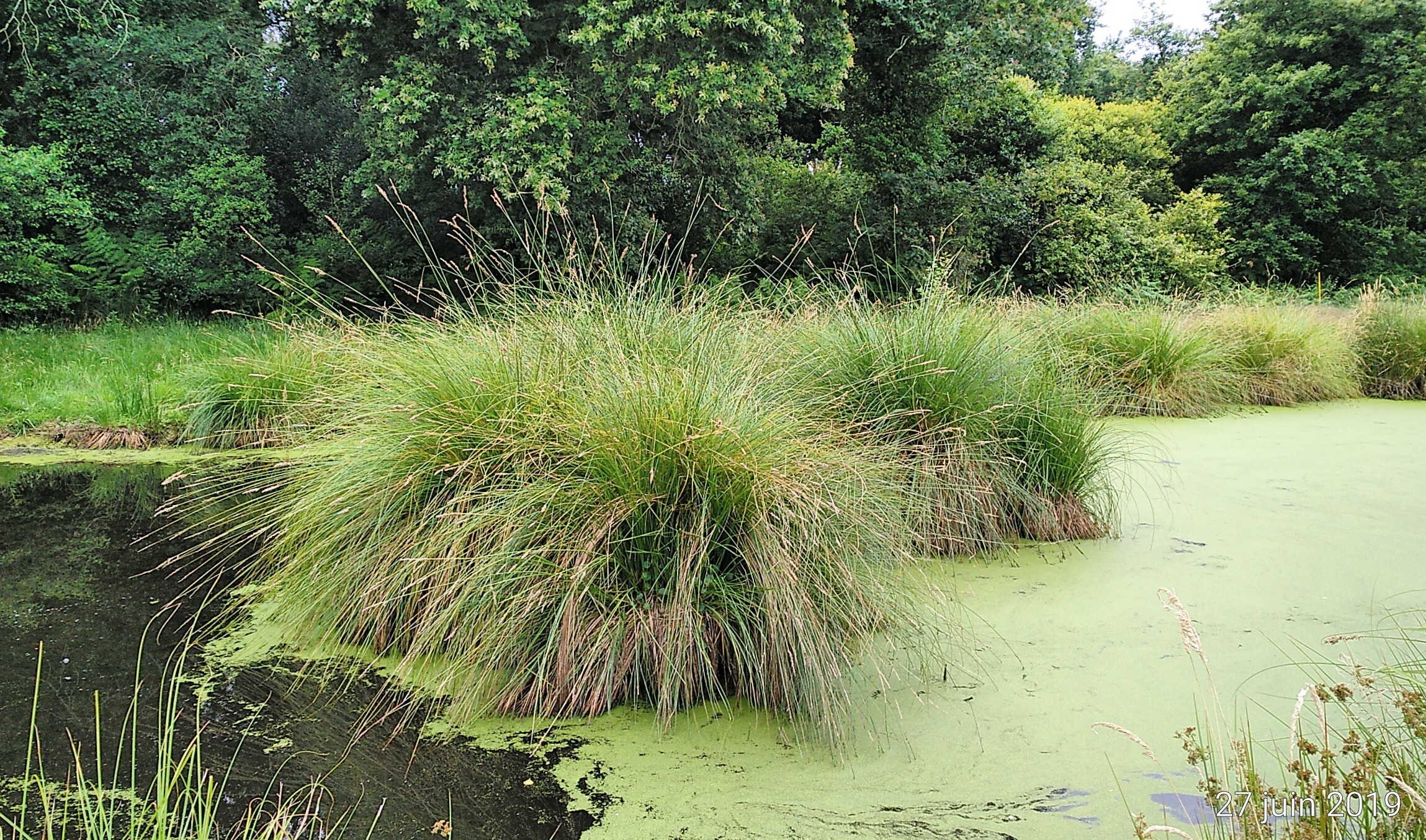
Habit: Robust perennial herb, usually 40–100 cm tall, occasionally up to 150 cm. Stems: Sharply triangular, rough in the upper part and often bent under the weight of the inflorescence; the base is protected by brownish scale-like sheaths. Leaves: Flat or channelled blades, 3–7 mm wide, rigid, with markedly scabrous and cutting margins. Ligule obtuse or truncate, 2–5 mm long. Flowers: Arranged in a large, much-branched panicle 5–15 cm long, composed of numerous androgynous spikes, male above and female below. Glumes ovate, brown, with a conspicuous membranous margin. Fruits: Pear-shaped utricles, plano-convex and glossy, tapering into a bifid beak, enclosing biconvex achenes protected by the sac-like utricle. Flowering: May–July.
Distribution and habitat
Chorological type: European-Caucasian. Distribution in Italy: Present across much of the Italian territory. Habitat: A markedly hygrophilous species that colonises permanently wet areas such as marshes, springs, wet thickets and the margins of water bodies, from lowland areas to 1500 m above sea level.
Etymology
Generic name (Carex): From the classical Latin name carex. It is thought to derive from the Greek keiro, “I cut”, because the leaf edges, being rich in silica, can cause small cuts on the skin. Specific name (paniculata): From the Latin panicula, “panicle”, a term that perfectly describes the branched inflorescence distinguishing this sedge from species with a simple spike.
Uses and properties
[blank]
Curiosities
Unlike many other Carex species, which bear linear or racemose inflorescences, greater tussock sedge is easily recognized by its broad panicle, which gives it a superficial resemblance to certain grasses. However, the triangular stem and the structure of the female flower, enclosed in the utricle, confirm its belonging to the Cyperaceae. In wetland ecosystems, this plant plays an important role in bank stabilization and provides shelter and nesting sites for marsh birds.