The Red Spur of Ancient Walls
Characteristics
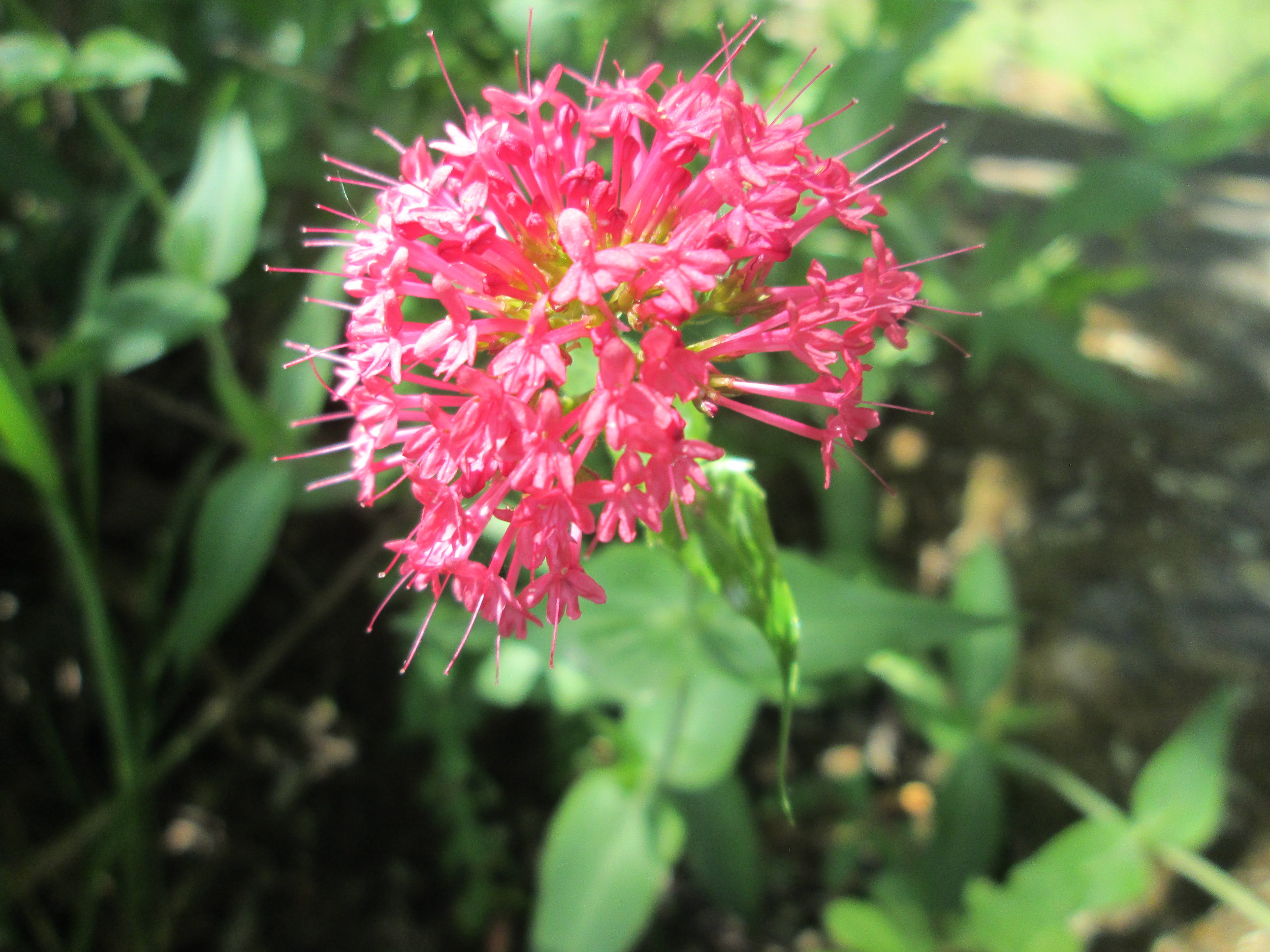
Habit: Perennial shrub 30–70 cm tall, glabrous and glaucous. Stems: Erect or ascending, arising from a woody rhizome at the base. Leaves: Opposite, smooth, bluish-green; lower leaves shortly petiolate, upper ones sessile and stem-clasping. Shape varying from ovate to lanceolate. Flowers: Arranged in dense corymbs, zygomorphic and fragrant. The sympetalous corolla, pink-violet to red, bears a characteristic linear spur at the base, 2–3 times as long as the ovary. It has a single stamen. Fruits: Achenes surmounted by a persistent feathery pappus aiding wind dispersal. Flowering: April–August.
Distribution and habitat
Chorological type: Steno-Mediterranean. Distribution in Italy: Common in all regions, with greater abundance in central and southern Italy and on the islands. Habitat: A pioneer species colonising old walls, limestone cliffs, rocky ground and roadsides, from sea level up to 1300 m above sea level.
Etymology
Generic name (Centranthus): Composed of the Greek terms kentron, “spur”, and anthos, “flower”, in reference to the peculiar morphology of the corolla. Specific name (ruber): A Latin adjective meaning “red”, the typical colour of the inflorescences in the most widespread wild form of the species.
Uses and properties
Red valerian is an edible and medicinal species. The roots, rich in tannins and essential oils, have sedative and antispasmodic properties similar to those of Valeriana officinalis, of which they have historically served as a substitute. In the kitchen, the leaves may be eaten in salads, although their strong smell is not appreciated by everyone. It is also highly valued as an ornamental plant for its hardiness and its ability to decorate walls and rock gardens with prolonged flowering.
Curiosities
In folk tradition, red valerian was credited with protective and magical powers: powdered roots were kept in the house to ward off lightning. It was also regarded as the “plant of peace”, and its leaves were used in domestic rituals or herbal infusions to calm quarrels in love and encourage reconciliation between lovers.