The Helmet of Rural Life
Characteristics
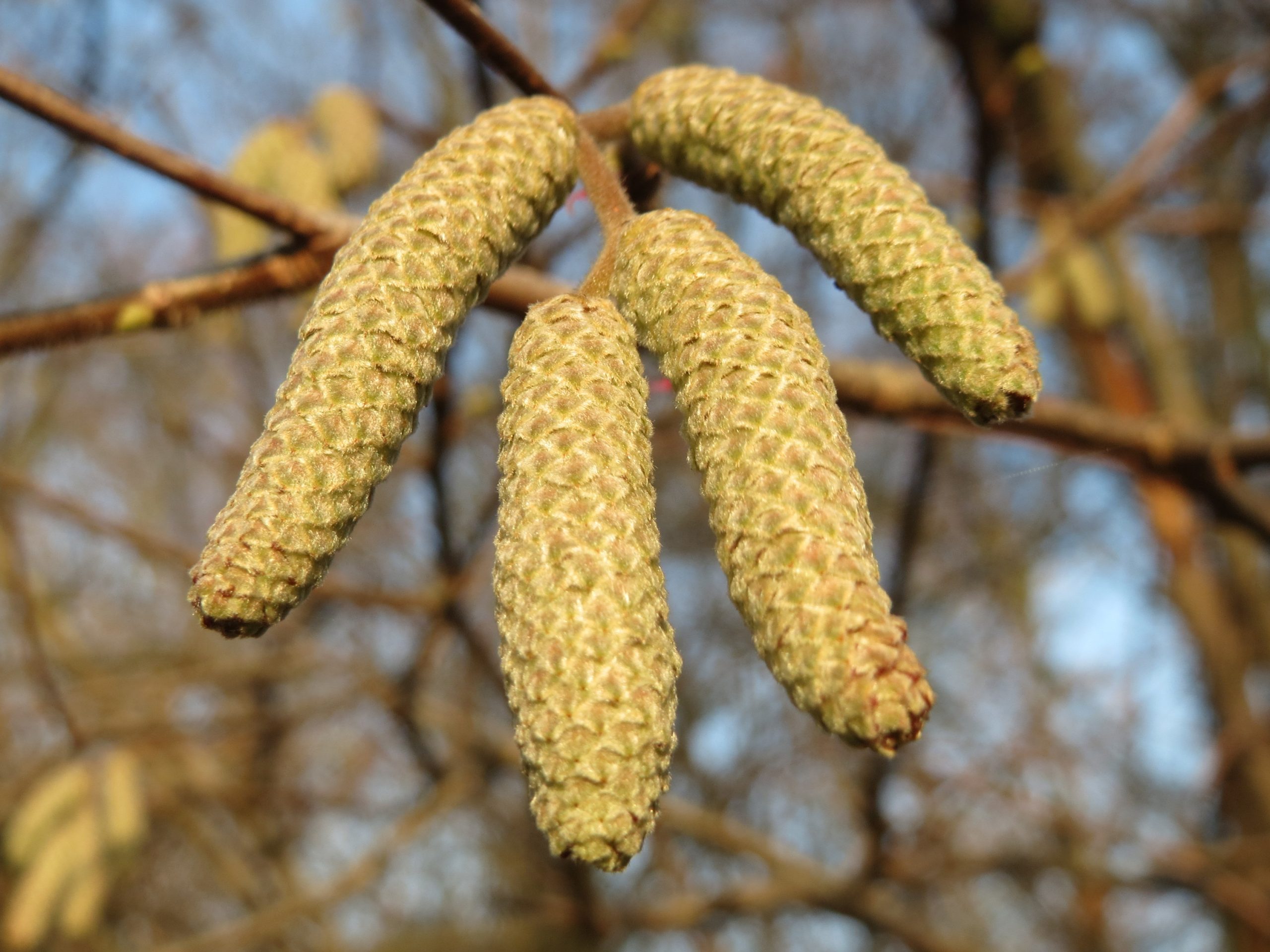
Habit: Shrub 3–4 m tall, occasionally a small tree up to 10 m, with a dense crown. Branches: Young twigs ochre-coloured and villous because of glandular hairs. Bark: Dark brown, glossy and rich in lenticels. Leaves: Alternate, rounded, with an acute apex and cordate base, doubly toothed margin and evident pinnate venation; upper surface deep green and rough, lower surface paler and pubescent. Flowers: Monoecious, with separate sexes. Male flowers are pendulous yellowish catkins releasing wind-borne pollen; female ones resemble buds and are recognizable only by their small tuft of bright red stigmas. Fruits: Hazelnuts, large edible achenes enclosed in a woody pericarp and almost entirely surrounded by a fringed or toothed leafy involucre. Flowering: February–March.
Distribution and habitat
Chorological type: European-Caucasian. Distribution in Italy: Present throughout the Italian territory. Habitat: A pioneer and adaptable species that colonises uncultivated soils, abandoned pastures and the understorey of broadleaved or coniferous woods, from sea level up to 1700 m above sea level.
Etymology
Generic name (Corylus): From the Greek korys, “helmet”, referring to the shape of the leafy husk that protects the fruit. Specific name (avellana): From the Latin nux abellana, “nut of Avella”, in honour of the town of Avella, historically renowned for the abundance of its hazel plantations.
Uses and properties
Hazel is an edible and medicinal species of great importance. The hazelnuts are essential in the confectionery and oil industries for the extraction of valuable oils. In medicine, the bark has febrifuge and wound-healing properties, while the leaves have purifying, vasoconstrictive and anti-haemorrhagic effects. The white-pinkish, very flexible wood is traditionally used to make baskets, handles, poles and charcoal.
Curiosities
Hazel, a symbol of fertility and abundance, is among the oldest cultivated plants, with archaeological remains dating back thousands of years. Its flexible branches were historically favoured by dowsers in the search for underground water sources, combining practical usefulness with an ancient bond to rural traditions.