The Valerian of the Heart and the May Thorn
Characteristics
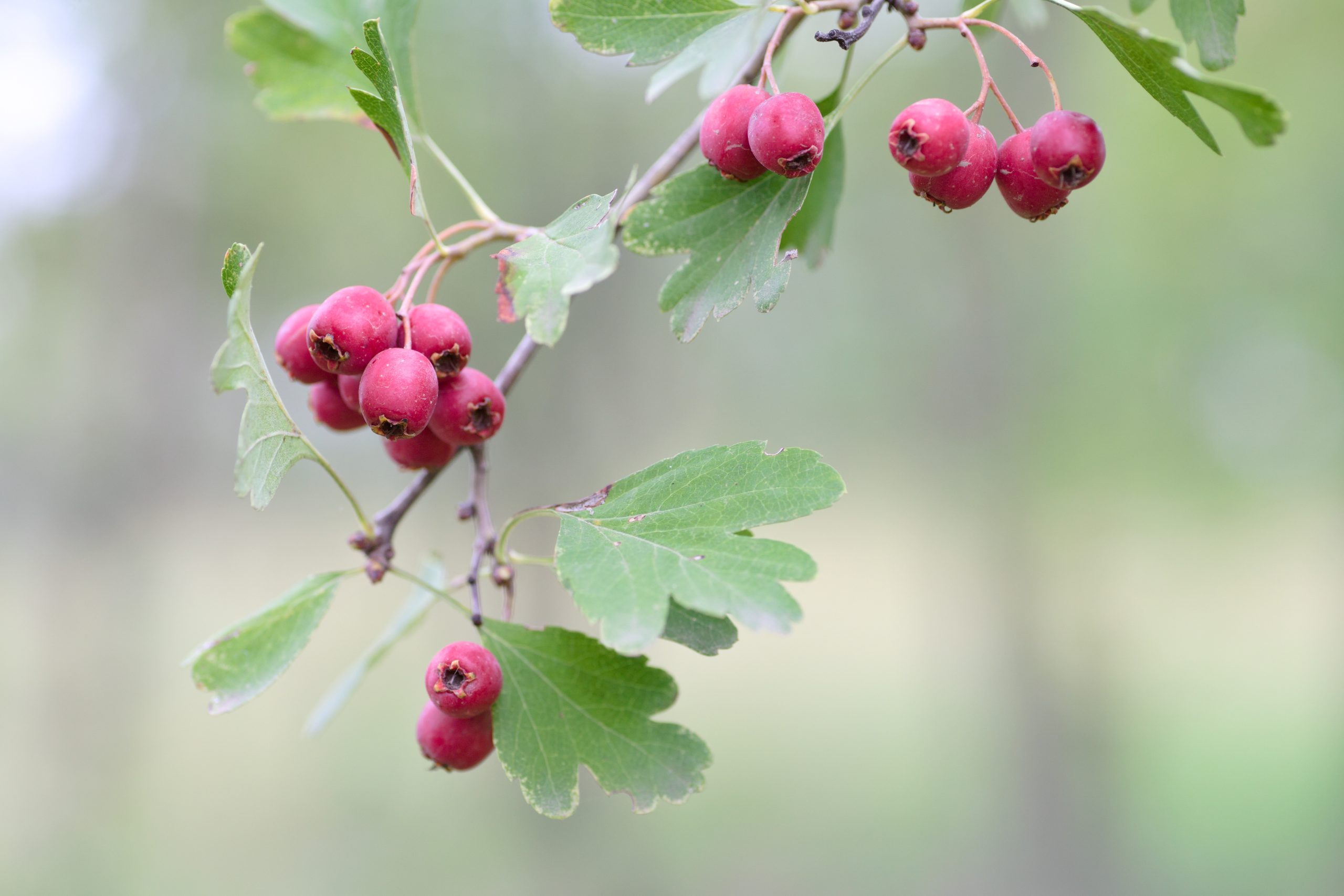
Habit: Shrub 2–5 m tall or small tree up to 12 m with a globose crown. Bark: Light grey and smooth when young, becoming brownish and scaly with age. Branches: Twisted and interwoven, with lateral branches bearing sharp dark thorns up to 2 cm. Leaves: Deciduous, alternate, rhomboid, glossy bright green, deeply lobed (3–7 lobes) with mostly entire margins. Flowers: Arranged in erect corymbs, white or pinkish and strongly scented. Fruits: Red drupes 7–10 mm wide, fleshy, containing a single yellow-brown stone. Flowering: May–June.
Distribution and habitat
Chorological type: Paleotemperate. Distribution in Italy: Present in all regions. Habitat: Adaptable pioneer species in woods, hedges and scrublands, preferring calcareous soils, from sea level to 1600 m.
Etymology
Generic name (Crataegus): From Greek kratos (strength), referring to the hardness of the wood. Specific name (monogyna): From monos (single) and gyne (female), indicating one pistil.
Uses and properties
Antico simbolo di speranza e fertilità per Greci e Romani, il biancospino assunse tinte ambivalenti con il Cristianesimo, che lo indicò come possibile componente della corona di spine di Cristo. Il suo odore, talvolta sgradevole a causa delle ammine, attira specifici insetti impollinatori. È inoltre noto per il legame ecologico con il fungo Prugnolo (Calocybe gambosa), che cresce frequentemente tra i suoi cespugli in primavera.