The Acid Fragrance of Cliffs
Characteristics
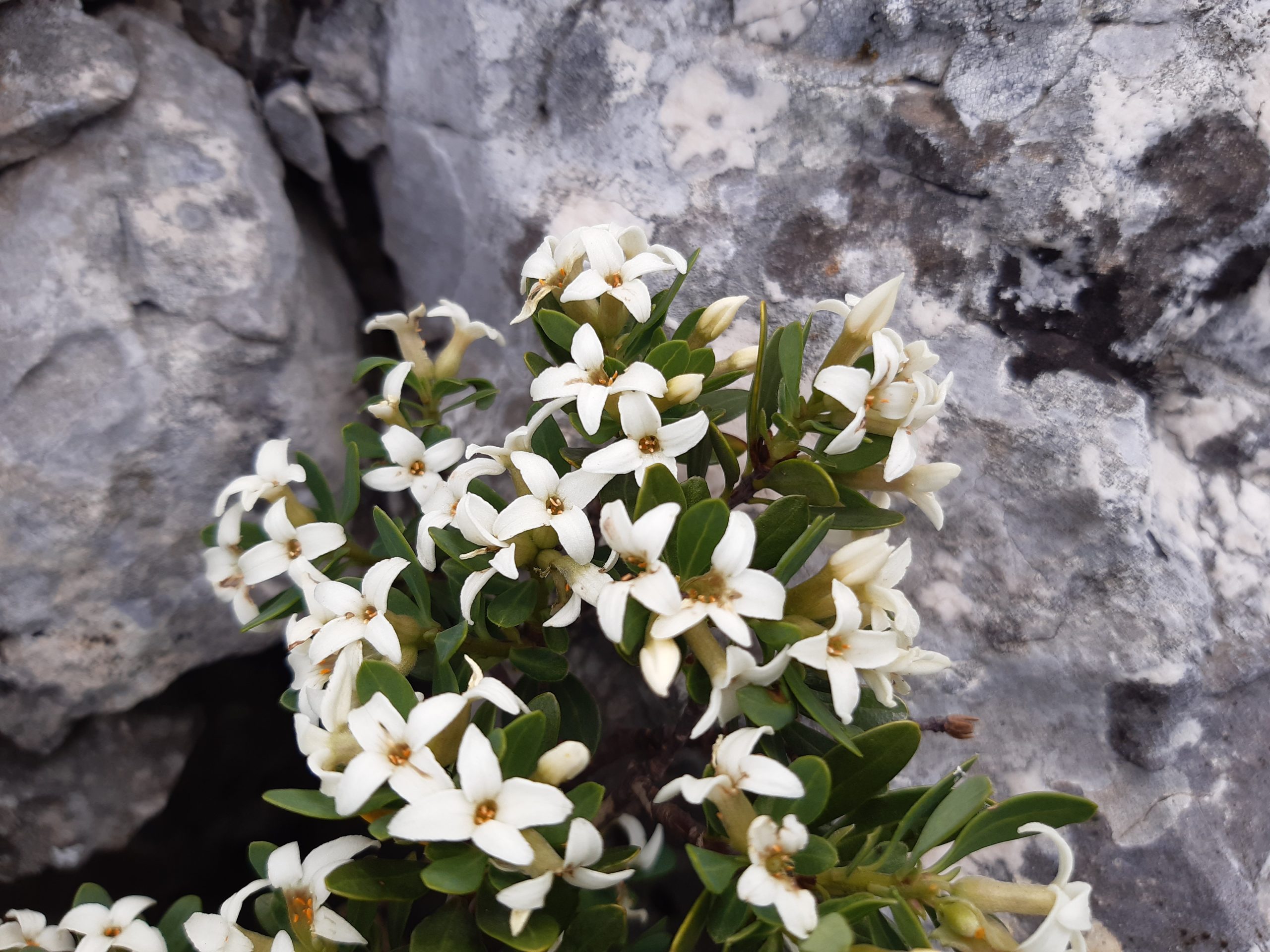
Habit: Highly branched suffrutescent plant 30–60 cm tall, dense and compact. Branches greyish and glabrous, with visible leaf scars. Leaves evergreen, leathery, obovate or spatulate, clustered at branch tips, glossy above and with prominent veins beneath. Flowers: Terminal clusters of 2–4 white or cream flowers with a characteristic slightly acrid fragrance. Fruits: Spherical fleshy drupes, red to orange at maturity. Flowering: May–July.
Distribution and habitat
Chorological type: Eurasian. Distribution in Italy: Present in all peninsular regions except Puglia. Habitat: Rocky slopes and limestone screes, between 300 and 1700 m.
Etymology
Generic name (Daphne): From Greek daphne (laurel). Specific name (oleoides): Either referring to scent or resemblance to olive leaves.
Uses and properties
Highly toxic plant; formerly used in folk remedies but now considered unsafe.