The Flea-Repelling Mint
Characteristics
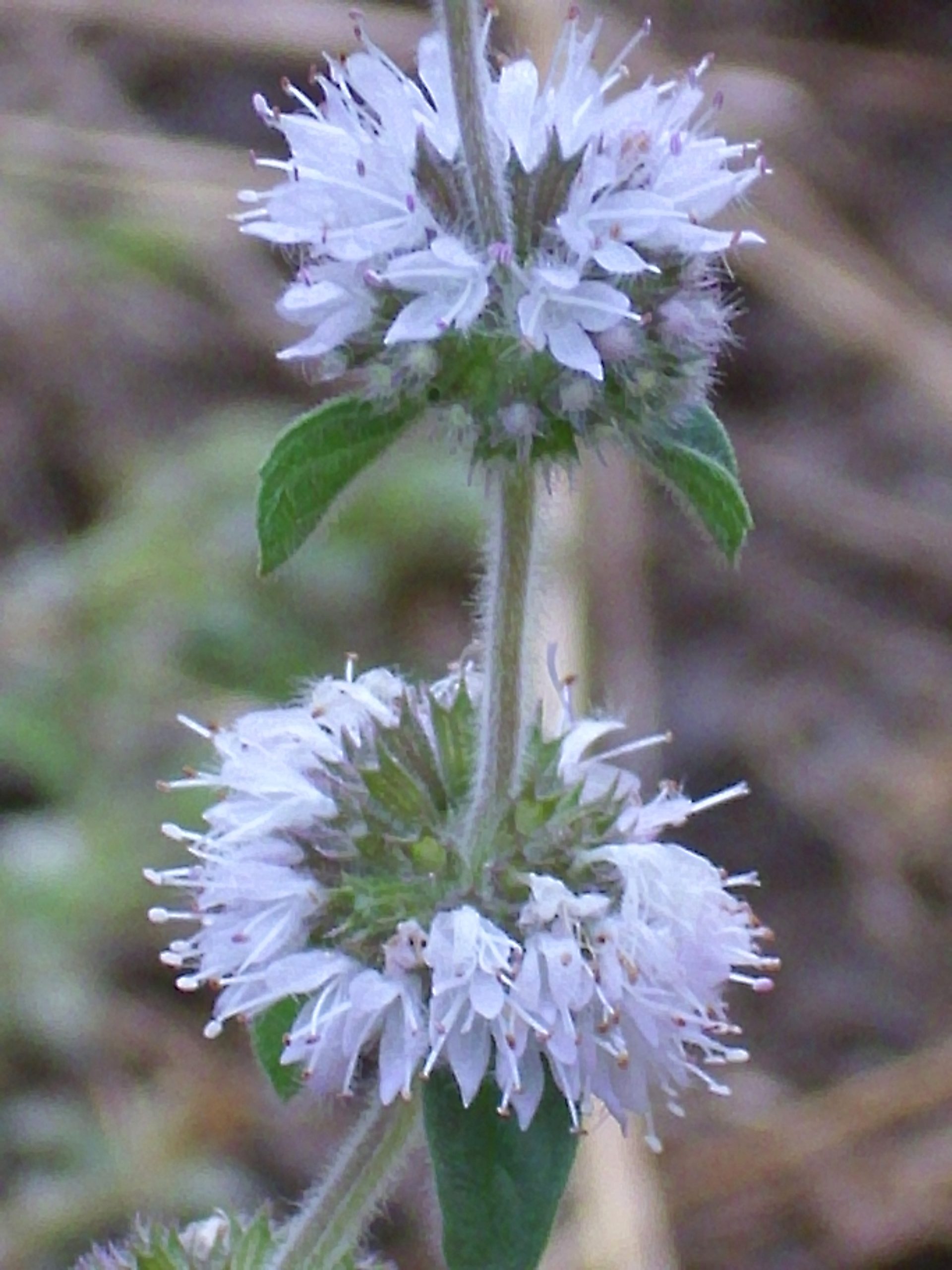
Habit: Perennial herbaceous plant, 15–60 cm tall. Stems: Ascending, with the typical quadrangular section of the Lamiaceae. They are sometimes woody at the base and are distinguished by internodes generally longer than the leaves, giving the plant a slender appearance. Leaves: Small, velvety, and shortly petiolate. They are oval or oblong, with an obtuse or subacute apex; the margins are entire or sparsely toothed. A characteristic feature is their tendency to be curved and folded like a trough along the midrib. Flowers: Gathered in an inflorescence composed of numerous hermaphroditic flowers arranged in globose verticillasters (10–30 flowers each), clearly spaced along the stem in the axils of bracteal leaves. The calyx is tubular, often purplish and hirsute, with 5 unequal teeth that make it bilabiate; inside the calyx tube there is a characteristic ring of hairs. The corolla is pinkish-lilac with 4 almost equal lobes. Fruits: A tetrachenium formed by 4 ellipsoid, wrinkled, light-brown nutlets protected by the persistent calyx. Flowering: April–September.
Distribution and habitat
Chorological type: Subcosmopolitan. Distribution in Italy: Common and widespread throughout all regions of the national territory. Habitat: Frequently found along ditch and roadside margins, in riverbeds, temporary ponds, and damp grassy places, from sea level up to 1200 m a.s.l.
Etymology
Generic name (Mentha): Of Greek origin (míntha), the name is linked to classical mythology. The nymph Minthe, beloved by Hades, was transformed into this fragrant plant by Persephone, jealous of their relationship, so that she might be trodden underfoot by all. Specific name (pulegium): From the Latin pulex (flea). The term recalls the traditional use of the plant as a natural repellent: burned or scattered indoors, it served to drive away fleas and other household parasites.
Uses and properties
Pennyroyal is a highly valued officinal and edible species, although it must be used with caution. Its essential oil is rich in pulegone, a substance that gives the plant tonic, digestive, carminative, and antispasmodic properties. In folk medicine it has been used to soothe coughs and regulate the menstrual cycle. However, ingestion in large quantities is toxic precisely because of its high pulegone content, which may be hepatotoxic. For external use, it has antiseptic and antipruritic properties. In cooking, the fresh or dried leaves are used to flavour vegetables, salads, and regional traditional dishes. Like all mints, it is an excellent melliferous plant, much visited by bees for the production of aromatic honeys.