The Velvety Mint
Characteristics
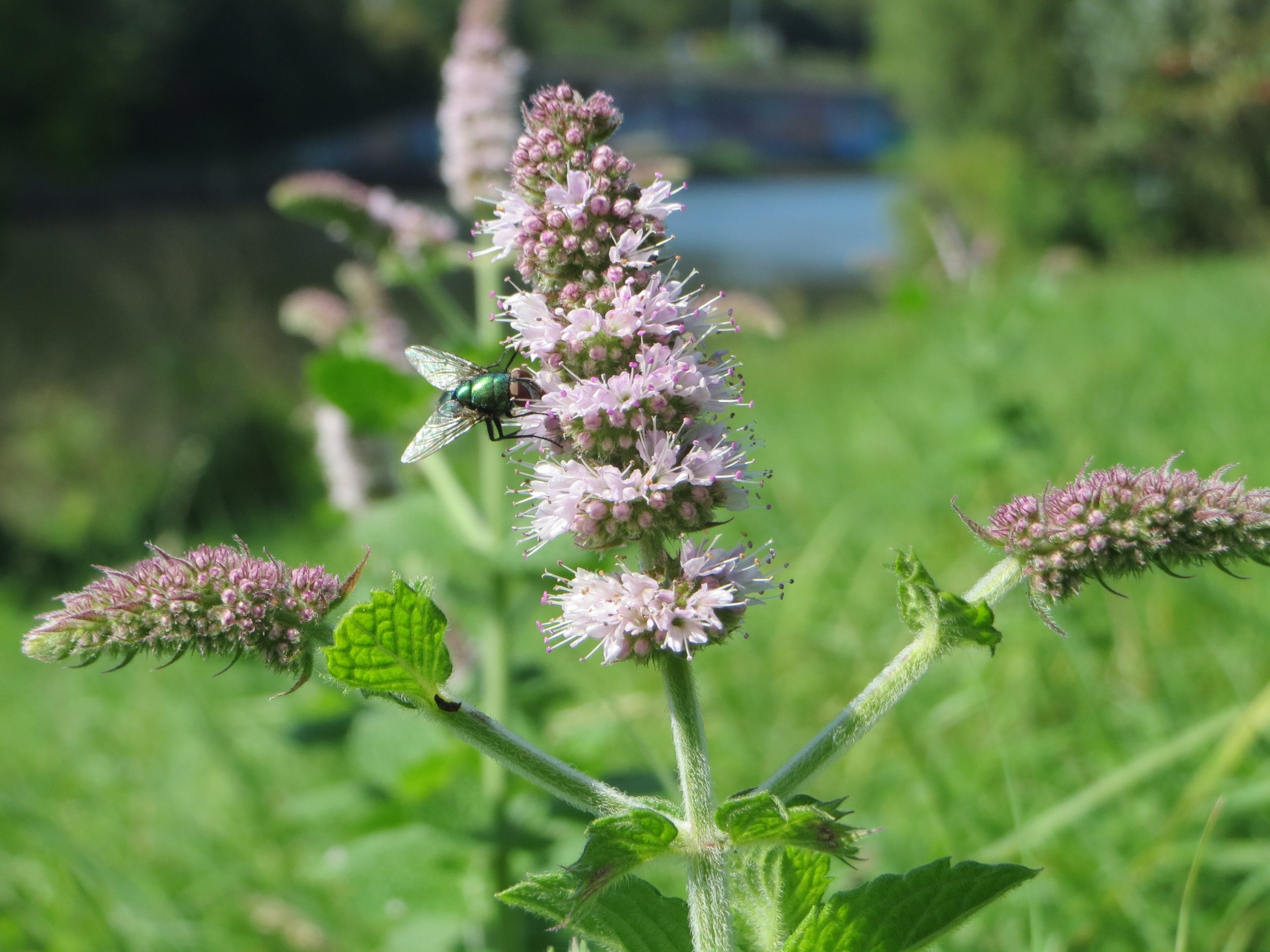
Habit: Perennial herbaceous plant that can reach 90 cm in height. Stems: Erect or ascending, markedly quadrangular, branched, and covered with variable hairiness that gives the plant a greyish appearance. Leaves: Opposite, sessile, and characteristically shaped: oblong, obovate, or sometimes almost orbicular, with a rounded apex. The blade is 2–4 cm wide and less than twice as long as wide. Its texture is wrinkled and velvety to the touch; the upper surface is grey-green, while the lower one is densely tomentose because of white cottony hairs. The margin is toothed or crenate-dentate. Flowers: Gathered in an inflorescence composed of dense, closely packed verticillasters forming terminal conical or cylindrical spikes. The flowers are hermaphroditic, fragrant, and borne on very short peduncles. The calyx is conical, grey-tomentose, and persistent, with 5 ciliate triangular teeth. The corolla is small (3–4 mm), divided into 4 whitish-pink lobes. Fruits: A schizocarpic microbasarium that at maturity splits into 4 one-seeded nutlets. Flowering: April–October.
Distribution and habitat
Chorological type: Eurymediterranean. Distribution in Italy: Present in almost the whole national territory. Habitat: It frequently grows in damp meadows, uncultivated land, along paths, and near ditches and springs, up to 1500 m a.s.l.
Etymology
Generic name (Mentha): Linked to the nymph Minthê, a figure of Greek mythology who was transformed into a fragrant plant by the goddess Proserpina out of jealousy toward her husband Hades. Specific name (suaveolens): From the Latin suavis (sweet) and olere (to smell). The name means “sweet-smelling,” although in the wild species the fragrance is often very strong and rustic, far from the sweet notes of domestic varieties such as pineapple mint.
Uses and properties
Apple mint is an officinal and edible species rich in active compounds, among which menthol stands out. It has antiseptic, digestive, carminative, and analgesic properties, and is particularly useful for calming coughs and aiding digestion. Historically, Hippocrates attributed aphrodisiac qualities to it, while Pliny recommended it as an effective analgesic. In folk medicine it was used for centuries against colic and halitosis. One curiosity linked to its smell concerns its role as a natural repellent: its pungent aroma is extremely unpleasant to mice, which is why farmers used to scatter its stems in granaries to protect grain stores. In modern times, extracts of this mint are used in the production of liqueurs, confectionery, and cosmetic products.