The Spider Flower of the Rocks
Characteristics
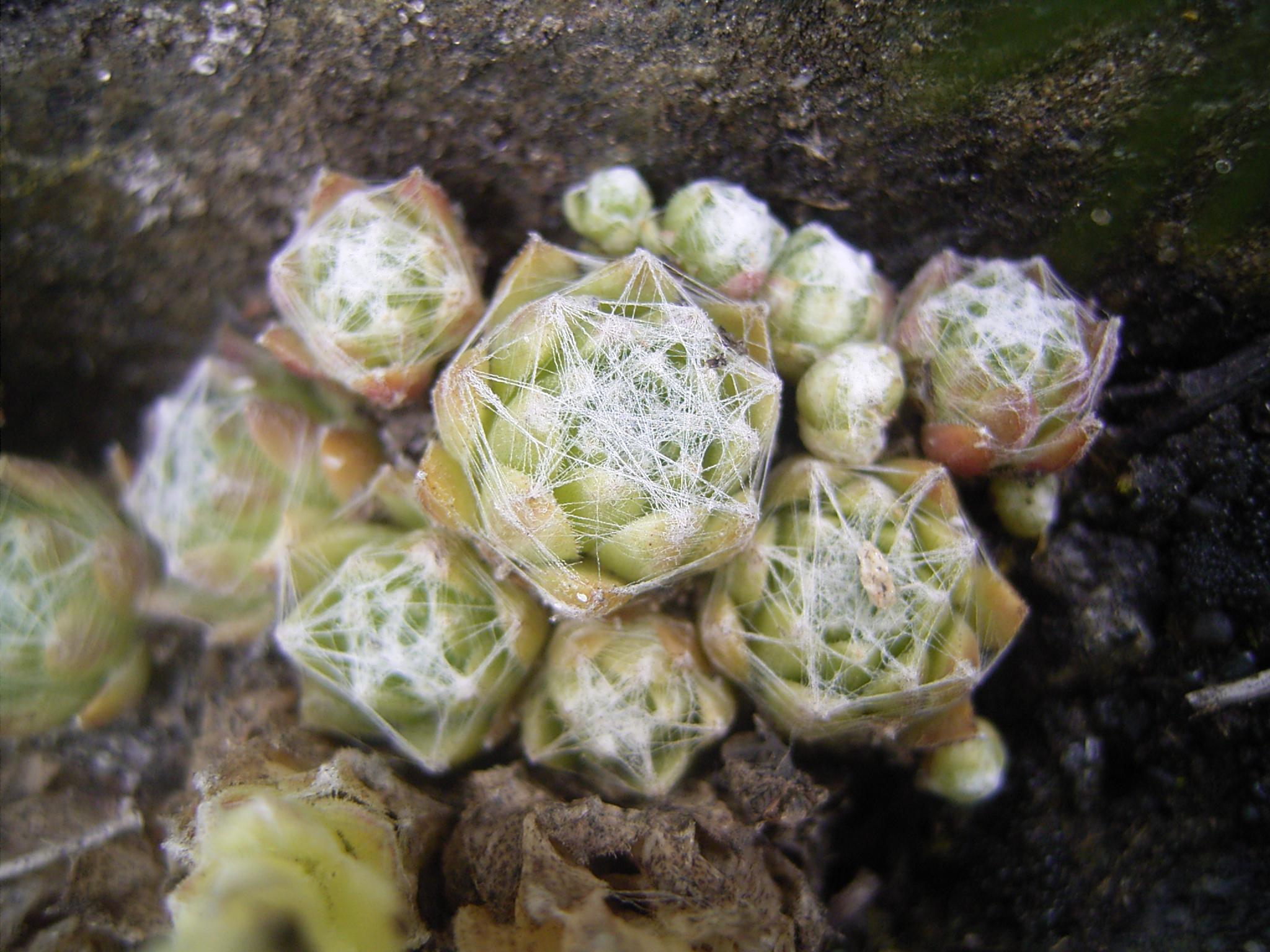
Habit: Perennial succulent plant developing in characteristic basal rosettes. Stems: Creeping, allowing the plant to form dense carpets in rock crevices. Leaves: Fleshy, ovate-lanceolate, and keeled, 7–15 mm long. Their colour is green, often tinged with reddish-violet on the upper part. The entire leaf surface is covered with white, woolly hairs that help retain moisture and reflect excessive high-altitude solar radiation. Flowers: Borne on erect flowering scapes in groups of 3–8. Each flower has 8–10 spreading petals of pinkish-red or violet colour, marked in the centre by a darker longitudinal vein. The flower reaches a maximum diameter of 2 cm. Fruits: Follicles retaining the persistent style, containing small pear-shaped seeds. Flowering: May–August.
Distribution and habitat
Chorological type: Southwestern European orophyte. Distribution in Italy: Common throughout the Alpine arc and in the northern and central Apennines, reaching its southern limit in Molise. Habitat: A specialist of extreme environments. It prefers cliffs, screes, and rock crevices, preferably on siliceous substrates such as granites and schists, though occasionally tolerating limestone, from 500 m to over 3000 m a.s.l.
Etymology
Generic name (Sempervivum): From the Latin semper (always) and vivum (alive), a term that underlines the plant’s extraordinary ability to remain vital in conditions where other species would perish. Specific name (arachnoideum): From the Greek aráchne (spider), referring to the white woolliness that recalls a spider’s web woven among the leaves of the rosette.
Uses and properties
Cobweb houseleek is considered a medicinal species. The fresh leaves, deprived of the epidermal skin or crushed, have soothing, cooling, and healing properties. They are traditionally used to treat calluses, warts, minor burns, and skin inflammations such as chapping. In folk medicine, plant extracts were also used, with caution, to combat general inflammatory states and intestinal disorders. Because of its peculiar aesthetic and ease of care, it is one of the most loved plants for the creation of rock gardens, green roofs, and small stone containers, where it requires very little water and full sun.