The Healing Herb that Mends Bones
Characteristics
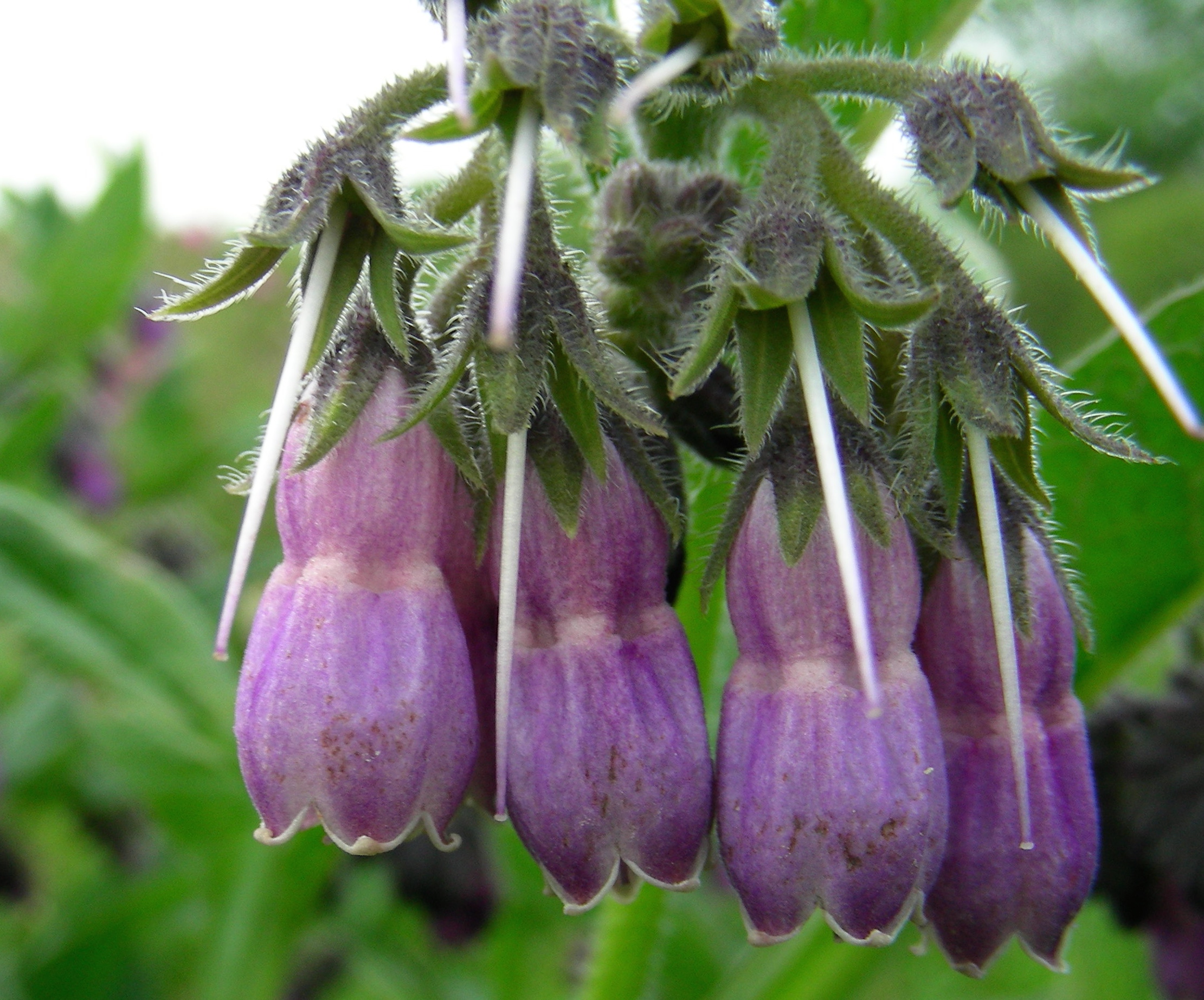
Habit: Robust herbaceous plant, 30–80 cm tall. Stem: Hollow, quadrangular in section, and covered with stiff reflexed hairs. A fundamental diagnostic feature is the presence of wings running along the whole stem, formed by the prolonged bases of the cauline leaves. Leaves: Alternate, oval or lanceolate with an acute apex, bright green on the upper surface and silvery-tomentose beneath, where the veins appear markedly raised. The margin is finely crenate. Flowers: Gathered in scorpioid cymes, inflorescences unrolling like a scorpion’s tail, typical of the Boraginaceae. The flowers are pendulous and the corolla is tubular-campanulate, with colours ranging from pink to violet or whitish-yellow. Inside the throat of the corolla are 5 ciliate-glandular scales protecting the stamens. Fruits: A schizocarp that at maturity divides into 4 ovate nutlets, black, smooth, and glossy. Flowering: April–November.
Distribution and habitat
Chorological type: European-Caucasian. Distribution in Italy: Common in all northern and central regions. Habitat: Found along watercourses, in marshy meadows, ditches, and riparian woods, from sea level up to 1300 m a.s.l.
Etymology
Generic name (Symphytum): From the Greek symphuò, meaning to unite or to weld together, referring to the age-old belief in its ability to mend bones and wounds. Specific name (officinale): Refers to the historical use of the plant in the old medicinal workshops.
Uses and properties
Common comfrey is a medicinal species that embodies a unique biochemical dualism, combining allantoin, which has healing and tissue-regenerating properties, with dangerous pyrrolizidine alkaloids, known for their marked hepatotoxicity. This characteristic now makes dietary or internal use, in the form of infusions and decoctions, strongly discouraged or prohibited, although it remains an excellent resource for external topical use. In this field it acts as a powerful vulnerary, astringent, emollient, and analgesic, making it ideal in the treatment of dry skin, pressure sores, varices, ulcers, and similar conditions. It is also widely employed for the consolidation of bone fractures and wounds, thanks to allantoin’s ability to stimulate cell proliferation. Historically, its rhizome was boiled by Greeks and Romans to create sticky pastes that hardened like primitive casts, or used to extract a natural brown dye.