The Stinging Nurse of the Underwood
Characteristics
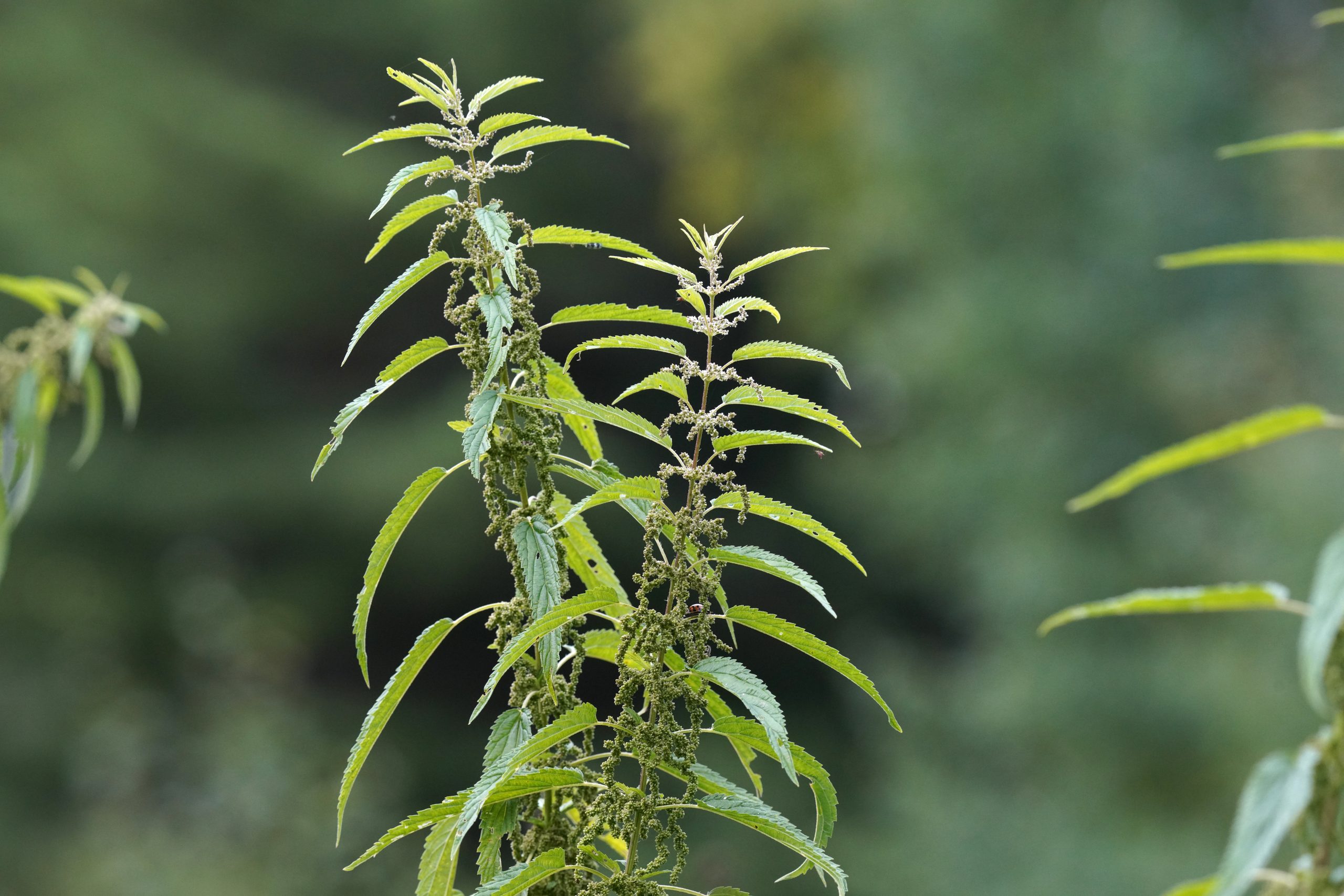
Habit: Stoloniferous perennial herbaceous plant, 30–120 cm tall, with a characteristic deep green colour. Stems: Robust, erect, quadrangular in section, and often tinged red or yellow. Leaves: Opposite, petiolate, and ovate-lanceolate with a cordate base. The margin is conspicuously serrated, with a longer apical tooth. The surface is covered with rigid hairs resembling glass ampoules. Flowers: Gathered in glomerulate racemes in the axils of the leaves; the male flowers are erect or spreading, while the female ones become pendulous after fertilisation. Fruits: A small ovoid achene, protected by persistent tepals. Flowering: April–November.
Distribution and habitat
Chorological type: Subcosmopolitan. Distribution in Italy: Present throughout the Italian territory. Habitat: A nitrophilous species, it loves soils rich in nitrates, nitrogen, and phosphorus. It grows near houses, stables, shady woods, and uncultivated land, from the lowlands up to 2300 m a.s.l.
Etymology
Generic name (Urtica): From the Latin urere, to burn, referring to the sensation caused by contact. Specific name (dioica): From the Greek dis, two, and oikia, house, indicating that the sexes live on separate plants.
Uses and properties
Common nettle is an extraordinarily complete edible and medicinal species, characterised by a nutritional profile rich in vitamins A, C, and K, formic acid, and mineral salts such as iron and potassium. In therapy it is appreciated for its diuretic, tonic, haemostatic, and hypoglycaemic properties; the use of its root and flowers is today scientifically validated for countering benign prostatic hyperplasia and related urinary disorders. In cosmetics, the leaves are a key ingredient in lotions and shampoos designed to normalise seborrhoeic scalp and combat dandruff. In cooking it is considered an excellent vegetable: once cooked or dried, the plant completely loses its stinging power and lends itself to the preparation of risottos, soups, omelettes, and fillings with a delicate taste and high protein value. Beyond biomedical and alimentary uses, nettle also has an important industrial history for its strong textile fibres, similar to hemp, and a crucial role in organic farming, where its macerate acts as a powerful fertiliser and a natural repellent against aphids.