The Mountain Elixir of Good Health
Characteristics
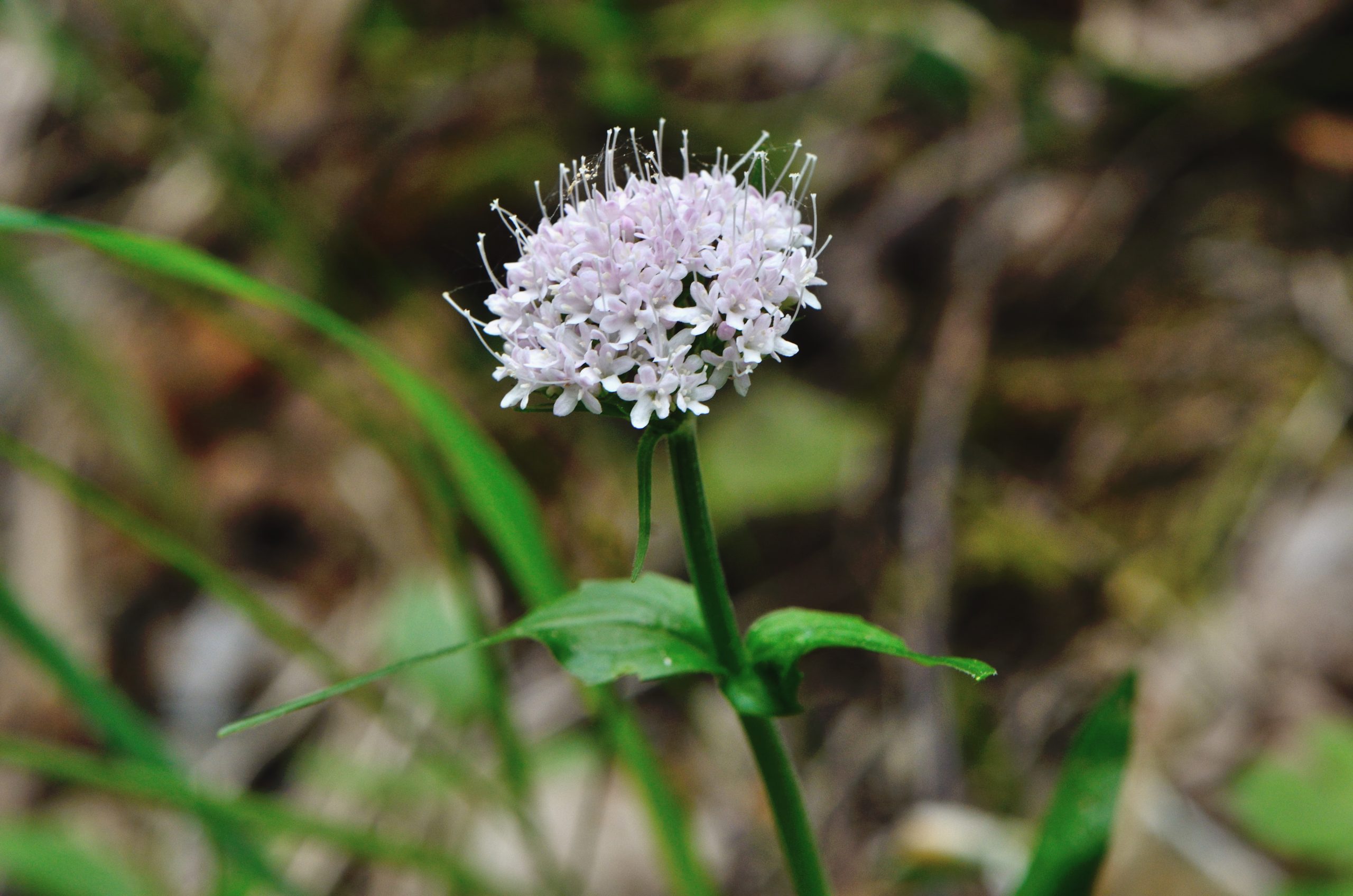
Habit: Perennial plant characterised by a creeping, woody, dark-coloured rhizome from which one or more stems arise. Stem: Cylindrical, striated, with a typical hairiness especially near the nodes and in the apical portion. Leaves: The basal leaves are entire, oval or elliptic-orbicular in shape, borne on a long petiole up to 10 cm. The secondary veins are very marked and form a clearly visible anastomosing network. The cauline leaves are arranged in 3–4 opposite pairs along the stem, sessile and more elongated, ovate-lanceolate. The uppermost leaves are progressively reduced to bracts. Flowers: Gathered in a lax corymb, with the lower branches often very elongated. The corolla is tubular, white-pink or delicate lilac, about 3–5 mm long. Fruits: An oval, glabrous achene 3–4 mm long, surmounted by a feathery pappus that facilitates wind dispersal. Flowering: April–August.
Distribution and habitat
Chorological type: Southern European orophyte. Distribution in Italy: Common throughout the Alpine arc and the Apennine chain. It is absent only in Puglia and Sicily. Habitat: It grows on shaded cliffs, rock debris, screes, and in areas close to mountain springs, from 300 up to 2300 m a.s.l.
Etymology
Generic name (Valeriana): From the Latin valére, to be well or to be strong, in reference to the strengthening and calming properties of the plant. Specific name (montana): Indicates its ecological link with mountain habitats.
Uses and properties
Mountain valerian is a medicinal species sharing much of the phytotherapeutic profile of the better-known common valerian, although it is typically linked to high-altitude rocky environments. The parts used are the rhizomes and roots, which are collected and dried to preserve their active compounds, among them valepotriates and valeric acids. This plant possesses sedative, antineurotic, antispasmodic, and cardiotonic properties, making it particularly effective in the treatment of sleep disorders and anxious states. Historically, thanks to its action on the central nervous system, it has also been used as an antiepileptic support.
Curiosities
The celebrated botanist Mattioli in the sixteenth century was among the first to document the irresistible attraction that cats feel for this plant, due to volatile compounds such as actinidine. Observing the subsequent drowsiness of the felines, folk medicine inferred its powerful hypnotic effects on humans.