The Velvety Anti-Asthmatic Shrub
Characteristics
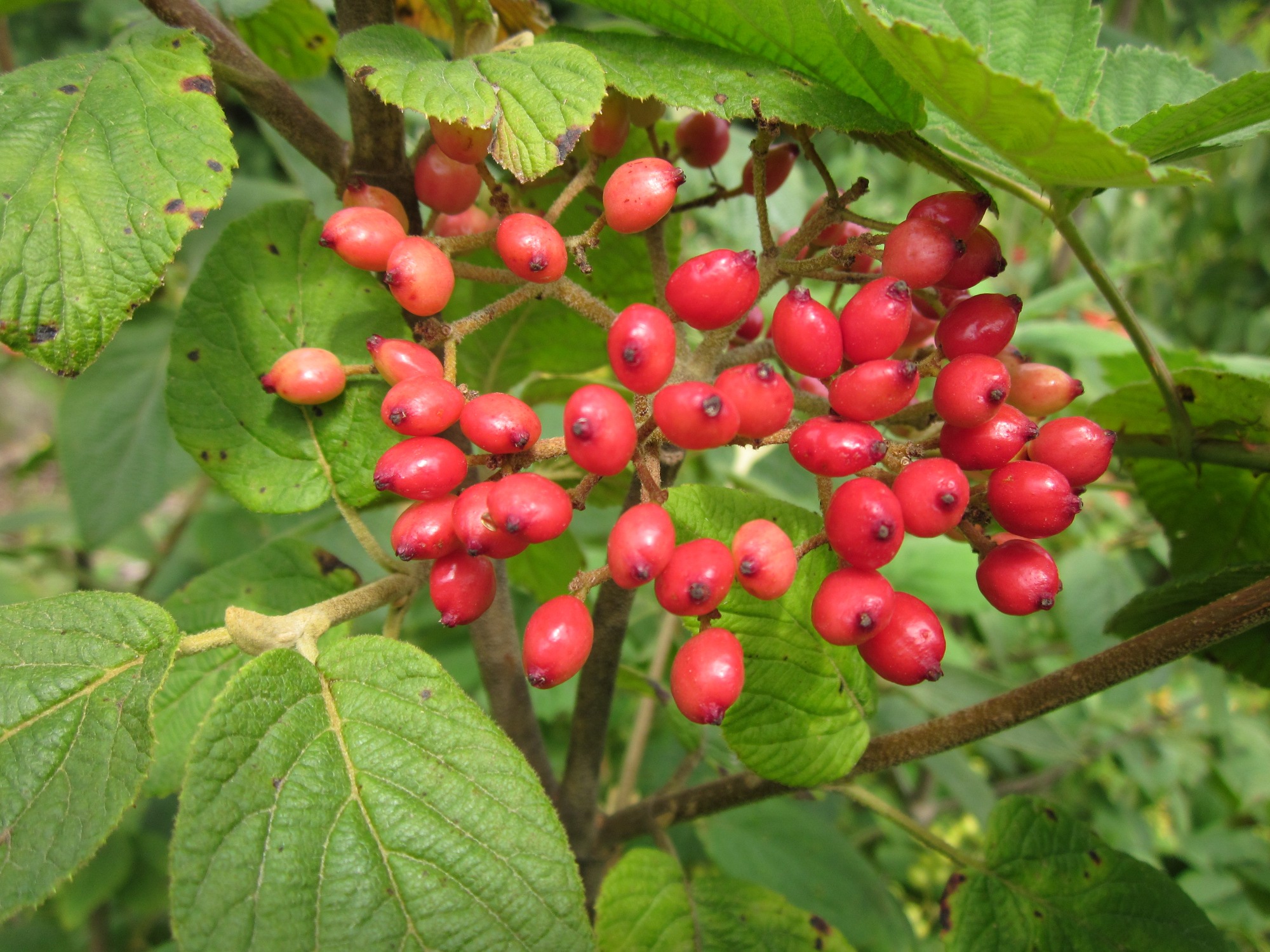
Habit: Much-branched deciduous shrub, 1–5 m tall. Bark: Brownish-pink. Branches: The young branches are greyish, flexible, and covered with dense hairiness that gives them a mealy or furfuraceous appearance. Leaves: Opposite, oval in shape, and shortly petiolate. The upper surface is dark green and wrinkled, while the lower one is grey-green, characterised by dense woolly pubescence and very prominent veins. The margin is finely toothed. Flowers: Gathered in dense terminal corymbs 5–10 cm wide. They are cream-white, hermaphroditic, and fragrant. The corolla is funnel-shaped with 5 oval lobes. Fruits: Oval, flattened drupes. Their maturation is gradual, creating a striking chromatic contrast, changing from green to bright red and finally to glossy black at full maturity. Flowering: March–May.
Distribution and habitat
Chorological type: Southern European. Distribution in Italy: Common in almost the whole peninsula, except Puglia, Basilicata, and Calabria. Habitat: It grows at woodland edges and in open thickets, preferring calcareous and well-drained soils, from the lowlands up to 1400 m a.s.l.
Etymology
Generic name (Viburnum): From the Latin viere, to weave or to bind, referring to the flexibility of the branches. Specific name (lantana): Probably from the Latin lentare, to bend, again referring to the pliant nature of the plant.
Uses and properties
Wayfaring tree is considered a toxic medicinal species, especially the unripe fruits and the leaves, therefore internal use must be strictly controlled. It is nevertheless a remedy of choice in gemmotherapy: the glyceric macerate of the fresh buds acts as a powerful anti-asthmatic, modulating the pulmonary autonomic nervous system and reducing bronchial spasms, useful in allergic asthma. Traditionally, flower infusions have anti-inflammatory properties, while those of leaves and twigs were used externally to treat ulcers and boils. For centuries, its flexible branches have been used as weaving material for baskets and agricultural ties. It is also much appreciated in parks for the contrast between the pale flowers and the multicoloured fruits.