The Bitter Herb of the Ancients
Characteristics
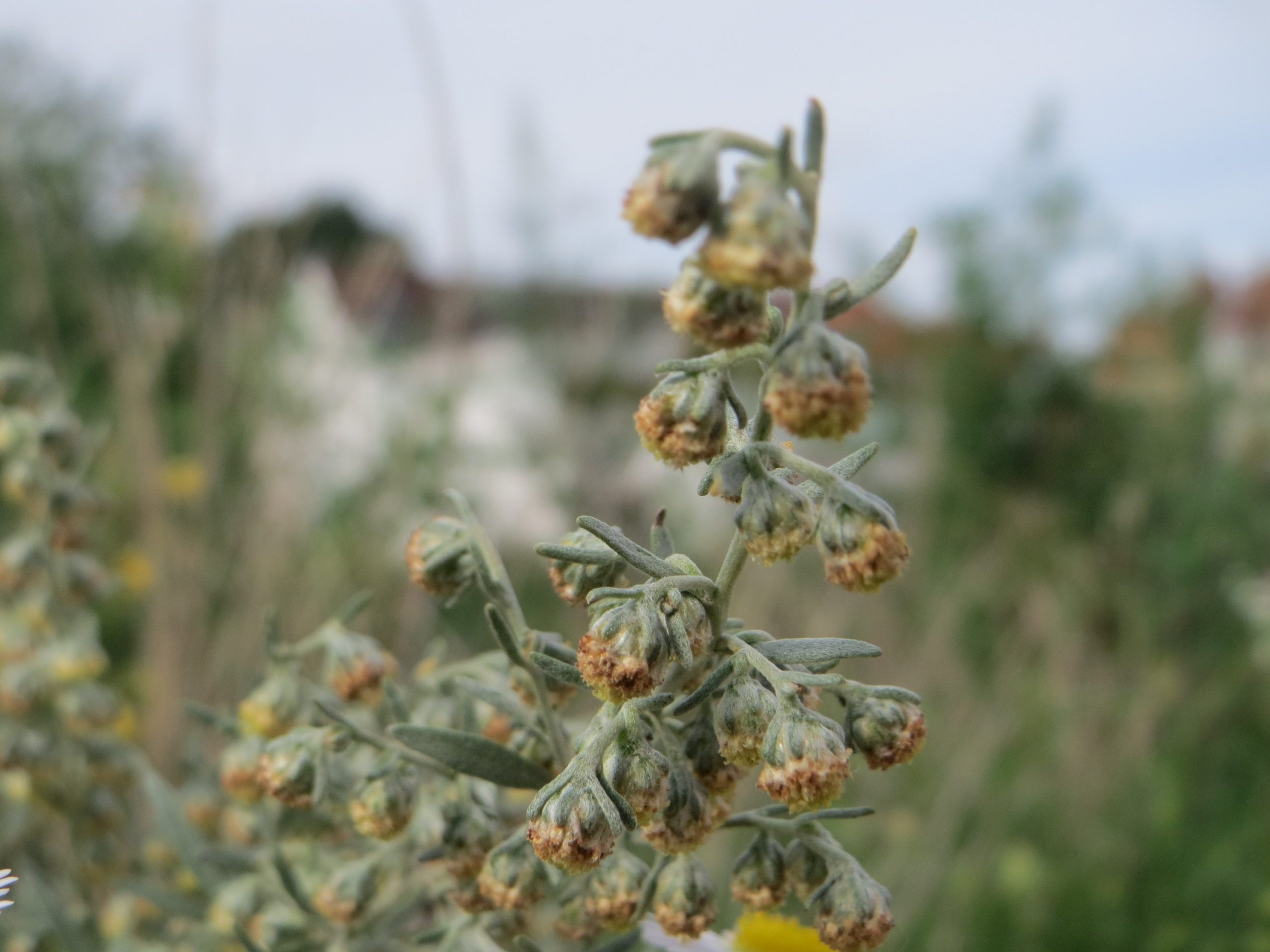
Habit: A perennial bushy herb, 40–100 cm tall. Stem: Erect, woody at the base and entirely covered with grey-silvery down. Leaves: Basal leaves long-petioled and 2–3 times pinnatisect with a feathery appearance; stem leaves smaller, subsessile and whitish-silky beneath. Flowers: Small yellow capitula, 3–4 mm wide, pendulous and arranged in leafy panicles developing along the upper part of the stem. Fruits: Achenes, or cypselae, a dry indehiscent fruit containing a single seed. Flowering: July–September.
Distribution and habitat
Chorological type: Eurosiberian. Distribution in Italy: Present in all Italian regions except Sicily, Sardinia and Puglia. Habitat: It grows in dry, stony or ruderal places, along paths and on wasteland, up to 1100 m above sea level.
Etymology
Generic name (Artemisia): Derived from the goddess Artemis, symbol of protection and female healing in Greek mythology. Specific name (absinthium): From the Greek apsinthion, meaning “without sweetness”, in allusion to the plant’s intensely bitter taste, historically associated with sorrow.
Curiosities
In the nineteenth century, wormwood became the essential ingredient of the famous drink absinthe, nicknamed the Green Fairy and regarded as a symbol of inspiration and excess by bohemian artists such as Baudelaire and Van Gogh. However, abuse of the drink, due to the accumulation of thujone, caused severe neurological disorders known as absinthism, a phenomenon that led to the temporary banning of absinthe in many European countries and in the United States in the early twentieth century.