Good King Henry’s Wild Spinach
Characteristics
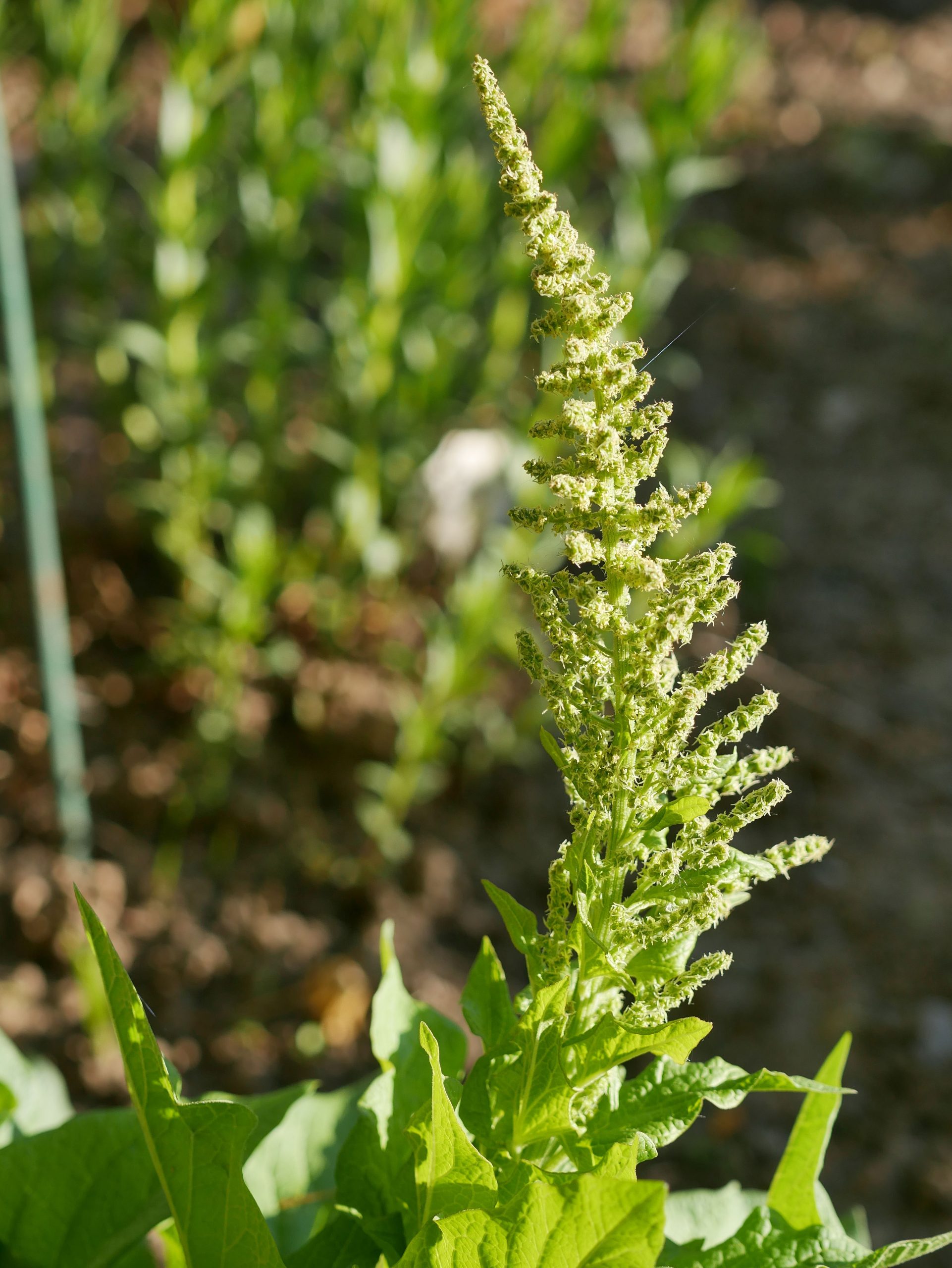
Habit: Perennial herb 20–70 cm tall. Stems: Erect or ascending, striate and leafy. Leaves: Triangular and hastate at the base, with two downward-pointing lobes; upper surface dark green, lower surface pale and farinose, with entire or slightly undulate margins. Flowers: Small, brownish-green, arranged in glomerules within a terminal spike-like inflorescence. Fruits: Achenes containing black, glossy seeds. Flowering: May–August.
Distribution and habitat
Chorological type: Circumboreal. Distribution in Italy: Common throughout the national territory. Habitat: A nitrophilous species growing in ruderal places, near stables, livestock resting enclosures and mountain huts, between 500 and 2100 m above sea level.
Etymology
Generic name (Blitum): A term cited by Pliny, probably referring to a kind of wild spinach. Specific name (bonus-henricus): The interpretation is debated; it may honour Henry IV of France, protector of botanists, or derive from folk legends such as that of “Poor Henry”, cured of leprosy by this plant.
Uses and properties
Good King Henry is known as “wild spinach”. In cooking, the young leaves are eaten raw, while the mature ones are ideal boiled for stuffings and soups; the flowering shoots are cooked like asparagus. For health, its high iron and vitamin content makes it an excellent remineralizing and anti-anaemic plant. For external use, the leaves have emollient properties useful for drawing abscesses to a head or for treating burns when cooked in oil. Because of its oxalic acid content, consumption is not recommended for people suffering from stones, arthritis or rheumatism.