Daphne’s Toxic Crown
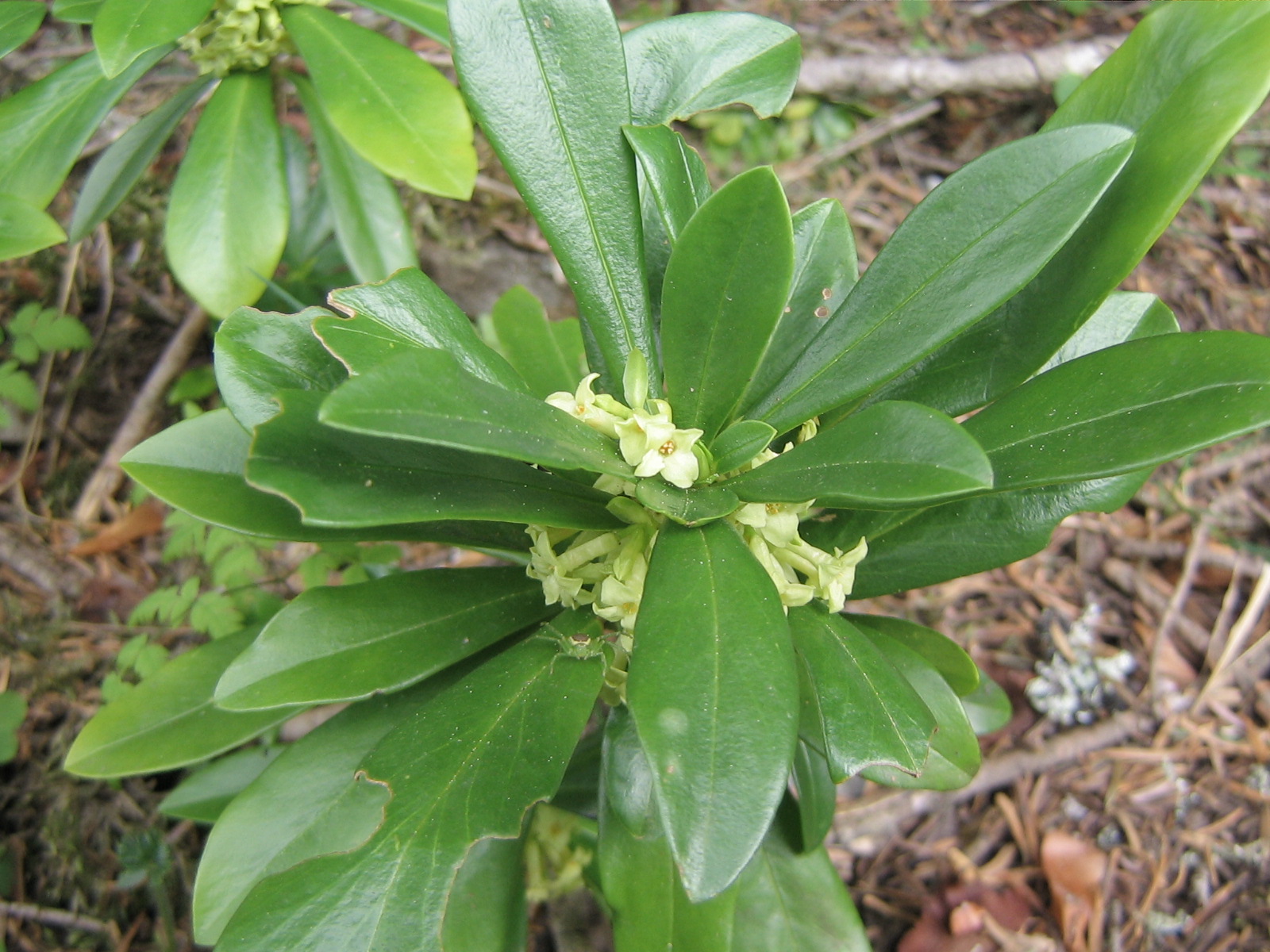
Characteristics
Habit: Evergreen shrub 60–140 cm tall. Stems erect and little branched, with leaves concentrated at the apex. Branches fleshy and glabrous, dichotomously branched. Leaves leathery, lanceolate, dark glossy green above and glaucous beneath; lower leaves reflexed, median horizontal, apical erect forming a dense terminal tuft. Flowers: Yellow-green, slightly fragrant, in axillary racemes of 3–10 flowers. Fruits: Spherical drupes 6–8 mm, turning from green to red to black at maturity. Flowering: January–April.
Distribution and habitat
Chorological type: Sub-Atlantic/Sub-Mediterranean. Distribution in Italy: Present in most of the territory. Habitat: Shaded understory of deciduous forests, especially on calcareous soils, between 300 and 1500 m.
Etymology
Generic name (Daphne): From Greek mythology, the nymph Daphne transformed into a shrub. Specific name (laureola): Diminutive of laurus (laurel), referring to leaf resemblance.
Uses and properties
Highly toxic plant; historical medicinal uses abandoned due to danger.