Hera’s Conical Fruit
Characteristics
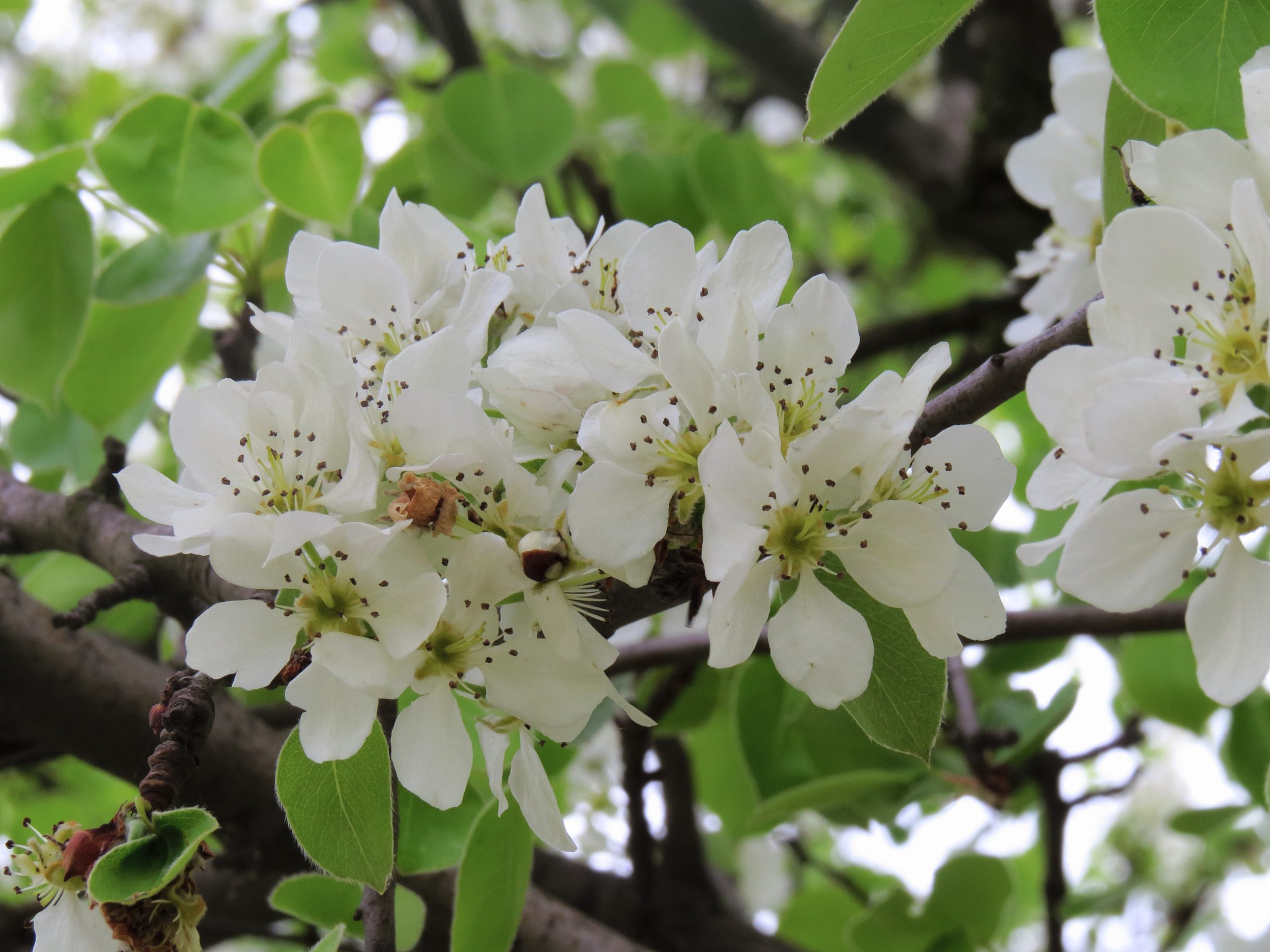
Habit: Tree that can reach 18–20 metres in optimal conditions, although it often appears in a smaller or shrubby form. Branches: Young branches are frequently spiny, a typical feature of the wild form. Bark: Grey-brown, becoming fissured with age into very regular characteristic quadrangular plates. Leaves: Deciduous and alternate, borne on a long petiole. The blade varies from ovate to cordate, with an acute apex and finely toothed margin. Initially tomentose, they later become glabrescent and glossy at maturity; the upper surface is dark green, the lower one paler. Flowers: Gathered in erect corymbs borne on tomentose peduncles. The calyx is hairy and divided into 5 lobes. The corolla is composed of 5 white petals, sometimes tinged pink on the outer surface. At the centre stand numerous stamens with red-purple anthers, a feature that helps distinguish it from the apple tree. Fruits: A pyriform pome (the classic pear), botanically a false fruit derived from the enlargement of the receptacle. It contains smooth, ovate brownish-black seeds. It becomes edible and sweet only when fully ripe. Flowering: March–May.
Distribution and habitat
Chorological type: European-Caucasian. Distribution in Italy: Present in all regions of the national territory. Habitat: Frequently encountered in deciduous woods, scrublands, and at the margins of clearings, from sea level up to 1400 m a.s.l.
Etymology
Generic name (Pyrus): Derived from the Greek term pyr (fire), in reference to the conical shape of the fruits, which in ancient times was thought to resemble a flame. Specific name (communis): Latin adjective underlining the great spread and familiarity of the species among local populations.
Uses and properties
Wild pear is a fundamental species in both agriculture and traditional medicine. Its fruits are rich in simple sugars, fibres (pectins), potassium, and vitamin C, acting as refreshing agents and regulators of intestinal transit. While cultivated varieties are selected for fresh consumption and processing into juices or jams, the fruits of the wild species, originally sour, require bletting (ripening on straw) to become palatable. The wood is extremely valuable: reddish-brown, very fine-grained, and compact, it does not splinter easily, making it ideal for luxury cabinetmaking, drawing instruments, and woodcut blocks.
Curiosities
Historically, the tree was surrounded by a strong symbolic aura: consecrated to the moon and to the goddess Hera (whose statue at Mycenae was carved from this very wood), it was also linked to Aphrodite through the shape of the fruit, interpreted as a symbol of fertility.