The Snow-White Carpet of the Cliffs
Characteristics
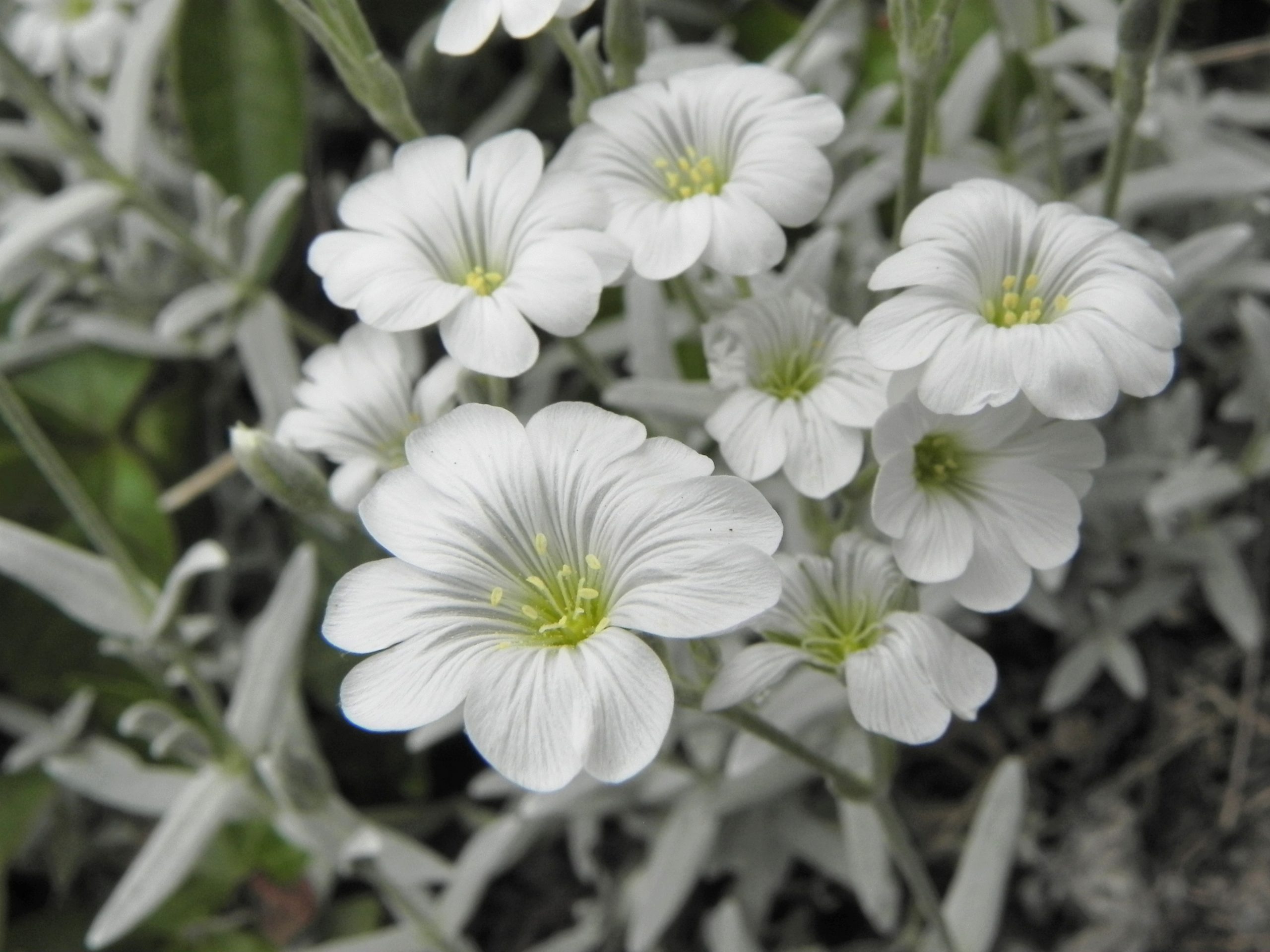
Habit: A suffruticose plant 10-40 cm tall, forming broad and dense cushions. Stems: Ascending and branched. Leaves: Opposite, without stipules, linear to lanceolate, entirely covered by a white felt that protects the plant from transpiration and intense sunlight. Their length is 4 to 10 times their width. Flowers: Arranged in a branched inflorescence of 3-15 white flowers, 1.5-2 cm across, on long peduncles. Flowers pentamerous, with bifid spatulate petals nearly twice as long as the sepals. Fruits: A cylindrical orthodont capsule, about twice as long as the calyx. Seeds with a verrucose surface. Flowering: May-July.
Distribution and habitat
Chorological type: Italian endemic. Distribution: Native to the Central and Southern Apennines, from the Sibillini Mountains to Sicily, although naturalized in many northern Italian regions because of its cultivation. Habitat: It colonises screes, rocky debris, limestone cliffs and roadside margins in dry, stony environments between 600 and 2200 m above sea level.
Etymology
Generic name (Cerastium): From the Greek keras, meaning “horn”, referring to the typically elongated and curved shape of the fruiting capsule at maturity. Specific name (tomentosum): From the Latin tomentum, in reference to the dense, soft woolly indumentum covering the whole plant and giving it its characteristic silvery colour.
Uses and properties
Highly valued in ornamental gardening, snow-in-summer is one of the most effective ground-cover plants for full sun. Thanks to its decorative foliage and abundant snowy flowering, it is ideal for rock gardens. Its hardy and partly invasive nature makes it suitable for erosion control on unstable slopes or poor soils, where it quickly forms dense mats that suppress weeds and protect the ground from runoff.