The Apennine Star of the Snows
Characteristics
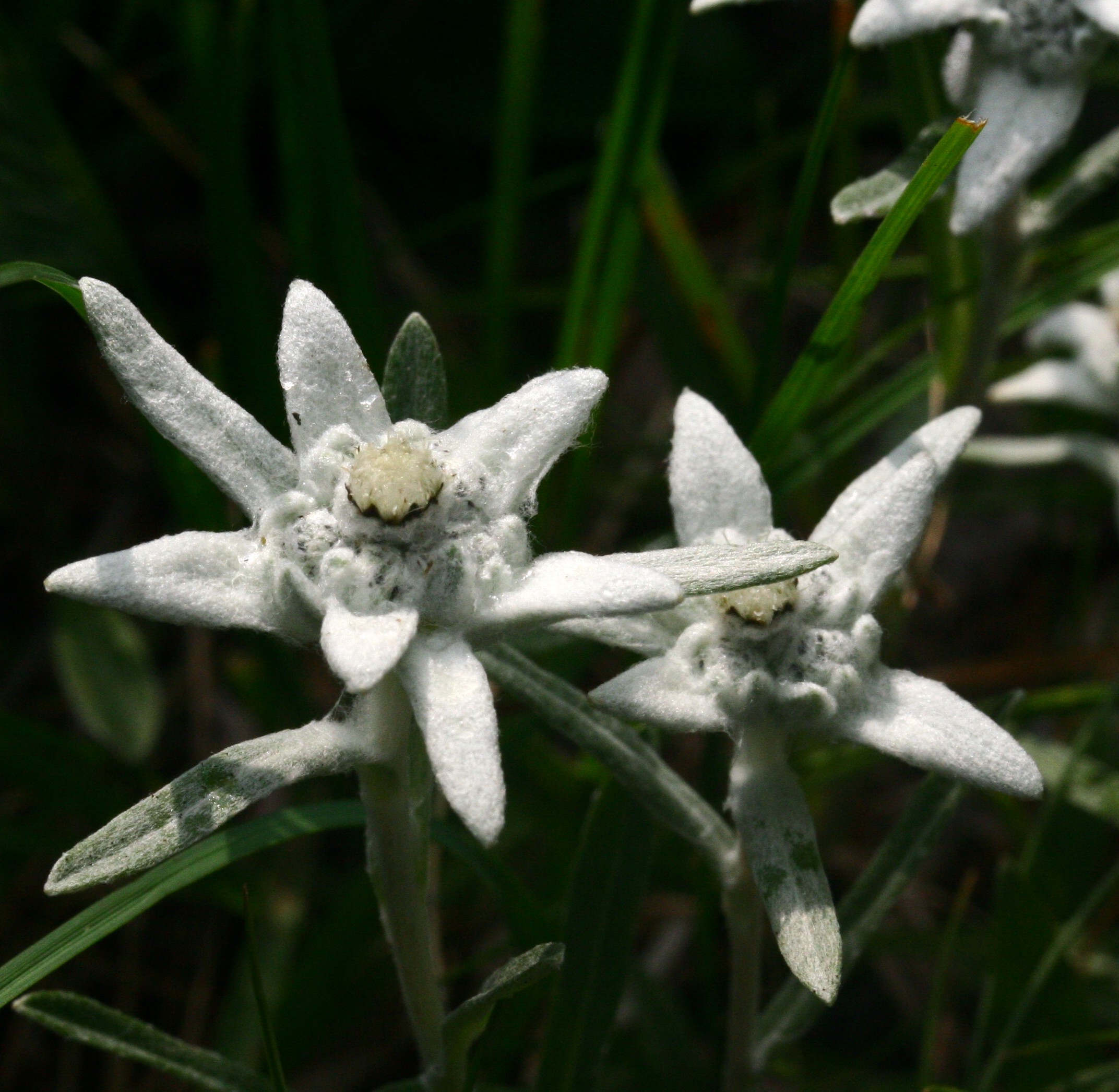
Habit: A small perennial herb that rarely exceeds 5 cm in height. Stem: Very short, almost completely pressed to the ground, giving the plant a cushion-like appearance. Leaves: Basal leaves spatulate and densely tomentose on both surfaces. Upper stem leaves are transformed into woolly white bracts surrounding the inflorescence. Flowers: Arranged in a composite inflorescence formed by a radiating star of modified white-woolly leaves enclosing a group of small flower heads. Usually one larger central head is surrounded by about five smaller ones. The true flowers, inside the heads, are straw-yellow. Fruits: Single-seeded achenes adapted for wind dispersal. Flowering: May-July.
Distribution and habitat
Chorological type: Subendemic. Distribution: One of the rarest and most precious elements of Italian flora, restricted to only a few isolated stations in the Central Apennines, mainly on the Gran Sasso and the Majella. Habitat: It grows exclusively on limestone cliffs, consolidated screes and exposed ridge sites between 2200 and 2800 m above sea level, in environments characterized by long-lasting snow cover.
Etymology
Generic name (Leontopodium): Derived from the Greek words leon, “lion”, and pous, “foot”. The etymology, “lion’s foot”, refers to the overall shape of the inflorescence which, with its woolly bracts, resembles the print of a feline paw. Specific name (nivale): From the Latin nivalis, “of the snow”, emphasizing the species’ close association with the highest peaks and nivation climates.
Curiosities
The Apennine edelweiss is a glacial relict of inestimable scientific and biogeographical value. Because of the extremely small size of its populations and the specificity of its habitat, the species is listed in the Italian Red List of Flora as Vulnerable and enjoys strict protection at both national and regional level. The collection of any part of the plant is strictly forbidden. Compared with the Alpine edelweiss of the Alps, the Apennine subspecies is distinguished by its smaller size and even denser indumentum, adaptations necessary for survival under the extreme aridity and intense sunlight of the calcareous Apennine ridges.