Artemis’ Bitter Herb
Characteristics
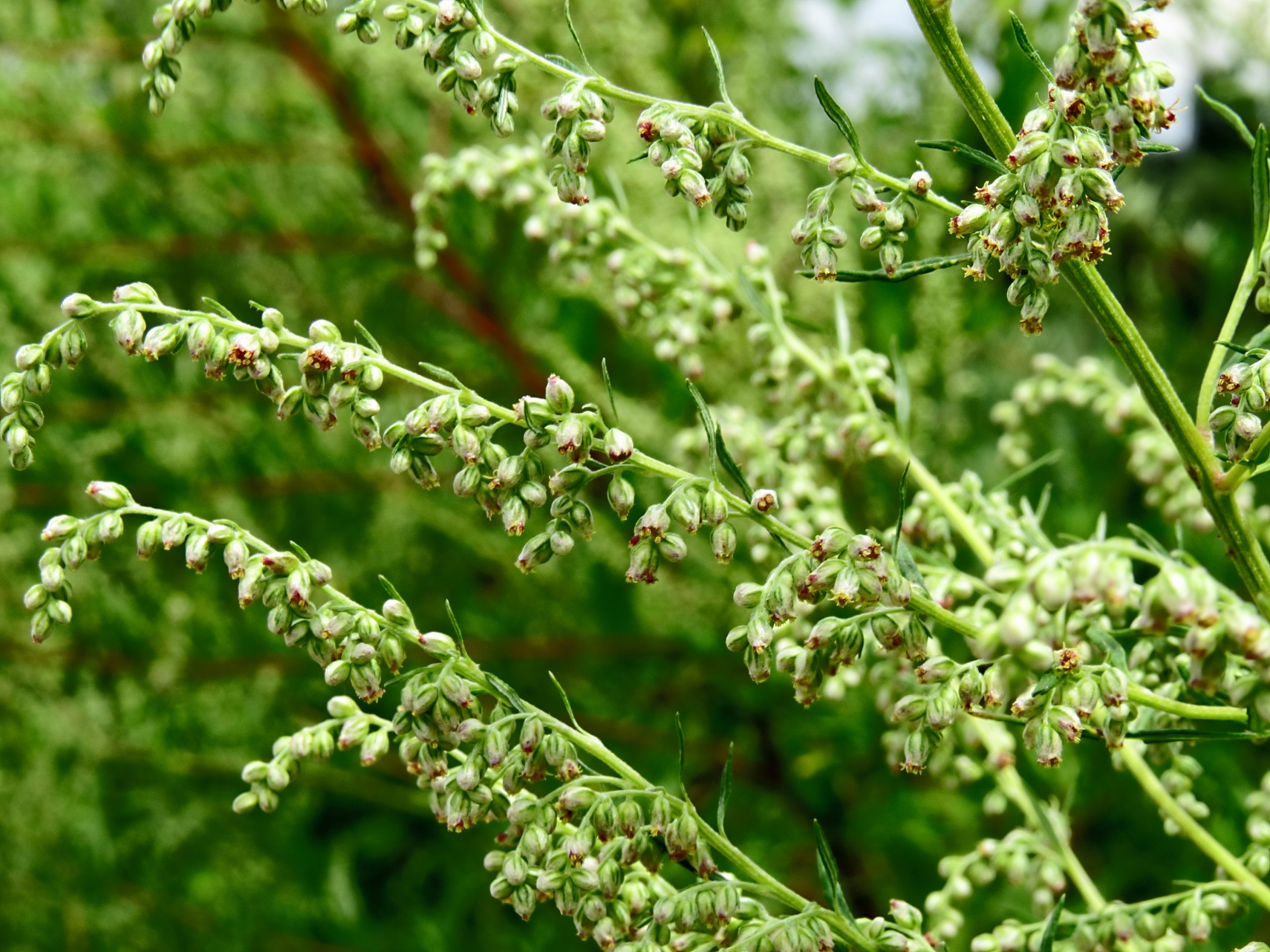
Habit: A perennial bushy herb, 50–150 cm tall, with a short oblique woody rootstock. Stem: Reddish, striate and highly branched. Leaves: Alternate and pinnatifid, green and glabrous above, whitish and tomentose beneath; lower leaves semi-clasping, with oval and incised-dentate lobes. Flowers: Arranged in a broad leafy pyramidal panicle composed of numerous subsessile ovoid capitula, with yellow-reddish tubular florets and a densely woolly involucre. Fruits: Glabrous achenes, oblong, pointed, smooth and lacking a pappus. Flowering: June–October.
Distribution and habitat
Chorological type: Circumboreal. Distribution in Italy: Present throughout Italy. Habitat: Nitrogen-rich ruderal grasslands, rubble and waste ground, from the plains up to 1000 m above sea level, occasionally higher.
Etymology
Generic name (Artemisia): Derived from Artemis, goddess of the hunt and the moon who presided over childbirth, because the plant was used to treat women’s ailments, or from the Greek artemes, meaning healthy or in good health. Specific name (vulgaris): A Latin term indicating that this is an extremely common and widespread species.
Uses and properties
It has been credited with bitter-tonic, sedative, digestive and emmenagogue properties, and has been used to regulate menstrual flow or to treat intestinal parasitosis, anorexic states and dyspepsia. The roots were considered useful in supporting the central nervous system in cases of overexcitability, while in culinary and industrial contexts the plant served as a bittering base for soft drinks and digestive liqueurs. It also acts as a natural insect repellent.
Curiosities
In folk tradition, common mugwort is counted among the herbs of St John, and in ancient Rome it was carried on the body as an amulet against evil spirits. An old belief suggested placing its leaves in one’s shoes to walk long distances without fatigue, while historically the plant was long used to flavour beer before being definitively replaced by hops.