The Venom Gland of the Rock
Characteristics
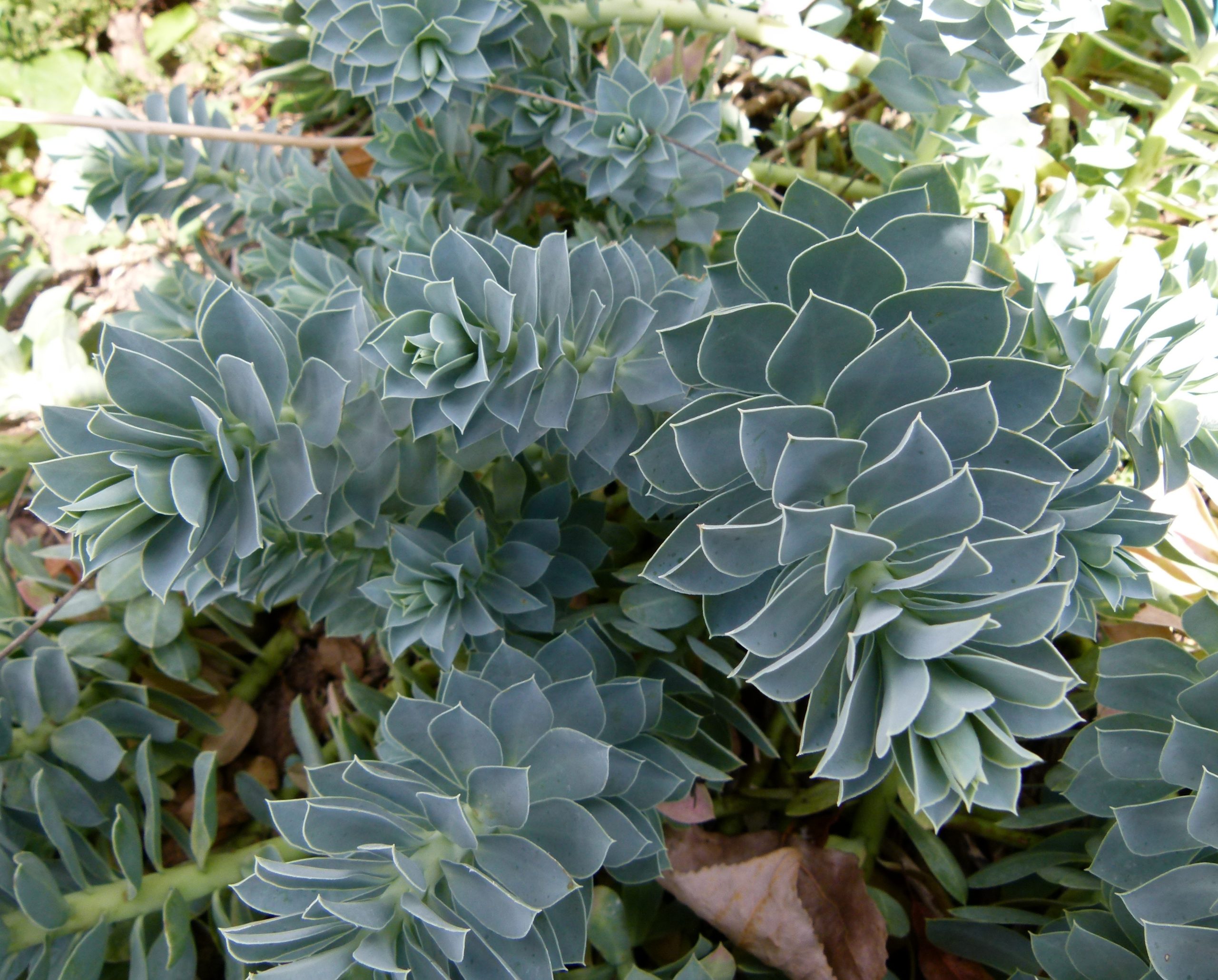
Habit: Perennial plant 20–30 cm tall with a hemispherical habit. Stems thick, fleshy, prostrate or ascending, glaucous and densely covered with leaves. Leaves succulent, glabrous, tightly spiral; lower leaves erect-spreading, upper larger, oval to sub-round with a mucronate apex. Flowers: Terminal umbels with 5–7 rays composed of cyathia with bright yellow or orange glands bearing two horn-like lobes. Fruits: Subglobose capsules with white, wrinkled seeds. Flowering: April–June.
Distribution and habitat
Chorological type: Pontic/South-European. Distribution in Italy: Central Alps and Apennines. Habitat: Dry, rocky calcareous slopes and screes, 600–1900 m.
Etymology
Generic name (Euphorbia): Named after Euphorbus. Specific name (myrsinites): Refers to resemblance to myrtle leaves.
Uses and properties
Highly toxic plant with irritant latex historically used for wart removal.