The Herb of Joy
Characteristics
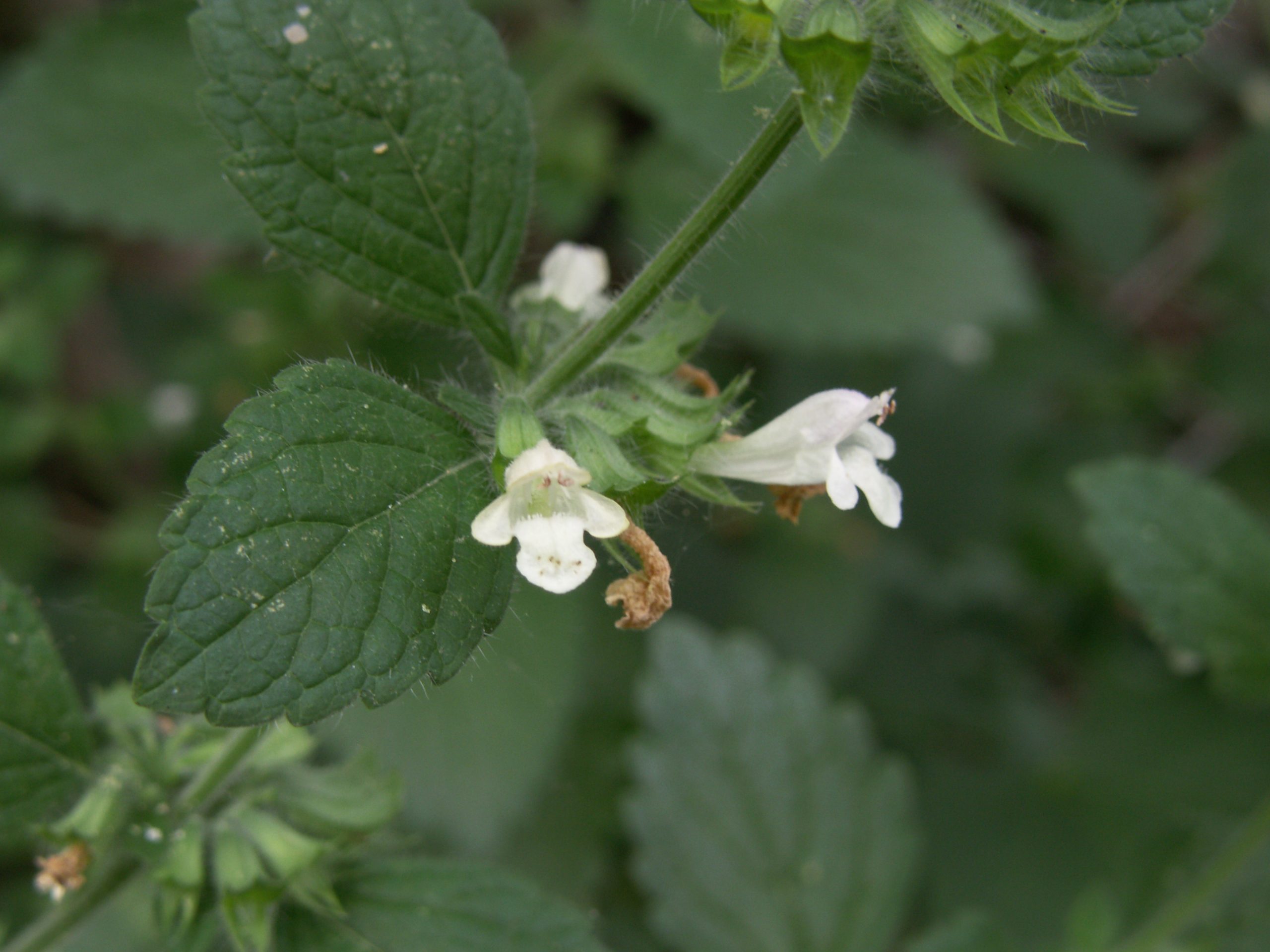
Habit: Perennial herb 30–80 cm tall. Stems: Erect, with the quadrangular section typical of the family. They are branched and bear spreading bristly hairs mainly along the angles. Leaves: Opposite, yellowish-green, and petiolate. The blade is ovate, with the lower leaves tending toward a cordate shape; the margin is markedly crenate-dentate (with 6 to 14 teeth per side). The leaf surface is rich in glands containing essential oil. When rubbed, they release a strong lemon scent. Flowers: Borne on short peduncles, grouped in loose glomerules situated in the axils of the leaves. The corolla is sympetalous and bilabiate: initially yellowish, it turns whitish-pink after fertilisation. The calyx is tubular, campanulate, and also bilabiate. Fruits: A tetrachenium composed of 4 small dark-brown nutlets contained within the persistent calyx. Flowering: April–August.
Distribution and habitat
Chorological type: Eurymediterranean / Western Asia. Distribution in Italy: Present in all regions. In northern Italy it is considered an ancient introduction (archaeophyte) and is often found naturalised. Habitat: It prefers uncultivated places, ruderal environments (near houses and old walls), sunny and dry areas, or cool woodland margins, from sea level up to 1000 m a.s.l.
Etymology
Generic name (Melissa): From the Greek mèlitta (honey bee). The name highlights the plant’s extremely melliferous value, able to attract swarms of bees with its abundant nectar and citrus scent. Specific name (officinalis): From the Latin offícina (workshop), confirming its millenary use in pharmacy, herbal medicine, and liqueur-making.
Uses and properties
Lemon balm has been cultivated for over 2000 years and is regarded as a cornerstone of the European pharmacopeia. Thanks to the essential oil rich in citronellal and geranial, it has marked sedative, antispasmodic, and digestive properties. Avicenna claimed that lemon balm “disposed the mind to joy,” while Paracelsus called it an “elixir of long life.” Historically famous is the “Carmelite Melissa Spirit,” used as a universal remedy against anxiety and nausea. Today it is taken internally against stress, insomnia, and nervous tension affecting the digestive system; externally it is an effective antiviral against Herpes simplex. In the kitchen, the fresh leaves are an excellent substitute for lemon to flavour vinegars, fruit salads, omelettes, and desserts.