The Wandering Rose of the Gods
Characteristics
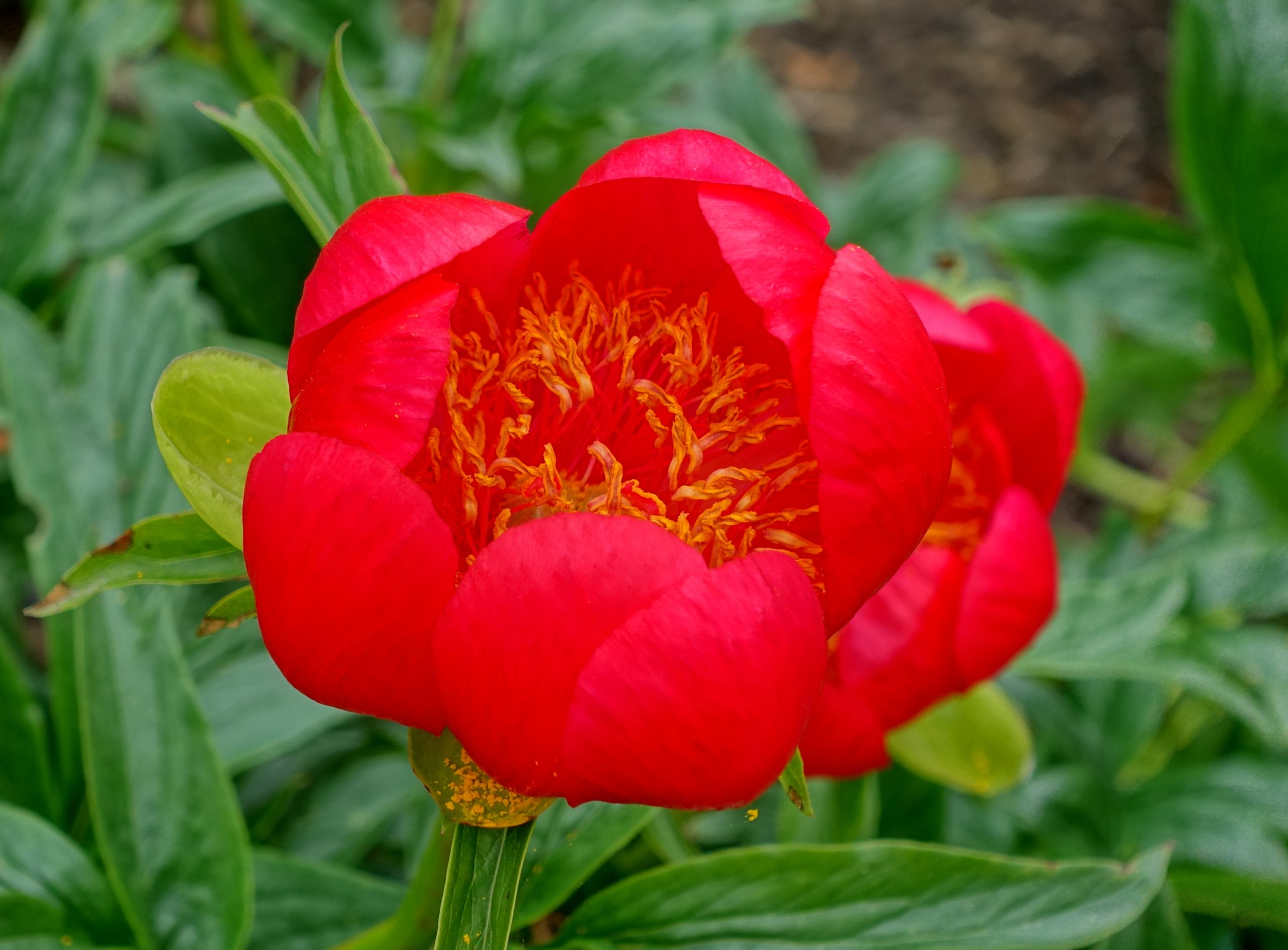
Habit: Perennial herbaceous plant with an erect habit, usually 30–50 cm tall. Stems: Green, with a surface that may be completely glabrous or show sparse pubescence. Leaves: It usually bears 4 to 8 leaves. The blade is biternate-partite (divided twice into three main segments) and overall has 15 to 17 divisions. The upper (adaxial) surface is glossy green, while the lower (abaxial) surface appears glaucous and hairless. The second- and third-order segments often bear three characteristic large teeth at the apex. Flowers: Solitary and terminal, cup-shaped and closed, 7–12 cm in diameter, with an intense, brilliant ruby-red colour. The corolla is composed of 6 to 10 concave ovate-oblong petals. The stamens have red filaments echoing the colour of the petals. Fruits: Tomentose follicles, 20–35 mm long. At maturity, these fruits bend outward to facilitate seed dispersal. Flowering: May.
Distribution and habitat
Chorological type: Southeastern European. Distribution in Italy: This is an extremely rare species in the national territory. It is found exclusively in Basilicata and Calabria, where it survives in extremely small and localised populations. Habitat: It prefers clearings in Turkey oak woods, seeking cool, deep, and well-structured soils, between 900 and 1200 m a.s.l.
Etymology
Generic name (Paeonia): Derived from the Greek paionía, a term dedicated to Peon (Paíon), the mythical physician of the Greek gods who, according to legend, was transformed into this flower by Pluto to save him from divine envy. Specific name (peregrina): From the Latin peregrinus, meaning exotic, foreign, or wandering. The term historically indicated a plant perceived as non-native or possessing an unusual distribution compared with other more common peonies.
Curiosities
The wild peony represents one of the most threatened botanical entities of the Italian flora. Due to the scarcity of its populations and the specificity of its habitat, it is classified according to IUCN criteria as EN – Endangered. It is strictly protected at both national and regional levels; collecting flowers or removing rhizomes is severely prohibited to prevent the extinction of the remaining wild populations. Its survival depends on careful management of woodland clearings and protection from damage caused by overgrazing and trampling.