The Hairy Oak of Italian Woods
Characteristics
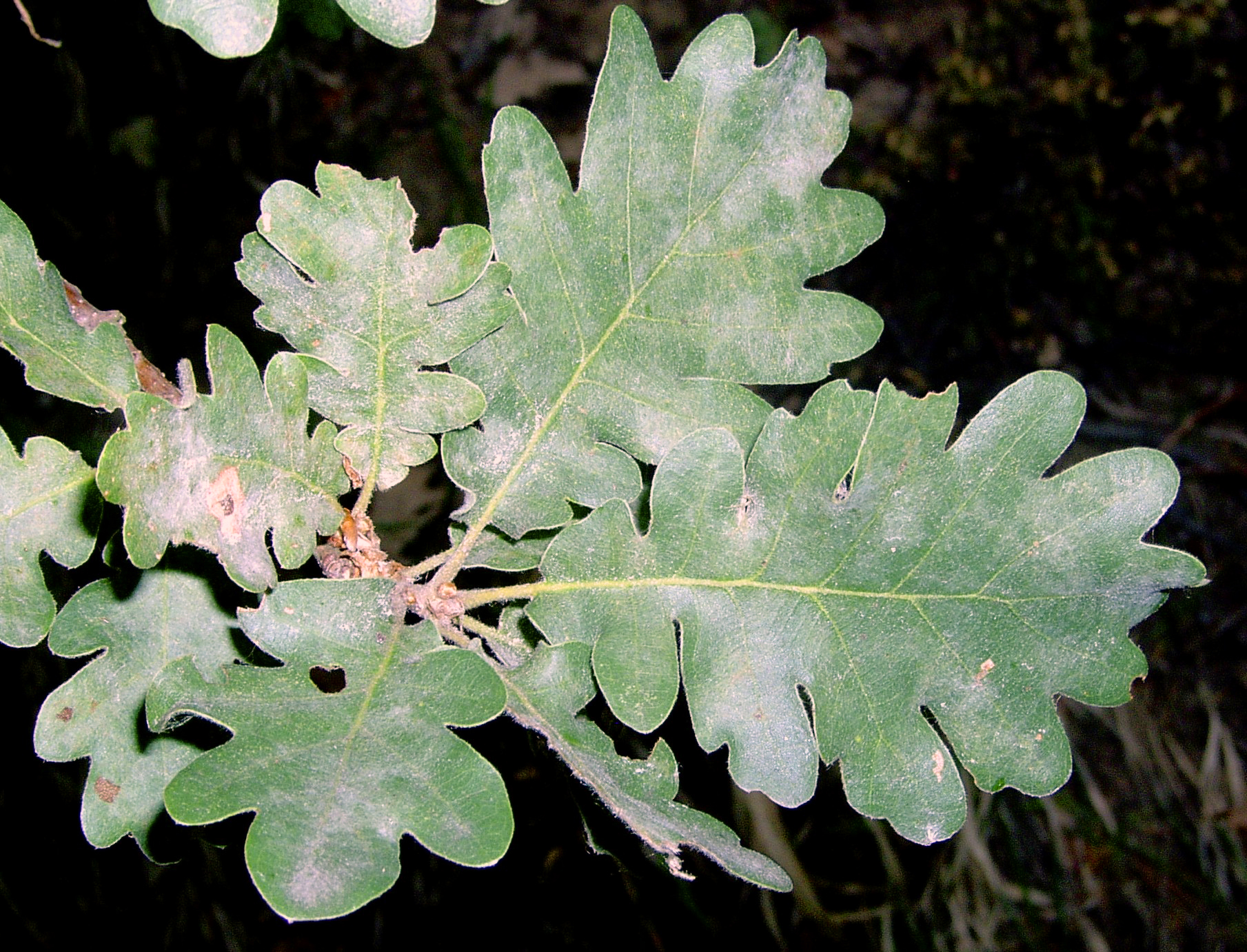
Habit: Medium-sized tree, usually 20–25 metres tall, with a broad, irregular crown and a trunk often twisted, knotty, and branched from a low height. Bark: Dark grey, very thick and early fissured into small quadrangular or rectangular plates with very hard, rough reliefs. Branches: One-year-old branches are the main identifying feature: they are densely covered with a greyish or whitish down composed of stellate hairs, which disappears only partially in subsequent years. The buds are small, ovoid-conical, and also pubescent, arranged in dense groups at the apex of the branches. Leaves: Juvenile leaves are entirely felted (white-tomentose on the lower surface), while adult leaves become glabrous and glossy above, but retain a greyish indumentum of stellate hairs beneath. The blade, oblanceolate in shape, has 5–6 deeply incised lobes per side and a petiole 6–13 mm long. The leaves are marcescent: they dry in autumn but remain attached to the branches through much of the winter. Flowers: Monoecious species with unisexual flowers appearing at the same time as the leaves. The male flowers are gathered in loose yellowish-green catkins. The female flowers are much less conspicuous, located in the axils of the upper leaves or at the ends of the branches. They are solitary or grouped in small clusters (2–5) and are almost sessile. Fruits: Acorns sessile or borne on a very short peduncle. They are protected by cupules with very appressed, felted scales. Flowering: April–May.
Distribution and habitat
Chorological type: European / Pontic. Distribution in Italy: It is the most widespread oak in Italy, present from the Alps to Sicily. It forms pure or mixed woods, often associated with Turkey oak, hop hornbeam, manna ash, and field maple. Habitat: It prefers hill and lower montane woods, showing indifference to the nature of the substrate (calcareous or siliceous). It is particularly well adapted to warm, dry slopes, with an altitudinal range from sea level up to 1000 m a.s.l.
Etymology
Generic name (Quercus): Classical Latin name for the oak, a tree sacred to Jupiter. Specific name (pubescens): From the Latin pubes (down, soft hair), referring to the dense hairiness covering the young branches and the lower surface of the leaves.
Uses and properties
The wood of the downy oak is hard and resistant, historically used for beams, boats, and railway sleepers, as well as being an excellent firewood.
Curiosities
A suggestive legend is linked to its marcescent foliage: it is said that, in order to protect the forest from the dominion of the devil—granted by God only during the period when the trees had shed their leaves—the oak decided to retain its dry leaves on the branches throughout winter. Since then, the downy oak does not strip completely until the first bud of another shrub appears in spring, thus symbolically ensuring protection for the whole woodland ecosystem.