The Red Tear of Mount Ida
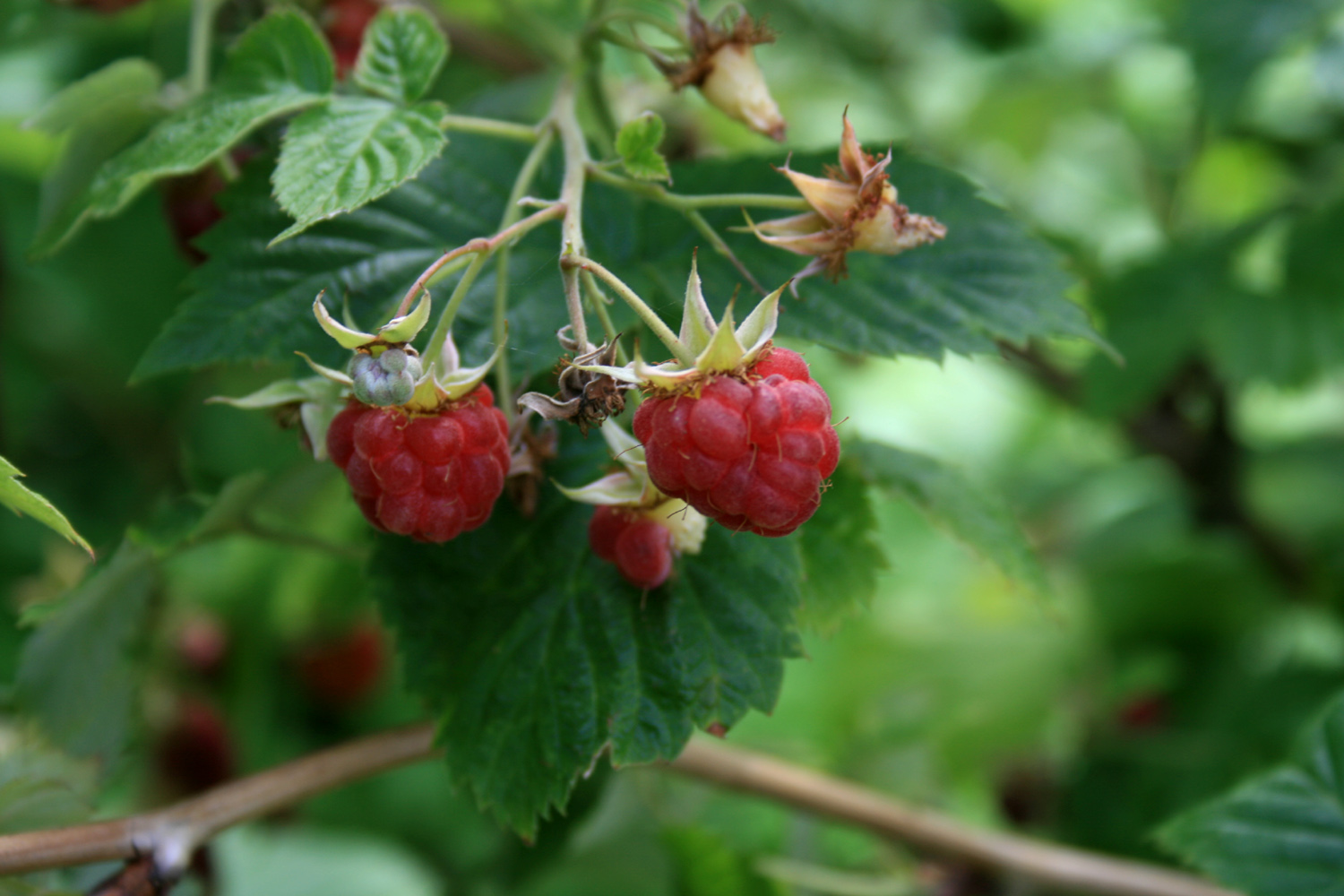
Characteristics
Habit: Perennial shrub characterised by a very vigorous creeping rhizome from which biennial sub-erect or arching stems arise, up to 2 metres tall. Stems: Cylindrical, green or reddish-brown, often covered with a waxy bloom (pruinose). They may be glabrous or slightly hairy, armed with small, fine, straight prickles, much less aggressive than those of the common bramble. Leaves: Deciduous and odd-pinnate, composed of 3, 5, or 7 ovate-lanceolate leaflets with serrated margins. A distinctive feature is the strong chromatic contrast between the two surfaces: the upper one is light and bright green, while the lower one is densely white-tomentose (covered with a felt of white hairs). Flowers: Gathered in small groups (2–5) in terminal cymes. The flower is pentamerous, with 5 greyish-white sepals reflexed downward and 5 small, spatulate white petals that fall very quickly. At the centre are numerous stamens surrounding a mass of white, villous carpels. Fruits: Actually a compound infructescence (an aggregate of druplets), globose in shape and dull red in colour. It is formed by numerous small, juicy drupelets joined together; unlike the blackberry, the raspberry at maturity detaches completely from the white receptacle, remaining hollow inside. Flowering: April–June.
Distribution and habitat
Chorological type: Circumboreal. Distribution in Italy: Present throughout the territory; very common in the Alps and northern Apennines, becoming progressively rarer toward the South and the islands. Habitat: It prefers clearings in humid woods, screes, and the margins of mountain forests, between 200 and 2000 m a.s.l.
Etymology
Generic name (Rubus): From the Latin ruber (red), the typical colour of the ripe fruits of many species belonging to this genus. Specific name (idaeus): Refers to Mount Ida in Turkey (near ancient Troy). According to Dioscorides, the plant was particularly abundant on this mountain, hence the name “bramble of Ida.”
Uses and properties
Raspberry is a valuable edible and medicinal species. The fruits are rich in sugars, organic acids, and Vitamin C, and are appreciated for their refreshing, cardiotonic, and mildly laxative properties. In folk medicine, the leaves (rich in tannins) are used as an infusion for their astringent effect or as a mouthwash to soothe inflamed gums and oral mucosa. Besides fresh consumption, raspberries are a cornerstone of the confectionery industry for the production of jams, syrups, and jellies. Their intense aroma makes them ideal for preparing liqueurs and as flavour correctors in pharmaceuticals. In modern phytotherapy, the bud extract of Rubus idaeus is widely used to regulate female hormonal balance.