The Dark Sister of Elder
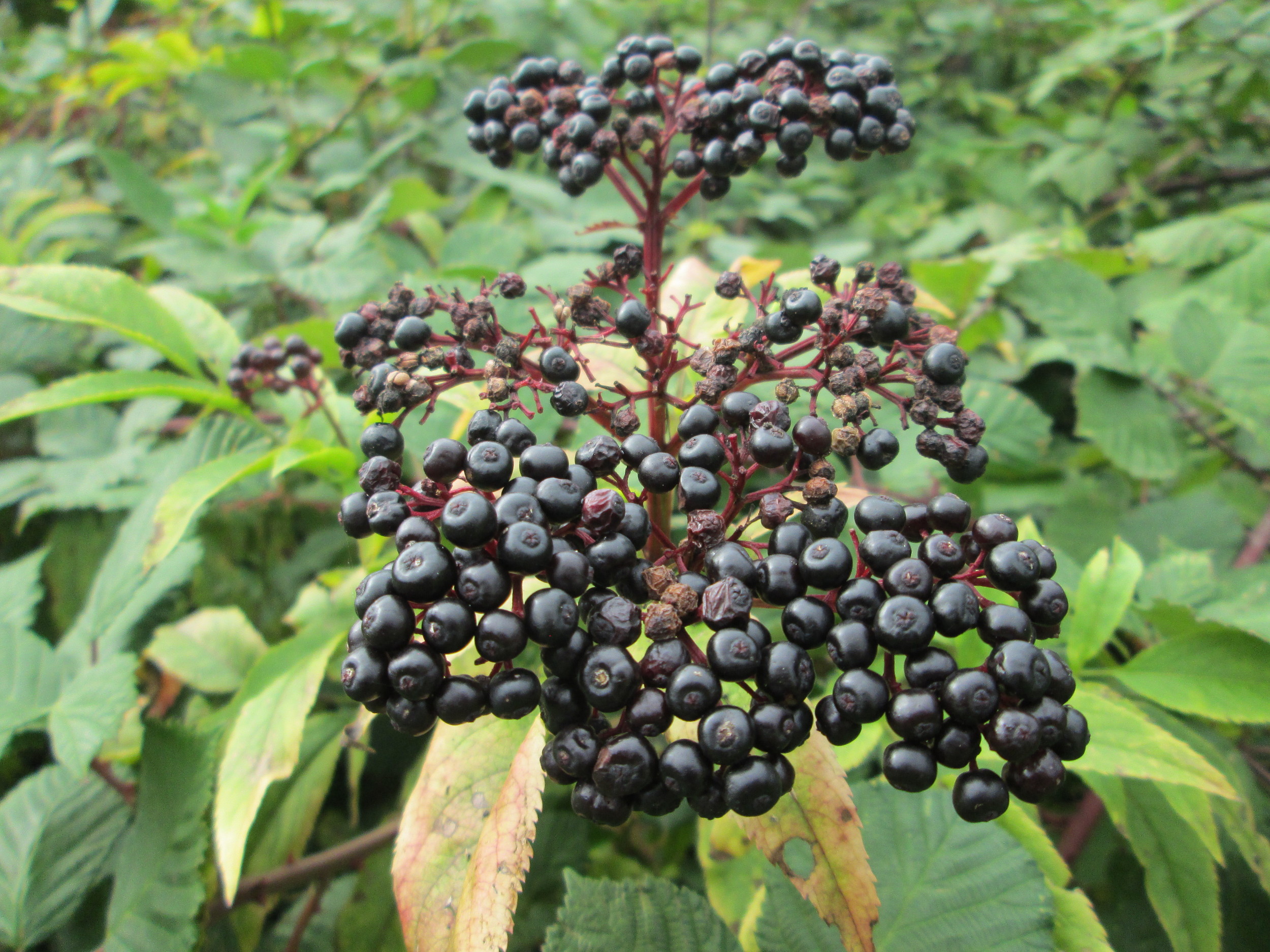
Characteristics
Habit: Robust, bushy perennial herbaceous plant, capable of reaching 150 cm in height. Stems: Erect, rigid, longitudinally furrowed, and sparsely branched. Leaves: Opposite and odd-pinnate, composed of 5–9 oblong-lanceolate segments (10–15 cm long). The segments have an acuminate apex and a distinctly serrated margin. The upper surface is dark green and hairless, while the lower one is paler and pubescent. At the base of the petiole there are stipules resembling small leaves. Flowers: Gathered in broad upward-facing corymbs (up to 16 cm), composed of more than 200 small flowers. The corolla is rotate, white or slightly pinkish on the outside; the anthers are characteristically violet. A fundamental difference from black elder is that the inflorescence of dwarf elder remains erect even when the fruits are ripe. Fruits: A small globose-pyriform drupe, 4–6 mm, black and glossy at maturity. Each berry contains 3–4 wrinkled stones. Although they resemble the edible berries of common elder, those of dwarf elder are toxic. Flowering: April–July.
Distribution and habitat
Chorological type: Eurymediterranean. Distribution in Italy: Present throughout the national territory, except Valle d’Aosta. Habitat: It grows in uncultivated places, field margins, ditches, paths, and degraded pastures, from sea level up to 1300 m a.s.l.
Etymology
Generic name (Sambucus): Latin name of uncertain origin, already used in classical times to indicate plants of this genus. Specific name (ebulus): Derived from the Latin ebulum, the epithet with which ancient authors such as Virgil and Pliny specifically identified this herbaceous kind of elder.
Uses and properties
Dwarf elder is a toxic medicinal species. It contains cyanogenic glycosides and drastic purgative substances that can cause severe gastrointestinal irritation, vomiting, and abdominal pain. For this reason, its uses in folk medicine (root as a diuretic, leaves as an antirheumatic, or flowers for bronchitis) are now strongly discouraged and considered dangerous because of the risk of poisoning. The ripe berries, despite their toxicity to humans, are used for the production of inks, natural textile dyes (violet-blue), and in artisanal preparations as repellents for insects or rodents, which do not tolerate the strong smell of its extracts.