The Aromatic Herb of Satyrs
Characteristics
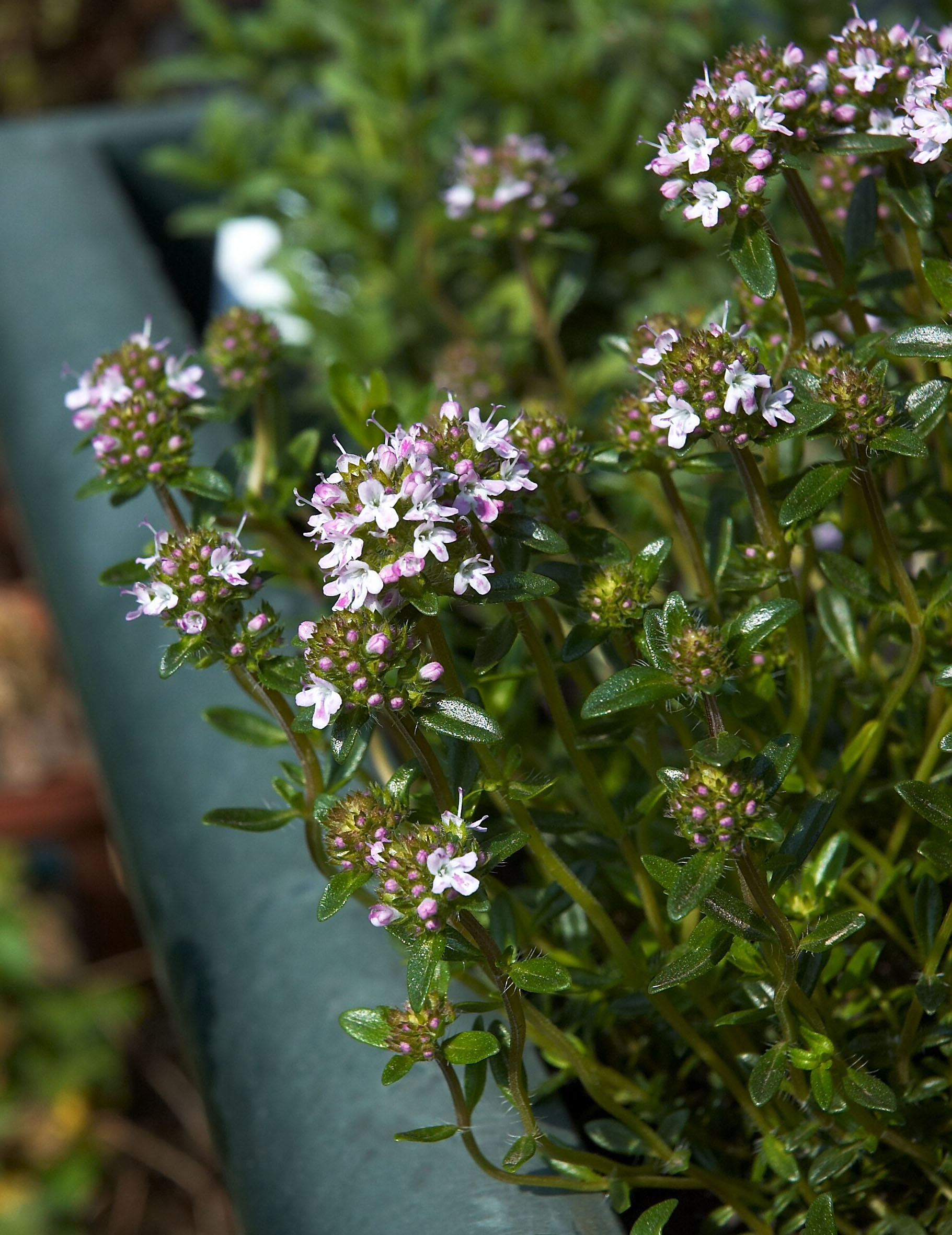
Habit: Perennial suffruticose plant reaching 30–50 cm in height. Stems: Woody and branched from the base, with a typical tetragonal section in the upper herbaceous part; they are erect and covered with fine pubescence. Leaves: Arranged oppositely and sub-sessile, spaced along the stem. The blade is linear-lanceolate, with an acute apex and leathery consistency. Bright green in colour, the leaves have scattered oil glands and a margin bordered by small cilia. In the axils of the main leaves, small fascicles of 2–8 smaller leaflets often develop. Flowers: Hermaphroditic and fragrant, gathered in small verticillasters of 2–3 elements situated in the axils of the upper leaves. The calyx is tubular, with 10 evident veins and 5 pointed teeth. The corolla, white or whitish-pink, is hairy-glandular, with the upper lip entire and erect, and the lower lip divided into three lobes and arranged perpendicularly to the tube. Fruits: A schizocarp dividing into 4 small oval achenes with a dotted surface, remaining protected inside the persistent calyx after flowering. Flowering: June–November.
Distribution and habitat
Chorological type: Western Mediterranean. Distribution in Italy: Present in almost all Italian regions, except Valle d’Aosta and Sicily. Habitat: Frequently found on sunny slopes and along mountain roadsides, from sea level up to 1300 m a.s.l.
Etymology
Generic name (Satureja): Derived from the Latin term satureia, already used by Pliny the Elder. Although the exact etymology is uncertain, it is historically linked to the world of classical myths. Specific name (montana): Adjective emphasising its preference for mountain habitats.
Uses and properties
Winter savory is a prized edible and medicinal species. Its essential oil, rich in thymol and carvacrol, gives it powerful antiseptic, carminative, and digestive properties. In herbal medicine it is used to loosen catarrh in bronchitis and to treat gastrointestinal disorders and diarrhoea. In cosmetics, the infusion is used to tone the body in bath water and to strengthen the hair bulb. In cooking it is considered a “queen” herb alongside thyme and oregano. Thanks to its strong aroma, it pairs ideally with legumes, whose digestion it facilitates by preventing flatulence, grilled meats, cereals, and sauces. It is also used in the production of bitters and perfumes.
Curiosities
Among the ancient Romans it was known as the herb of the Satyrs. It was believed that its hairiness and stimulating aroma possessed remarkable aphrodisiac virtues, from which derive both its botanical name and the medical term “satirism” indicating excess male desire. For this reason, in the Middle Ages, its cultivation was sometimes forbidden in monastery gardens.