The White-Pink Diamond Cushion
Characteristics
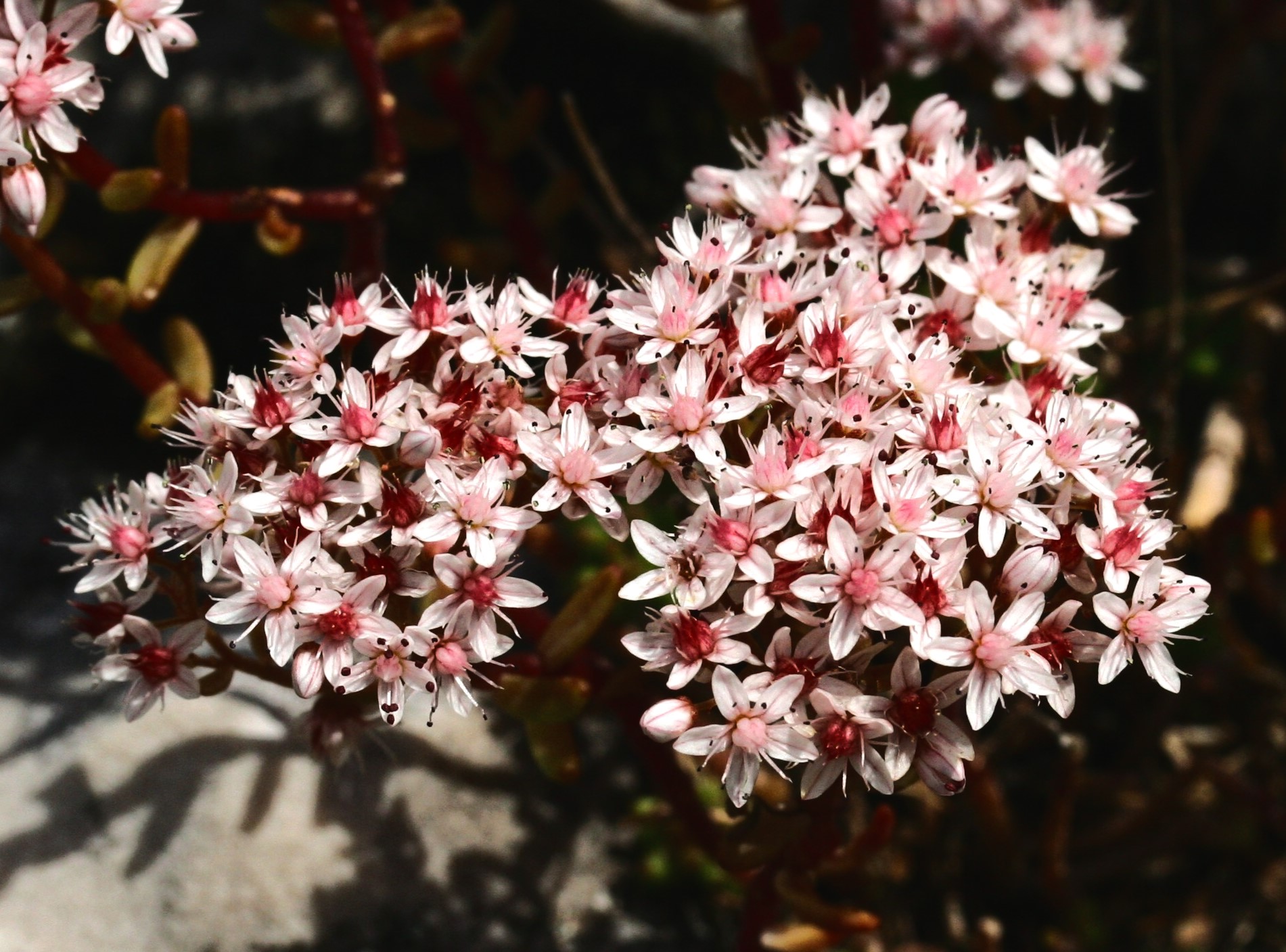
Habit: Small succulent herbaceous plant (5–15 cm) with a slender creeping rhizome. Stems: Fragile, twisted, and often turning reddish when exposed to strong sunlight. Leaves: Alternate, sessile, and glabrous, cylindrical or sub-clavate in shape, slightly flattened on the upper side. They are 5–9 mm long, fleshy, and gibbous at the base. Their colour ranges from light green to reddish-bronze; their succulent structure allows the plant to survive in extremely arid environments by storing water reserves. Flowers: Gathered in terminal corymbose cymes, rather lax and branched. They are hermaphroditic and pentamerous. The corolla is dialypetalous, composed of 5 white petals, sometimes with a slight keel or pinkish streaking on the back, about twice as long as the calyx. Fruits: A follicetum composed of erect and elongated follicles, often reddish, which release small brown seeds at maturity. Flowering: May–August.
Distribution and habitat
Chorological type: Eurymediterranean. Distribution in Italy: Common and present in all regions, from coastal areas to the mountains. Habitat: A pioneer plant that grows on gravels, rocky outcrops, sunny embankments, and old dry-stone walls, from sea level up to 2000 m a.s.l.
Etymology
Generic name (Sedum): From the Latin sedere (to sit), because of its prostrate habit clinging to rocks, or from sedare (to soothe), in reference to the cooling and soothing properties attributed to some species of the genus. Specific name (album): From the Latin albus (white), the characteristic colour of the flowers that distinguishes it from related species with yellow flowers.
Uses and properties
White stonecrop is considered a toxic medicinal species. Although folk medicine used it to treat calluses, burns, and wounds thanks to the emollient properties of its pulp, the plant contains alkaloids that may irritate the mucous membranes and digestive tract. In the past, in some rural traditions, it was known as the “herb of mercy” or the herb of last resort, because it was administered, often without real scientific basis, to dying people in a desperate attempt to revive them. Today it is appreciated above all in sustainable gardening for the creation of green roofs and low-maintenance rock gardens.