The Fleshy Shield Against Lightning
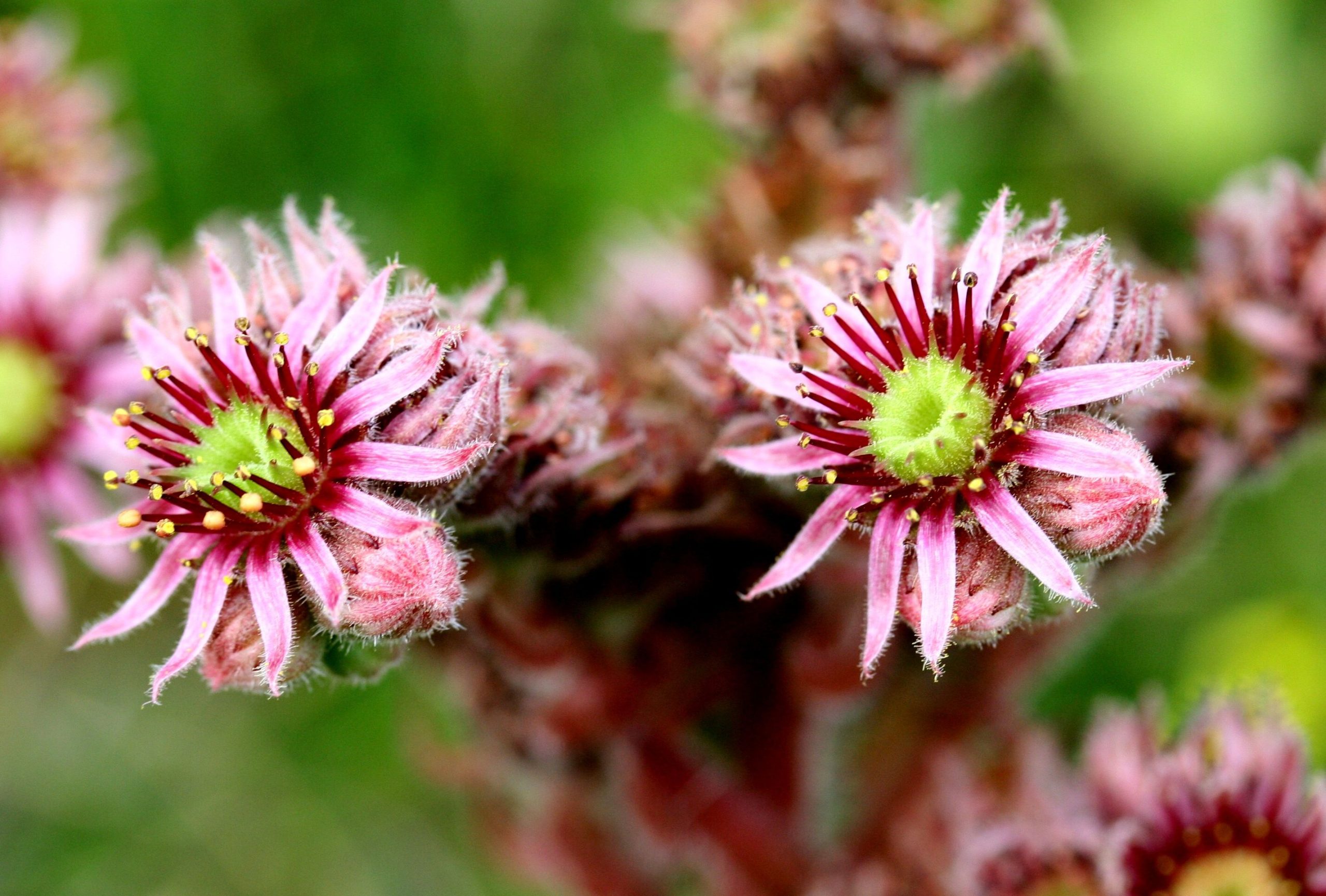
Characteristics
Habit: Perennial stoloniferous herbaceous plant, with a flowering scape that may rise up to 30–50 cm. Leaves: The scape leaves are lanceolate and slender, while the basal ones are arranged in compact, very fleshy rosettes. They are oblong-acute or acuminate in shape, ending in a small rigid, pungent tip. Their colour ranges from green to glaucous, often with the apex tinged reddish-brown. Unlike other related species, the leaf surfaces are glabrous, while the margin is distinctly ciliate. Flowers: Numerous, up to 40 per scape, gathered in compact corymbs ending in scorpioid cymes. The petals, usually 12–16, are pink-violet with darker longitudinal veins. Fruits: A follicetum composed of numerous erect follicles surmounted by the persistent style, containing minute seeds. Flowering: May–August.
Distribution and habitat
Chorological type: Southern European orophyte. Distribution in Italy: Common in almost all continental Italy, rarer or absent in the major islands in the wild. Habitat: It grows on cliffs, screes, old dry-stone walls, stone or thatched roofs, and dry grasslands, from 200 up to 2800 m a.s.l.
Etymology
Generic name (Sempervivum): From the Latin semper vivum (always alive), referring to its ability to withstand extreme drought and cold while keeping its foliage alive. Specific name (tectorum): From the Latin tectum (roof). It refers both to its natural ability to colonise building roofs and to the custom, dating back to the time of Charlemagne, of planting it on house roofs to “protect them from lightning,” then associated with divine wrath or evil powers.
Uses and properties
Common houseleek is an edible and medicinal species. The leaves are rich in mucilages, tannins, and organic acids such as malic and formic acid. The leaf pulp has emollient and healing properties; poultices were used against insect bites, burns, and calluses. The infusion was employed as a refreshing eye lotion. In the past, the youngest rosettes were eaten in salads or preserved in vinegar as an emergency food reserve.
Curiosities
A popular belief held that if the plant flowered on the roof for the first time, misfortune would strike the family. On the contrary, it was also believed that the plant could aid communication in those who had speech difficulties, the “mute.”