The Tree of Death and Life
Characteristics
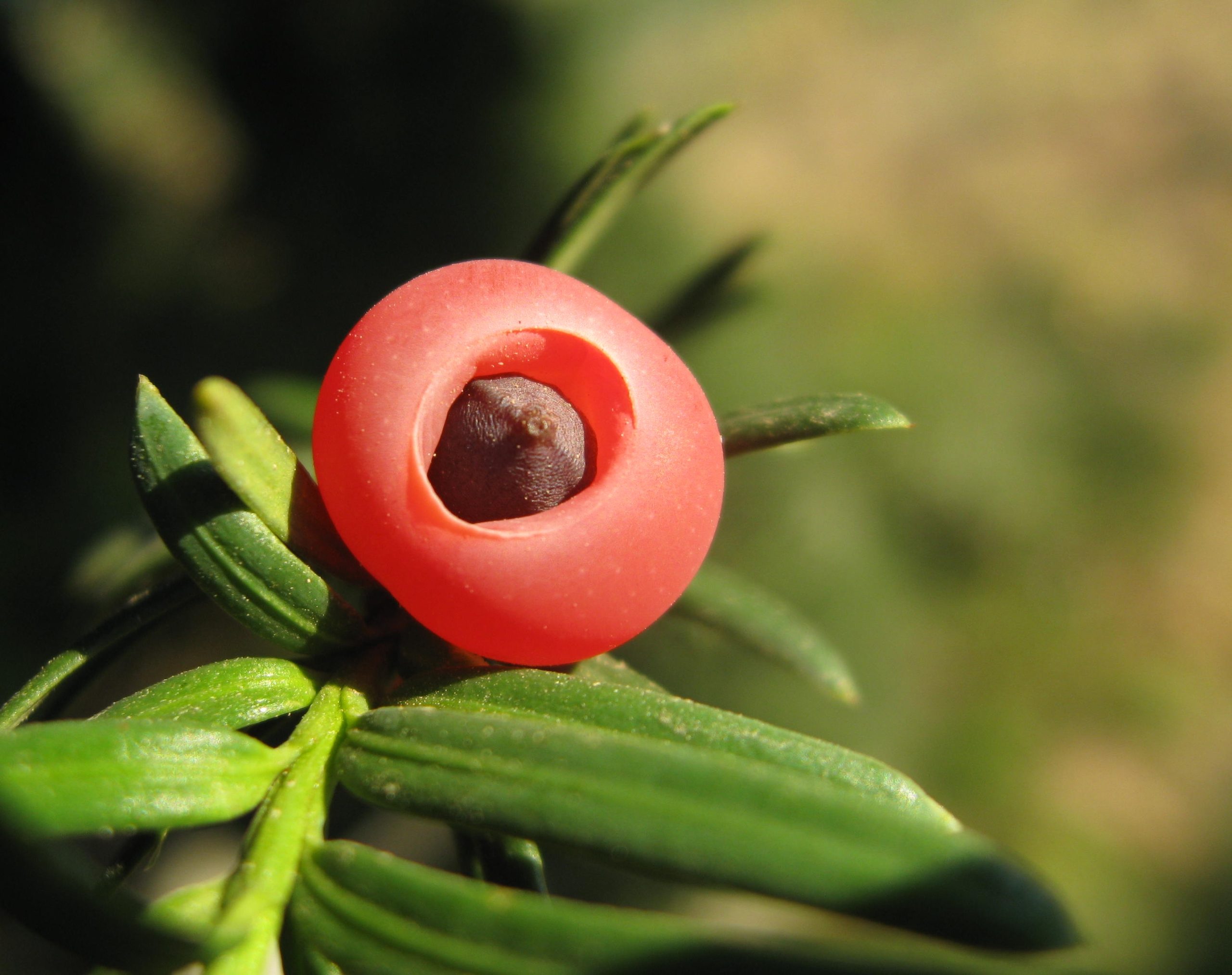
Habit: Evergreen tree up to 15–25 m tall, with a stout and much-branched trunk. Bark: Smooth, thin, reddish-brown, tending to peel off in thin plates or strips. Leaves: Needle-like, persistent, linear, and flattened. They are arranged in two ranks along the twigs. Dark glossy green above, paler and yellowish below. Although mucronate at the apex, they are not sharp to the touch. Reproductive organs: Grouped into male and female cones on separate individuals. The male cones are gathered in small yellowish globose strobili composed of shield-shaped stamens containing pollen; the female cones resemble small solitary green buds containing a single ovule surrounded by basal bracts, which produces a single black seed partially enclosed by a fleshy and succulent bright red cup called an aril, attracting birds and favouring zoochorous seed dispersal. Flowering: March–May.
Distribution and habitat
Chorological type: Montane Mediterranean / Palaeotemperate. Distribution in Italy: Present in all regions. Habitat: A shade-loving species typical of mixed deciduous and coniferous woods, especially beech and fir forests. It grows between 300 and 1600 m a.s.l. on cool, calcareous soils.
Etymology
Generic name (Taxus): From the Greek taxos, yew, or toxon, bow. The bond between the plant and the weapon is millenary. Specific name (baccata): From the Latin baccatus, bearing berries, because of the appearance of the arillate fruit.
Uses and properties
Common yew is a medicinal species of extreme toxicity: every part except the red aril contains taxine, a lethal cardiotoxic alkaloid that acts rapidly on the heart. Paradoxically, from its biochemistry derives paclitaxel, a powerful chemotherapeutic drug used against cancer. The only edible part is the aril, the red flesh surrounding the seed; the seed itself, however, is extremely poisonous if chewed. Thanks to its exceptionally elastic and resistant wood, yew has historically been the material of choice for bows, such as that of Ötzi and the English longbows, and is still sought after in cabinetmaking. Today it is highly appreciated as an ornamental plant for topiary art, since it tolerates drastic pruning and can live for millennia.
Curiosities
For the Celts it was the tree of the moon and of immortality, guardian of the gates of the Otherworld. In Christian culture it became the churchyard tree, symbol of protection beyond death. Pliny the Elder handed down legends about its deadly shade, while D’Annunzio celebrated its fatal nature.