The Root of Sleep and Calm
Characteristics
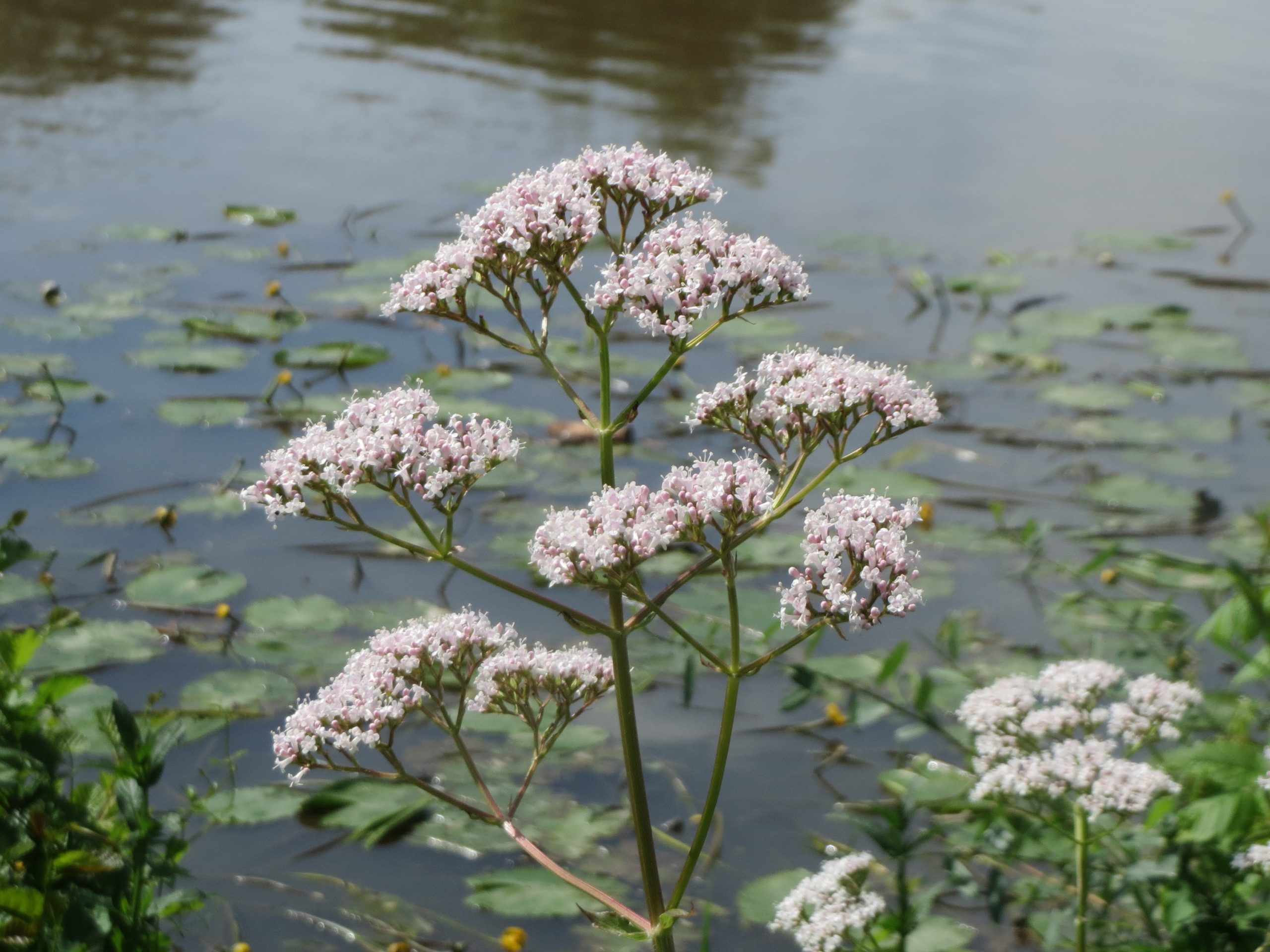
Habit: Robust and slender herbaceous plant, 30–150 cm tall. Stem: Erect, hollow inside, cylindrical, and marked by longitudinal grooves. It is typically leafy up to the inflorescence. Leaves: Odd-pinnate, composed of 11–15 lanceolate leaflets arranged in pairs, with a more developed terminal leaflet. Along the stem there are 6 to 13 pairs of opposite leaves. Flowers: Gathered in dense apical corymbs that divide symmetrically into three main branches. The corolla is tubular, about 4–5 mm long, pale pink or white. It has 5 unequal lobes that give the flower a slight asymmetry. Fruits: An ovoid achene surmounted by a feathery pappus, a transformation of the calyx, which allows it to fly. Flowering: April–July.
Distribution and habitat
Chorological type: European. Distribution in Italy: Present in almost the whole national territory. Habitat: It prefers decidedly wetter environments than the mountain species: permanent meadows, riverbanks, ditches, and woodland margins, from the lowlands up to 1400 m a.s.l.
Etymology
Generic name (Valeriana): From the Latin valére, to be well, in reference to the medicinal use of the plant. Specific name (officinalis): Likewise referring to its medicinal use.
Uses and properties
Common valerian is an edible and medicinal species whose active parts are the dried rhizomes and roots, rich in a unique phytocomplex including valepotriates, essential oils such as isovaleric acid, and sesquiterpenes among them valeric acid. Thanks to these constituents, the plant exerts powerful sedative, anxiolytic, antispasmodic, and hypotensive actions, making it a treatment of choice for insomnia, as well as for anxiety, hysteria, migraine, and digestive or menstrual disorders of nervous origin. Besides internal use, it is also employed externally in the treatment of eczema, ulcers, rheumatic pain, and muscular strains. Known since the time of Hippocrates and widely used during the two World Wars to treat bombardment psychosis, valerian is also famous as cat herb for the irresistible attraction it exerts on felines, a phenomenon that already in the sixteenth century led botanists to intuit its profound action on the human nervous system.